From the library · 1863
Twenty-two tomatoes
Burr spent years importing seed and growing it out so he could tell one variety from another. The result is the closest thing there is to a census of American vegetables before the Civil War.
The Field and Garden Vegetables of America · Fearing Burr
The Field and Garden Vegetables of America: containing full descriptions of nearly eleven hundred species and varieties, by Fearing Burr, Jr., dated Hingham, March 1863. Project Gutenberg ebook 21682, transcribed from scans made available by the Internet Archive. Public domain by age.
Names below are Burr's own, in his spelling and his order, taken from the variety headings in the transcription. The counts are counts, not estimates, twenty-two tomatoes, twenty-five beets, twenty-five broccolis, sixteen carrots and two bunching onions, arrived at by listing every heading in those chapters. The rest of the book is not yet done, and the table says only what we have checked.
Burr's own caveat on completeness is quoted below and is the reason we describe this as the best available census rather than a complete one.
Read the whole book free at Project Gutenberg → We host none of it. Everything in a quoted block below is the book's; everything beneath it is ours.
It is easy to say that we have lost most of our vegetable varieties and hard to say what was actually lost. The usual figures get repeated without a source. This book is a source.
Fearing Burr set out in 1863 to describe every vegetable then grown in American gardens, and to do it properly: importing seed from England and France, planting it beside the American vegetable of the same name, and waiting a season to find out whether two names were one plant. His title page claims nearly eleven hundred species and varieties.
What we have done here is small and checkable. We counted the varieties he describes under five crops, heading by heading, and listed them in his order. We have not yet checked those names against what a seed house sells today, and until we have, we are not going to put a number on the loss.
- 01
What the book is for
Still holdsthe present volume is offered to the public as a manual or guide to assist in the selection of varieties, rather than as a treatise on cultivation.
Worth knowing before you open it. There is very little here about how to grow anything, because Burr assumed you could already read that elsewhere. It is a reference for telling one plant from another, and it is still the best one for the period.
- 02
How he actually did it
Still holdsin order to obtain some comparatively unimportant particular with regard to the foliage, flower, fruit, or seed, of some obscure and almost unknown plant, it has been found necessary to import the seed or root; to plant, to till, to watch, and wait an entire season.
This is a description of a variety trial, run by one man without funding, a decade before the agricultural experiment stations existed. It is also why the descriptions can be trusted: where two catalogues disagreed about a name, he grew both and looked.
- 03
The caveat that stops us overclaiming
Still holdsIt is not, however, presumed that the list is complete, as many varieties, perhaps of much excellence, are comparatively local: never having been described, they are, of course, little known.
Burr is saying that the local, unnamed, family-kept varieties never reached him, which means the real 1863 diversity was larger than his eleven hundred, and any loss calculated against his total understates it. It also means his book cannot be used as a closed list, and anyone quoting it as one is quoting past the author.
- 04
Why worthless varieties are described too
Still holdsa timely knowledge of that which is inferior, or absolutely worthless, is often as advantageous as a knowledge of that which is of positive superiority.
The reason his lists can be counted at all. A catalogue that only recorded the good varieties would tell you nothing about how many existed, and it is the honest note in a book written when every other source on varieties was a seed merchant with stock to move.
- 05
Seed that keeps five years
Mostly holdsthe seeds are lens-shaped, yellowish-white, or pale-gray,--twenty-one thousand are contained in an ounce, and they retain their vitality five years.
Tomato seed stored cool and dry is still generally reckoned good for four to six years, so Burr's figure needs no correction. The caveat is only that viability falls gradually rather than expiring, and a germination test on a saucer costs nothing.
- 06
A tomato spacing from 1863
Mostly holdsthe plants may be set in the open ground where they are to remain, and should be three feet apart in each direction
Three feet each way for an unstaked plant, which is what the 1912 table also gives for field tomatoes fifty years later, and roughly what Solomon gives for growing them without irrigation. The tighter modern spacing assumes a stake, a determinate variety, and a hose.
- 07
When the tomato was suspect
Of its timeFor a long period, it was very little used; and the peculiar, specific term, lycopersicum, derived from lykos, “wolf,” and persicon, “a peach” (referring to the beautiful but deceptive appearance of the fruit), more than intimates the kind of estimation in which it was held.
Burr is recording, in 1863, that the tomato had only recently become respectable, he notes its use had increased fourfold in twenty years. The etymology he gives is the standard one. Read it as a reminder that the contents of an ordinary garden are far less fixed than they feel from inside any one decade.
What these crops could be in 1863
Every variety Burr describes under these headings, in his order and with his spelling. Counted from the chapter headings in the transcription, not estimated.
| Crop | Varieties described | Names |
|---|---|---|
| Tomato | 22 | Apple-tomato · Bermuda · Fejee · Fig-tomato · Giant · Grape or Cluster · Large Red · Large Red Oval-fruited · Large Yellow · Mexican · Perfected · Red Cherry · Red Plum · Round Red · Round Yellow · Seedless · Tree-tomato · White · White's Extra Early · Yellow Cherry · Yellow Pear-shaped · Yellow Plum |
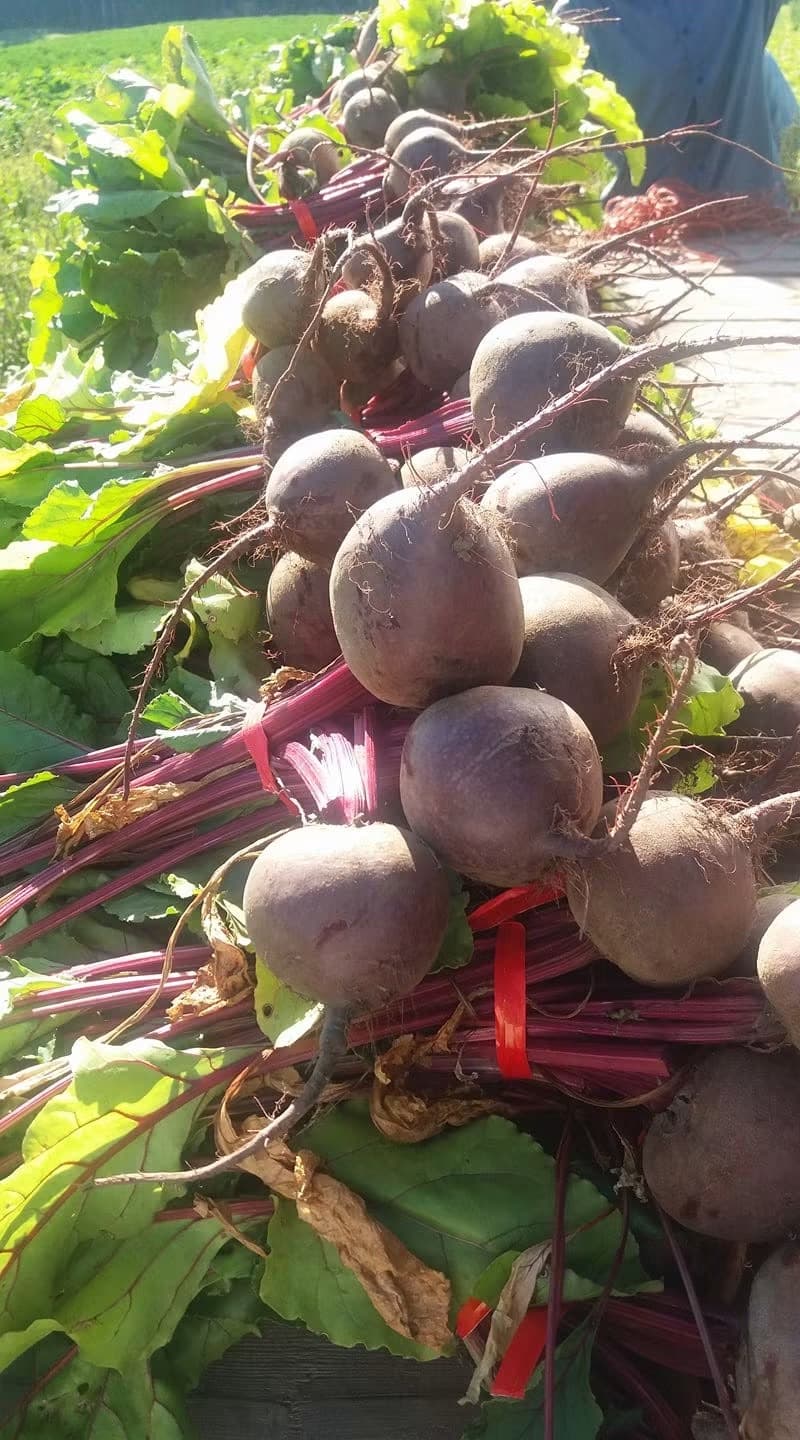
| Beet | 25 | Bark-skinned · Barrott's New Crimson · Bassano · Cattell's Dwarf Blood · Cow-horn Mangel Wurzel · Early Mangel Wurzel · Early Blood Turnip-rooted · German Red Mangel Wurzel · German Yellow Mangel Wurzel · Half Long Blood · Improved Long Blood · Long Blood · Long Red Mangel Wurzel · Long White Green-top Mangel Wurzel · Long Yellow Mangel Wurzel · Pine-apple Short-top · Red Castelnaudary · Red Globe Mangel Wurzel · White Globe Mangel Wurzel · White Sugar · White Turnip-rooted · Wyatt's Dark Crimson · Yellow Castelnaudary · Yellow Globe Mangel Wurzel · Yellow Turnip-rooted |
| Carrot | 16 | Altringham · Early Frame · Early Half-long Scarlet · Early Horn · Flander's Large Pale Scarlet · Long Orange · Long Red Belgian · Long Yellow · Long Surrey · Long White · New Intermediate · Purple or Blood Red · Short White · Studley · White Belgian · White Belgian Horn |
| Broccoli | 25 | Ambler's Early White · Chappell's Large Cream-coloured · Danish, or Late Green · Dwarf Brown Close-headed · Early Purple · Elletson's Gigantic Late White · Fine Early White · Frogmore Protecting · Gillespie's Broccoli · Green Cape · Green Close-headed Winter · Hammond's White Cape · Kent's Late White · Kidderminster · Late Dwarf Purple · Miller's Late White · Mitchell's Ne Plus Ultra · Mitchinson's Penzance · Portsmouth · Purple Cape · Snow's Superb White Winter · Sulphur or Brimstone Broccoli · Ward's Superb · White Cape · Willcove |
| Lettuce | 50 | Brown Dutch · Brown Silesian or Marseilles Cabbage · Brown Winter Cabbage · Early or Summer Cape · Early Simpson · Early White Spring or Black-seeded Gotte · Endive-leaved · English Endive-like Curled-leaved · Green Curled · Green Winter Cabbage · Hammersmith Hardy · Ice Cabbage · Imperial Head · India · Large Brown Cabbage or Mogul · Large Red Cabbage · Large Winter Cabbage or Madeira · Malta or Ice Cabbage · Neapolitan · Palatine · Spotted Cabbage (black-seeded) · Spotted Cabbage (white-seeded) · Stone Tennis-ball · Summer Cabbage · Tennis-ball · Turkey Cabbage · Versailles · Victoria or Red-bordered · White Gotte (black-seeded) · White Gotte (white-seeded) · White Silesian, or White Batavian · White Stone Cabbage · Yellow-seeded Brown Dutch · Alphange or Florence Cos (black-seeded) · Alphange or Florence Cos (white-seeded) · Artichoke-leaved Cos · Bath Green Cos · Brown Cos · Gray Paris Cos · Green Paris Cos · Green Winter Cos · Monstrous Brown Cos · Oak-leaved Cos · Red Winter Cos · Spotted Cos (black-seeded) · Spotted Cos (white-seeded) · Waite's White Cos · White Brunoy Cos (black-seeded) · White Brunoy Cos (white-seeded) · White Paris Cos |
| Cabbage | 36 | Atkins's Matchless · Barnes's Early · Bergen Drumhead · Champion of America · Early Battersea · Early Cornish · Early Drumhead · Early Dutch Twist · Early Hope · Early Low Dutch · Early Nonpareil · Early Sugar-loaf · Early Wakefield · Early York · East Ham · Green Glazed · Large Late Drumhead · Large York · Large Ox-heart · Marblehead Mammoth Drumhead · Mason · Pomeranian · Premium Flat Dutch · St. Denis · Shilling's Queen · Small Ox-heart · Stone-Mason · Sutton's Dwarf Comb · Vanack · Vaugirard Cabbage · Waite's New Dwarf · Winnigstadt · Early Dwarf Red · Large Red Dutch · Superfine Black · Utrecht Red |
| Summer squash | 10 | Apple Squash · Bush Summer Warted Crookneck · Early White Bush Scolloped · Early Yellow Bush Scolloped · Egg-squash · Green Bush Scolloped · Green-striped Bergen · Large Summer Warted Crookneck · Orange · Variegated Bush Scolloped |
| Pea | 71 | Auvergne · Batt's Wonder · Beck's Prize-taker · Bedman's Imperial · Bellamy's Early Green Marrow · Bishop's Early Dwarf · Bishop's New Long-podded · Black-eyed Marrow · Blue Cimeter · Blue Imperial · Blue Prussian · Blue Spanish Dwarf · British Queen · Burbridge's Eclipse · Carter's Victoria · Charlton · Champion of Paris · Climax · Dantzic · Dickson's Favorite · Dillistone's Early · Dwarf Marrow · Early Dan O'Rourke · Early Frame · Early Hotspur · Early Warwick · Early Washington · Fairbeard's Champion of England · Fairbeard's Nonpareil · Fairbeard's Surprise · Flack's Imperial · General Wyndham · Hair's Dwarf Mammoth · Harrison's Glory · Harrison's Perfection · King of the Marrows · Knight's Dwarf Blue Marrow · Knight's Dwarf Green Marrow · Knight's Dwarf White Marrow · Knight's Tall Blue Marrow · Knight's Tall Green Marrow · Knight's Tall White Marrow · Matchless Marrow · Milford Marrow · Missouri Marrow · Ne Plus Ultra · Noble's Early Green Marrow · Prince Albert · Queen of the Dwarfs · Ringwood Marrow · Royal Dwarf or White Prussian · Sebastopol · Shillings Grotto · Spanish Dwarf · Tall White Marrow · Taylor's Early · Thurston's Reliance · Tom Thumb · Veitch's Perfection · Victoria Marrow · Warner's Early Emperor · Woodford's Marrow · Common Dwarf Sugar · Early Dwarf Dutch Sugar · Giant Eatable-podded · Large Crooked Sugar · Purple-podded or Australian · Red-flowered Sugar · Tamarind Sugar · White-podded Sugar · Yellow-podded Sugar |
| Bush bean | 35 | Bagnolet · Black-eyed China · Blue Pod · Canada Yellow · Chilian · Crescent-eyed · Dun-colored · Dwarf Cranberry · Dwarf Horticultural · Dwarf Sabre · Dwarf Soissons · Early China · Early Rachel · Early Valentine · Golden Cranberry · Long Yellow Six-weeks · Mohawk · Newington Wonder · Pea-bean · Pottawottomie · Red Flageolet · Red-speckled · Refugee · Rice · Rob-Roy · Round Yellow Six-weeks · Solitaire · Swiss Crimson · Turtle-soup · Victoria · White's Early · White Flageolet · White Kidney · White Marrow · Yellow-eyed China |
| Kale | 19 | Buda Kale, or Borecole · Cabbaging Kale, or Borecole · Cock's-comb Kale · Cow-cabbage · Daubenton's Creeping Borecole · Dwarf Green Curled Borecole · Field Cabbage · Flanders Kale · Green Marrow-stem Borecole · Lannilis Borecole · Neapolitan Borecole · Palm Kale · Purple Borecole · Red Marrow-stem Borecole · Tall Green Curled · Thousand-headed Borecole · Variegated Borecole · Variegated Cock's-comb Kale · Woburn Perennial Kale |
| Bulb onion | 27 | Blood-red · Brown Portugal · Danvers · Deptford · Early Silver Nocera · Early Red Wethersfield · Early Silver-skin · Fusiform, or Cow-horn · Intermediate Red Wethersfield · James's Keeping · Large Red · Madeira · New Deep Blood-red · Pale Red · Paris Straw-colored · Pear-shaped · Potato Onion · Silver-skin · Strasburg · Top or Tree Onion · Tripoli · Two-bladed · White Globe · Yellow Globe · White Lisbon · White Portugal, or Spanish · Yellow Onion |
| Cucumber | 10 | Early Cluster · Early Frame · Early Russian · London Long Green · Long Green Prickly · Long Green Turkey · Short Prickly · Underwood's Short Prickly · White Spanish · White-spined |
| Spinach | 7 | Flanders Spinach · Large Prickly-seeded Spinach · Lettuce-leaved Spinach · Sorrel-leaved Spinach · Summer or Round-leaved Spinach · Winter or Common Prickly Spinach · Yellow Sorrel-leaved Spinach |
| Bunching onion | 2 | Common or Red Welsh Onion · White Welsh Onion |
| Potato | 49 | Ash-leaved Early · Ash-leaved Kidney · Biscuit · Black Chenango · Buckeye · Calico · California Red · Carter · Churchill · Cristy · Cups · Danvers Seedling · Davis's Seedling · Dykeman · Early Blue · Early Cockney · Early Manly · Flour-ball · Fluke Kidney · Forty-fold · Garnet Chili · Gillyflower · Green-top · Hill's Early · Irish Cups · Jackson White · Jenny Lind · Lady's Finger · Lapstone Kidney · Long Red · Mexican · Nova-Scotia Blue · Old Kidney · Peach-blow · Pink-eyed · Poggy, or Porgee · Quarry · Rohan · Shaw's Early · State of Maine · St. Helena · Taylor's Forty-fold · Tolon · Vermont White · Veto, or Abington Blue · White Chenango · White Cups · White Mountain · Worcester Seedling |
| Radish | 28 | Early Black · Early Long Purple · Early Purple Turnip-rooted · Early Scarlet Turnip-rooted · Early White Turnip-rooted · Gray Olive-shaped · Gray Turnip-rooted · Long Purple · Long Salmon · Long Scarlet · Olive-shaped Scarlet · Purple Turnip-rooted · Scarlet Turnip-rooted · Small, Early, Yellow Turnip-rooted · White, Crooked · White Turnip-rooted · Yellow Turnip-rooted · Long White · Long White Purple-top · New London Particular · Oblong Brown · Black Spanish · Large Purple Winter · Long Black Winter · Long-leaved White Chinese · Purple Chinese · Rose-colored Chinese · Winter White Spanish |
| Chard | 5 | Green or Common Leaf-beet · Large-ribbed Curled · Large-ribbed Scarlet Brazilian · Large-ribbed Yellow Brazilian · Silver-leaf Beet |
| Garlic | 2 | Early Rose Garlic · Great-headed Garlic |
The counts are counts, but they are not a measure of loss. Several lists are padded with field crops grown for stock, ten of the twenty-five beets are mangel wurzels, and we have not yet checked any of these names against what seed houses sell today. Burr adds the third caveat himself: local, undescribed varieties never reached him, so the real 1863 diversity was larger than his book.
What the book cannot tell you
Every date in it is written for a region, because that is the finest grain a printed book can manage. Your frost dates are not a region, they belong to the weather station nearest you, and the same government that published half this shelf has thirty years of records for it.
More from the library
We're working through the public-domain growing literature and marking what still holds. Occasional notes from Eugene, Oregon, an art business with agricultural roots, working its way toward farming.
We'll email you to confirm before sending anything. After that, occasional seasonal notes from Sun & Rain Works, we won't share your address, and every email has an unsubscribe link.
Source: Fearing Burr, “The Field and Garden Vegetables of America”, 1863. Project Gutenberg ebook 21682, confirmed by Gutenberg as not in copyright. Quotations are verbatim from that transcription. Annotations are our own and are not endorsed by Project Gutenberg or by the transcribers.
Farm rooted clothing · Est. 2005
The guides are free. The shop is the business.
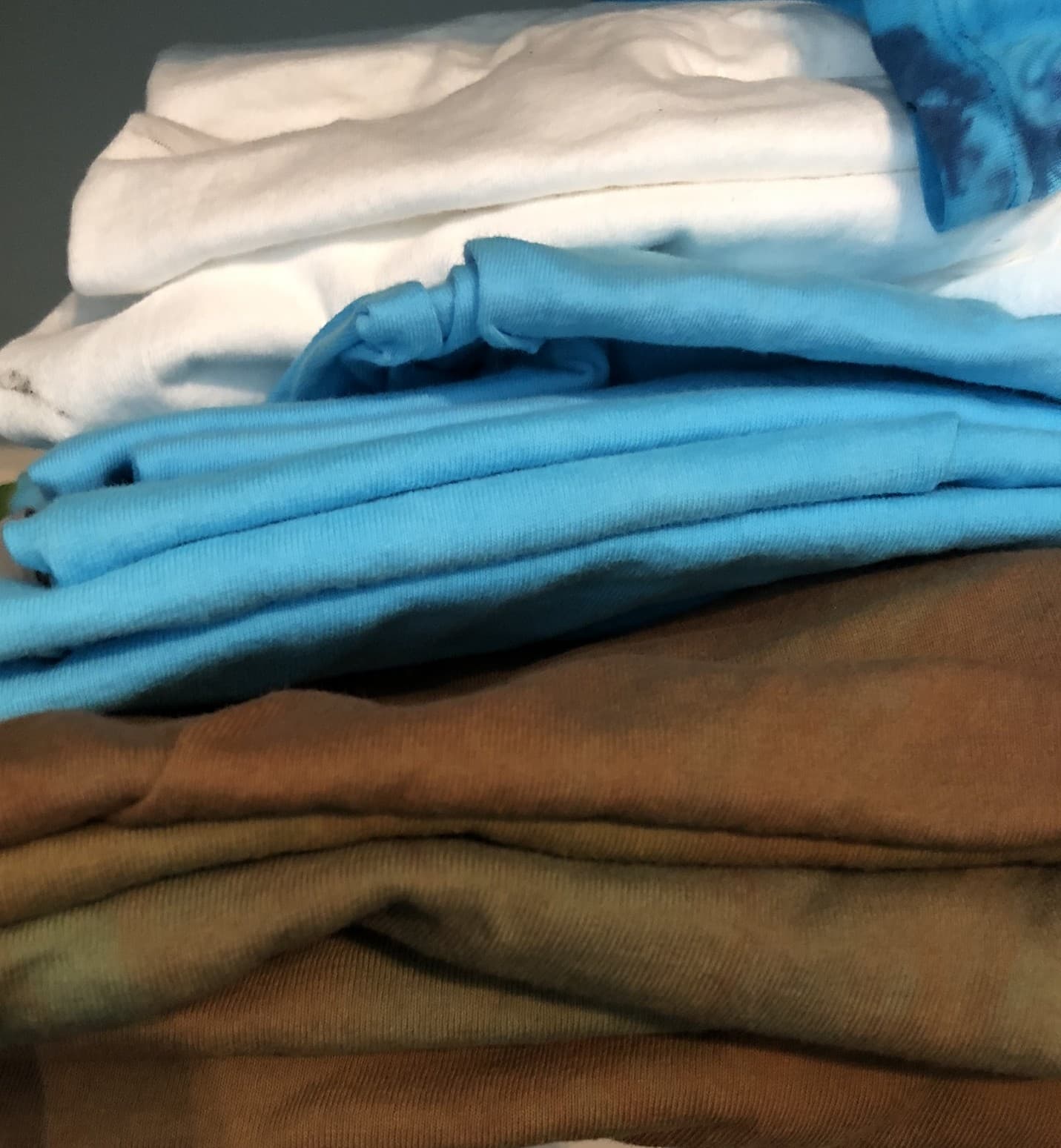
Sun & Rain Works is a small apparel outfit in Eugene, Oregon, with agricultural roots and a slow path toward farming. The annotated reading you just read comes from the same place as the shirts.