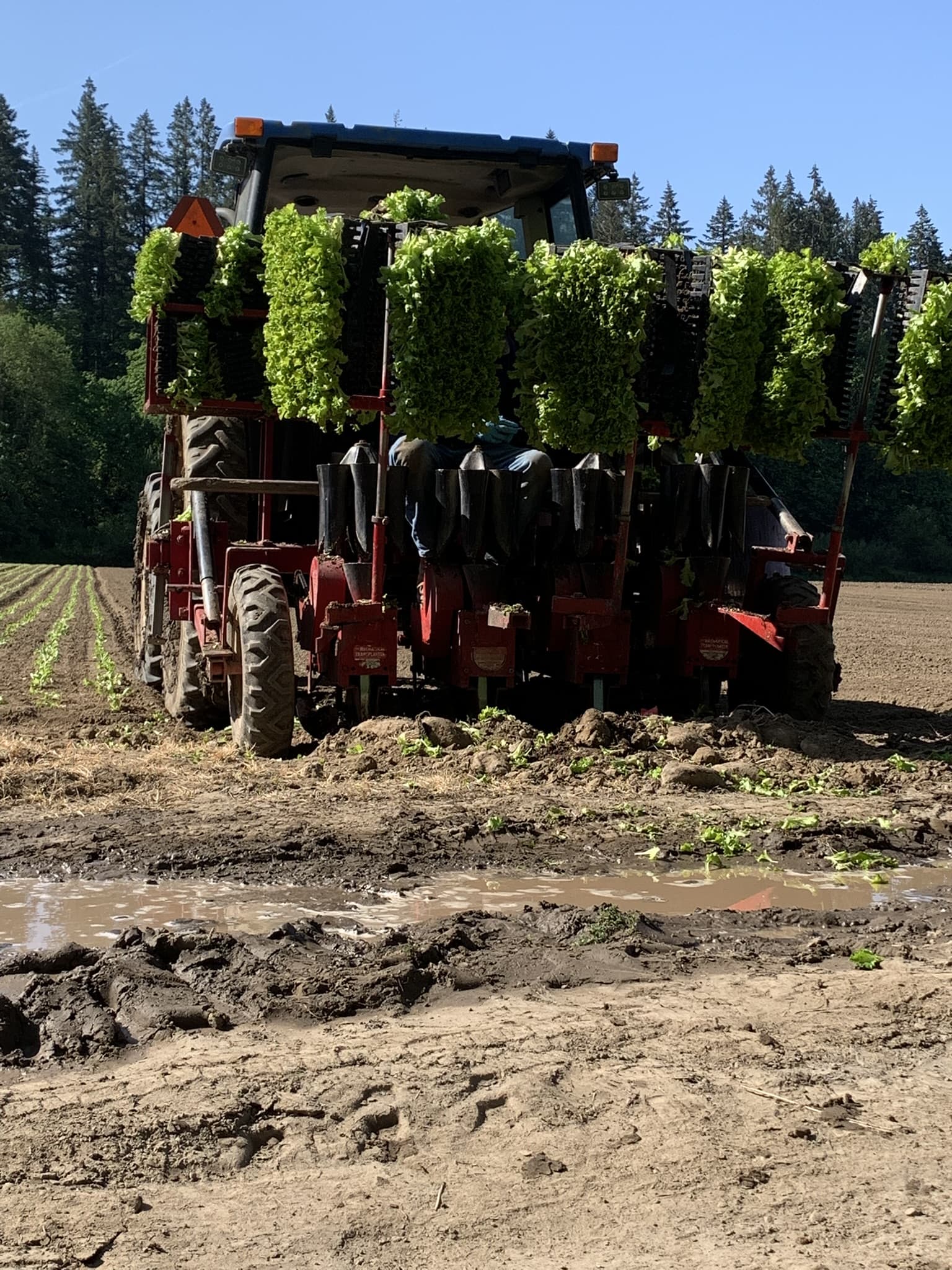
From the library · 1912
The spacing table everyone quotes wrong
Old manuals get dismissed for absurd row spacing. The wide numbers are real, but they are the horse column, and the same table prints a hand column beside it that is close to how we space a bed today.
The Vegetable Garden: What, When, and How to Plant · Anonymous
The Vegetable Garden: What, When, and How to Plant, published anonymously and reprinted from The Farmer's Cyclopedia. Copyright 1912 by the Agricultural Service Company of Washington, D.C.; the copy transcribed was printed by Doubleday, Page & Company in 1917. Project Gutenberg ebook 43531. Public domain by age.
One correction to our own shelf note, which described this book as almost entirely tables with the prose stripped out. That is wrong, and reading it properly is what showed it. The book is mostly prose, organised crop by crop, with a strong market-gardening slant, there are pages on shipping celery and on the capital required to enter the Bermuda onion trade. The single great table sits at the back, after the last crop entry.
The transcriber's own note explains why the tables read oddly in plain text: they were left as a replica of the original because reducing them would have made them unreadable. We have reproduced twelve rows of the largest one below, cell for cell.
Read the whole book free at Project Gutenberg → We host none of it. Everything in a quoted block below is the book's; everything beneath it is ours.
There is a stock complaint about pre-war gardening books: they tell you to put your rows three feet apart, which would waste most of a modern garden. The complaint is fair as far as it goes, and it stops one column too early.
This book prints its distances twice. One set is for a field a horse walks down pulling a cultivator, and the horse is what needs three feet, not the carrot. The set beside it is for ground worked by hand, and it is far tighter, lettuce in rows twelve to eighteen inches apart rather than thirty.
Read the right column and a 1912 manual stops being a curiosity and becomes a usable reference, written when knowing this was the difference between eating and not.
- 01
The whole point of the hand column
Still holdsLettuce may be grown in rows about 12 inches apart.
In the body of the book, for a household. The table at the back gives lettuce thirty inches for horse cultivation and twelve to eighteen for hand, and it is the thirty-inch figure that gets quoted when someone wants to show that old books were wasteful. Our own calendar says fourteen inches between rows, which sits inside the 1912 hand range.
- 02
Why beans go in shallow
Still holdsBecause of their peculiar habit of germination--the elongation of the part between the root and the seed leaves, called the hypocotyl--the seed leaves or cotyledons are lifted out of the soil. A large expenditure of energy on the part of the plant is necessary to accomplish this, and the more compacted the soil and the deeper the seed is planted the more time and energy are required in accomplishing this result.
This is correct botany, correctly applied, in a book for farmers in 1912. Epigeal germination is exactly why bean depth matters more than it does for peas, and why a crusted seedbed after heavy rain can lose a whole sowing that had already germinated underground.
- 03
Trench-planting a leggy tomato
Still holdsInstead of attempting to set the plant deeply and maintain it in an upright position, remove all except three or four of the top-most leaves about the growing point. Dig a shallow trench along the row--a trench 3 or 4 inches deep--slightly sloping from a deep point at one end to the surface of the ground at the other. Place the bare stem of the tomato and the root in this trench, with the root in the deepest portion, cover the stem throughout its length with fresh soil, and pack this firmly.
Still the standard fix for a transplant that has stretched, and still better than burying it upright, because the buried stem then sits in the warm top few inches instead of cold subsoil. Modern advice adds only that you should pinch the leaves off rather than tear them, to avoid a wound the whole stem length can rot from.
- 04
Staked tomatoes, and what our own numbers match
Still holdsIf the plants are to be trained in this way they can be set from 18 inches to 2 feet apart in the row, and about 3-1/2 to 4 feet between the rows.
Our sowing calendar gives tomatoes twenty-four inches in the row and thirty-six between, which lands inside the first figure and just under the second. That agreement is not because we took it from here, the numbers were set independently from current guidance, which makes it a reasonable check that both are describing the same plant.
- 05
Kale and frost
Still holdsThe flavor of kale is improved by frost.
One line, stated as common knowledge, and the mechanism was worked out later: cold drives the plant to convert stored starch into sugars as an antifreeze, and you taste the result. Our own note on kale says the same thing with the chemistry attached.
- 06
Spinach without thinning
Still holdsIn gathering spinach the entire plant is removed rather than merely cutting off the leaves. The larger plants are selected first, and the smaller or later ones are thus given room to develop. No thinning is required if this plan of harvesting is practiced.
A genuinely better method than the cut-and-come-again the modern packets assume, for anyone growing spinach to eat rather than to photograph. Harvesting whole plants largest-first thins the row and feeds you in the same motion.
- 07
On buying cheap seed
Still holdsThe small saving made by the purchase of cheap or inferior seed is usually paid for a hundred times over in the lessened value of the crop.
Written about cabbage for market, and true of every crop in a home garden too, where the seed is the cheapest input and the season is the one you cannot buy more of.
- 08
Where the book is not about your garden
Of its timeThe necessary land and irrigation facilities will require the initial outlay of from $10,000 to $30,000, and the running expenses are quite heavy.
From the section on Bermuda onions, and a fair warning about the book's centre of gravity. Substantial parts of it are a commercial handbook, acre yields, freight, market demand, rather than a household manual, and those parts have no bearing on a back garden beyond curiosity.
Distances to plant, from the 1912 table
Rows from the book's own table, headed “Quantity of Seeds or Number of Plants Required for a Row 100 Feet in Length, with Distances to Plant, Times for Planting, and Period Required for Production of Crop”. Only the crops covered by our sowing calendar are reproduced; the full table runs to some sixty vegetables.
| Kind of vegetable | Rows apart, horse cultivation | Rows apart, hand cultivation | Plants apart in rows | Depth of planting | Ready for use after planting |
|---|---|---|---|---|---|
| Beans, bush | 30 to 36 in. | 18 to 24 in. | 5 or 8 to ft. | 1/2 to 2 in. | 40 to 65 days |
| Beets | 24 to 36 in. | 12 to 18 in. | 5 or 6 to ft. | 1 to 2 in. | 60 to 80 days |
| Cabbage, early | 30 to 36 in. | 24 to 30 in. | 12 to 18 in. | 1/2 in. | 90 to 130 days |
| Carrot | 30 to 36 in. | 18 to 24 in. | 6 or 7 to ft. | 1/2 in. | 75 to 110 days |
| Cucumber | 4 to 6 ft. | 4 to 6 ft. | 4 to 6 ft. | 1 to 2 in. | 60 to 80 days |
| Kale or borecole | 30 to 36 in. | 18 to 24 in. | 18 to 24 in. | 1/2 in. | 90 to 120 days |
| Lettuce | 30 in. | 12 to 18 in. | 4 to 6 in. | 1/2 in. | 120 to 180 days |
| Onion, sets | 24 to 36 in. | 12 to 18 in. | 4 or 5 to ft. | 1 to 2 in. | 90 to 120 days |
| Peas | 3 to 4 ft. | 30 to 36 in. | 15 to ft. | 2 to 3 in. | 40 to 80 days |
| Spinach | 30 to 36 in. | 12 to 18 in. | 7 or 8 to ft. | 1 to 2 in. | 30 to 60 days |
| Squash, bush | 3 to 4 ft. | 3 to 4 ft. | Hills 3 to 4 ft. | 1 to 2 in. | 60 to 80 days |
| Tomato | 3 to 5 ft. | 3 to 4 ft. | 3 ft. | 1/2 to 1 in. | 100 to 140 days |
“5 or 8 to ft.” means plants per foot of row, not inches between them, the table switches units between crops and we have not silently harmonised it. “Ready for use after planting” is counted from sowing, including for the crops the same table says to start in a hotbed, which is why the tomato figure looks long.
What the book cannot tell you
Every date in it is written for a region, because that is the finest grain a printed book can manage. Your frost dates are not a region, they belong to the weather station nearest you, and the same government that published half this shelf has thirty years of records for it.
More from the library
We're working through the public-domain growing literature and marking what still holds. Occasional notes from Eugene, Oregon, an art business with agricultural roots, working its way toward farming.
We'll email you to confirm before sending anything. After that, occasional seasonal notes from Sun & Rain Works, we won't share your address, and every email has an unsubscribe link.
Source: Anonymous, “The Vegetable Garden: What, When, and How to Plant”, 1912. Project Gutenberg ebook 43531, confirmed by Gutenberg as not in copyright. Quotations are verbatim from that transcription. Annotations are our own and are not endorsed by Project Gutenberg or by the transcribers.
Farm rooted clothing · Est. 2005
The guides are free. The shop is the business.
Sun & Rain Works is a small apparel outfit in Eugene, Oregon, with agricultural roots and a slow path toward farming. The annotated reading you just read comes from the same place as the shirts.