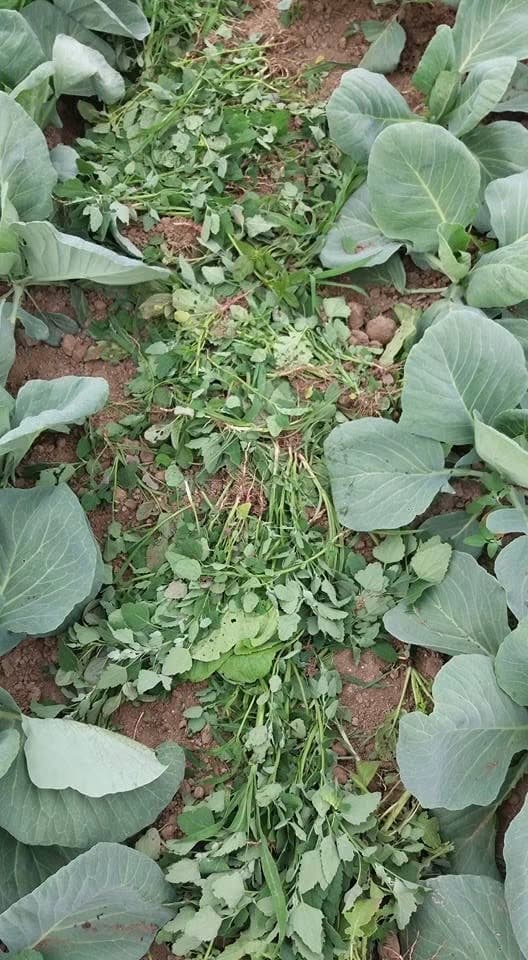
Victory Gardens for Beginners and Busy People
On Wednesday, March 3, 1943, the U.S. Department of Agriculture broadcast growing advice to people who had never grown anything. Eighty years later, most of it is still correct. Here it is, annotated.
What this is. A Homemakers' Chat radio script issued by the U.S. Department of Agriculture, Office of Information, Radio Service, drawing on the Bureau of Plant Industry. Scanned by the National Agricultural Library and hosted at the Internet Archive.
Why we can publish it. It is a work of the United States federal government and therefore not subject to copyright. The script carries the line “For use in non-commercial broadcasts only”, that was an instruction to radio stations of the day about airing it, not a licence term, and we have left it visible rather than quietly cropping it.
How we transcribed it.The scan is machine-read and the raw text is full of errors, “olan” for “plan”, “oarticularly”, “g<?-od”, plus words broken across lines (“pota- toes”) and page numbers dropped mid-sentence (“If weeds 2. grow rank on the land”). We repaired those scanning artefacts and nothing else. No wording, spelling, or punctuation has been modernised. Where a correction was a judgement rather than an obvious fix, we say so in the annotation. Everything in a quoted block is the USDA's; everything beneath it is ours.
What a wartime government told first-time growers
In the spring of 1943 the Secretary of Agriculture asked Americans to grow their own food, and millions of people who had never planted anything went looking for instructions. This script was part of the answer, read aloud, to homemakers, on the radio.
What is striking, reading it now, is how little of it is wrong. The soil advice is better than most of what circulated in the decades that followed. Two lines in particular could have been written this year.
- 01
How much time it takes
Still holdsPlant scientists of the U.S. Department of Agriculture say that an hour a day of regular attention should take care of a small home garden.
Still about right, and still the number people most underestimate. Note the word regular, an hour most days beats a frantic weekend, because weeding and watering respond to consistency rather than effort.
- 02
Sunlight
Mostly holdsMake sure the plot you choose for your garden has plenty of sunshine. If your plot does not get sun for 6 hours of the day, you can't raise vegetables.
Six hours remains the standard minimum for fruiting crops, tomatoes, squash, beans. The absolute is too strong though: leafy greens and many roots crop perfectly well on four. In the Willamette Valley, where summer light is long but often diffuse, shade is more often the limit than heat.
- 03
Reading the soil
Still holdsExperienced gardeners say, “If weeds grow rank on the land, it is a safe bet that the soil is fertile.”
A genuinely good field test, and free. Vigorous weeds indicate fertility and workable structure. What it cannot tell you is drainage or pH, for those, the NRCS soil survey now maps your specific ground, which no 1943 gardener could consult from a kitchen table.
- 04
Planning on paper
Mostly holdsPlan your garden on paper. The Victory Garden leaflet just mentioned gives several plans for gardens of different sizes. The smallest one is 30 by 50 feet, but you can have an even smaller garden if you haven't that much space.
Planning on paper first is as useful as it ever was. The scale has changed: 30 by 50 feet was their smallest plan, and it is larger than most gardens now. Intensive spacing and raised beds mean a modern 4-by-8 bed produces what took considerably more ground then.
- 05
Growing for nutrition, not just preference
Still holdsOf course, you'll want to plant vegetables the family likes. But give some thought also to vegetables that supply the most food value... particularly vitamins and minerals.
This is the most forward-looking line in the script. Choosing crops by nutritional return per square foot is treated today as a modern idea; it was wartime policy in 1943, when food value per unit of scarce ground genuinely mattered. The reasoning has not aged at all.
- 06
Asking someone local
Still holdsYou want to know which vegetables, and which varieties of those vegetables, grow best where you live... from your county agricultural agent.
The county agricultural agent still exists, that is the Cooperative Extension Service, and in Oregon it is OSU Extension out of Corvallis, with Master Gardeners in Lane County. Eighty years on, the best answer to “what grows here” is still a person who has grown it here.
- 07
Row orientation
Still holdsIf it's level, run the rows lengthwise. If the ground slopes, run them around, not up and down the slope. Put the tall plants on the north or west side so they won't shade the low ones.
Both rules are still taught. Rows across a slope rather than down it slow runoff and hold soil, the same contour principle used at field scale. Tall crops to the north is basic and constantly ignored; a row of staked tomatoes on the south edge will quietly shade out everything behind it.
- 08
Placing fertilizer
Still holdsUse a hoe to make a furrow about 2 inches deep and 3 or 4 inches wide, parallel to the line where you will plant your seeds, but at least 2 inches away from that line.
Band placement, described precisely. Keeping fertilizer a couple of inches off the seed line avoids burning germinating roots, and it is still the right technique. Their reason for the care was rationing, “fertilizer is precious this year”, but the agronomy stands on its own.
- 09
How much to cultivate
Still holdsThe plant scientists say to hoe or cultivate only often enough to keep weeds out. Extra hoeing does not help... may even harm tender roots.
Ahead of its time. Decades of enthusiastic tilling followed this advice being ignored; current soil science lands back where the Bureau of Plant Industry already was. Disturb the soil as little as the weeds require.
- 10
Watering
Still holdsSoak the soil thoroughly and deeply, the way a heavy rain soaks it... Frequent light sprinkling is bad. It waters the roots of shallow-growing weeds, and doesn't give the garden plants enough water to count.
Correct, and still the most common mistake made with a hose. Deep infrequent watering drives roots down; daily sprinkling keeps them at the surface and feeds weeds preferentially. West of the Cascades this matters from roughly July, when the rain stops and does not resume for two months.
- 11
Getting the bulletin
Of its timeThe first thing to do is to write to the U.S. Department of Agriculture, Washington, D.C., for a copy of the free 1943 Victory Garden bulletin.
The instruction that dates the piece most sharply. Writing to Washington and waiting for a leaflet was the fastest route to authoritative growing information in 1943. The same department's material now arrives in seconds, this page exists because of it.
- 12
Sharing the surplus
Still holdsIn a very small garden you won't have room enough for potatoes and corn... However, you may get around that difficulty by swapping vegetables with a neighbor who grows plants you don't have.
Presented as a workaround for scarce space, and it is really the whole point of a victory garden. Nobody grows everything well. The swap is what turns a set of individual plots into something that actually feeds a street. One transcription note: the scan reads “swarming vegetables with a neighbor”, which we have read as “swapping”, a machine misreading rather than a word anyone wrote.
“Find out which vegetables grow best where you live”
In 1943 that meant writing to Washington and waiting, or walking down the road to ask somebody who had grown a garden longer than you had. Both are still good answers. The county agricultural agent the script mentions still exists, in Oregon that is OSU Extension, and the Master Gardeners in Lane County are the people it was talking about.
Part of it we can now answer instantly. The same government that broadcast this script publishes thirty years of frost records for the weather station nearest you.
More from the archive
We're working through the USDA's victory garden material and marking what still holds. Occasional notes from Eugene, Oregon, an art business with agricultural roots, working its way toward farming.
We'll email you to confirm before sending anything. After that, occasional seasonal notes from Sun & Rain Works, we won't share your address, and every email has an unsubscribe link.
Source: United States Department of Agriculture, “Victory Gardens for Beginners and Busy People”, Homemakers' Chat, Wednesday, March 3, 1943. Information from the Bureau of Plant Industry. Digitised by the National Agricultural Library; archive identifier victorygardensfo1943unit. Public domain as a work of the U.S. federal government. Annotations are our own and are not endorsed by the USDA.
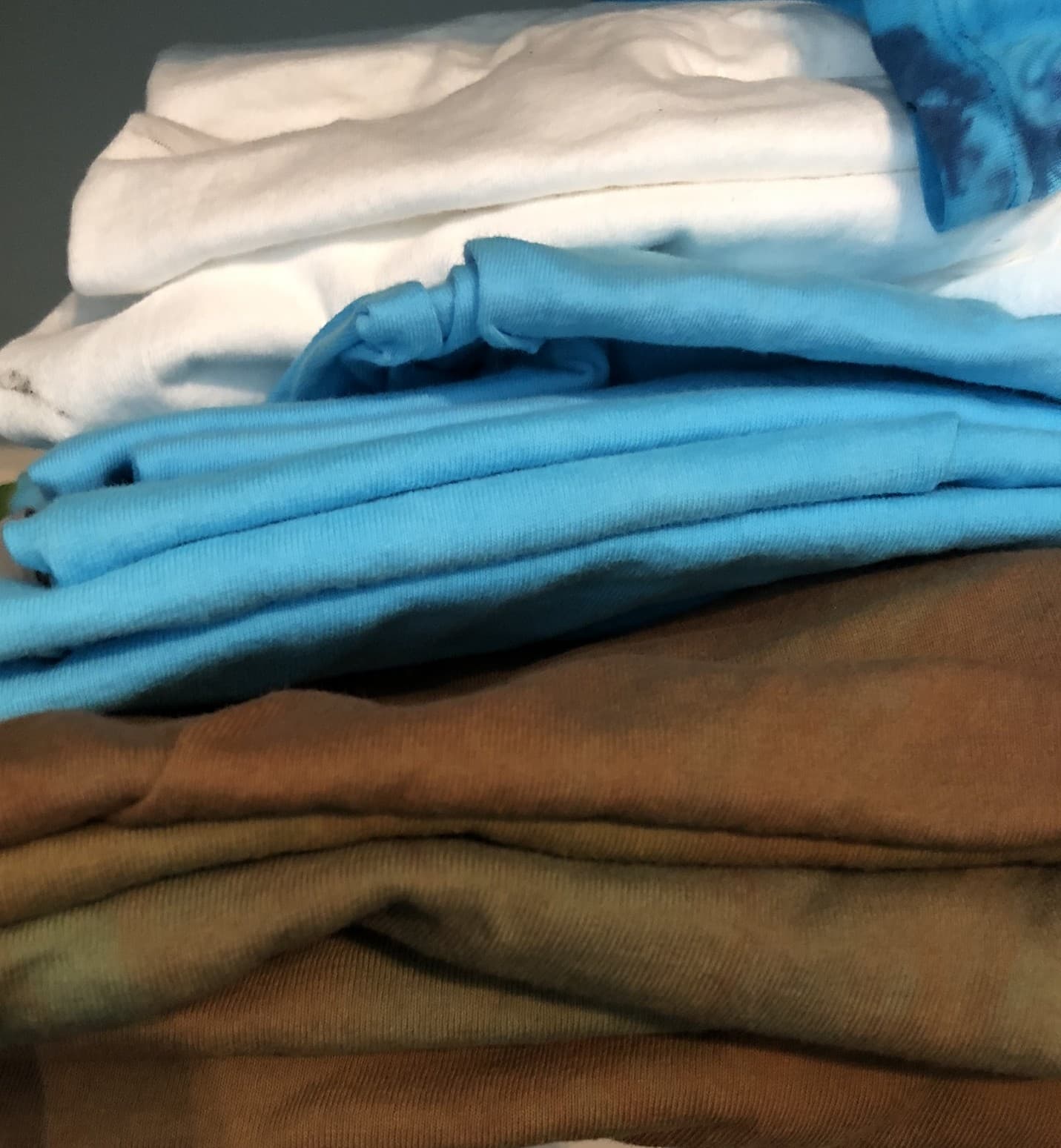
Farm rooted clothing · Est. 2005
The guides are free. The shop is the business.
Sun & Rain Works is a small apparel outfit in Eugene, Oregon, with agricultural roots and a slow path toward farming. The 1943 beginner's guide you just read comes from the same place as the shirts.