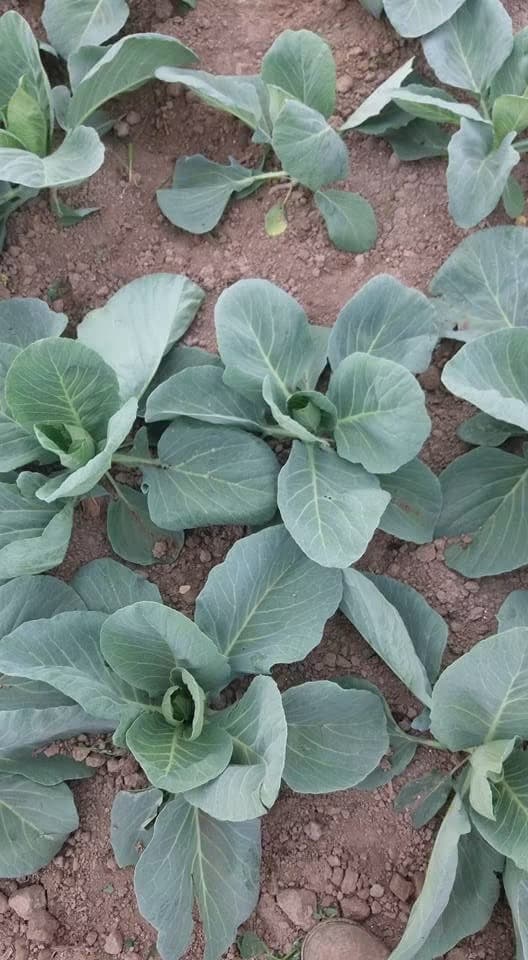
Victory Garden: Leader's Handbook
Not a guide for gardeners. A guide for the people who had to talk twelve million households into starting a garden, and keep them from quitting in July.
What this is. A 21-page handbook issued by the U.S. Department of Agriculture as series AKI-30, written for neighbourhood, county and state committee leaders running the 1943 campaign. Available in full at the Internet Archive, and as page images in the National Agricultural Library exhibit.
Why we can publish it. It is a work of the United States federal government and therefore not subject to copyright. The scan we quote from was contributed by Central University Libraries, Southern Methodist University, worth stating, because the National Agricultural Library holds a separate scan of the same handbook, and crediting the wrong institution for the text would be an easy mistake to make.
How we transcribed it. The scan is machine-read and the raw text carries the usual errors, “produoe” for “produce”, “Fanners” for “Farmers”, “Stat©” for “State”, plus decorative drop-cap glyphs dropped into sentences as noise. We repaired those scanning artefacts and nothing else. No wording, spelling, or punctuation has been modernised. Everything in a quoted block is the USDA's; everything beneath it is ours.
It cites its own sources. The handbook is partly a compilation and says so. Its “dozen dont's” spread is reprinted from Consumers' Guide of March 1, 1942, already a year old when this carried it, its planting calendar is credited to University of Maryland Extension, and its yield tables are adapted from Ohio State Extension Bulletin 232, “Garden for Victory”.
And it is itself an implementation. The twelve-bulletin reading list at the back of this handbook is copied, in order, from the 1943 Victory Garden Program, as are the garden targets and the hour-a-day figure it asks leaders to promise.
A note on the language
The handbook talks about gardening as warfare throughout, weeds are the enemy, pests are an invading army, vegetables stand in military rows. That is period voice and we have left it alone. One passage goes further and applies a racial slur for Japanese people to insect pests. We have not quoted that passage, because it contains no gardening advice, and we have not altered the scan we link to. It is worth knowing that the same government publishing this handbook was, that same year, incarcerating around 120,000 Japanese Americans, many of whom were growing vegetables under guard, in some camps at a scale that supplied other camps.
How to run a gardening campaign for twelve million people
The target for 1943 was six million farm gardens and more than twelve million town and city gardens, and around eighteen million families took it up. An enormous share of them had never grown anything before. Somebody had to organise that, and this is what they were handed.
It makes the handbook a different document from the growing advice of the same year. The horticulture is here, and it is good. But the sharpest passages are about people, why gardens get abandoned, how to keep a beginner going through the week the weeds win, what to do with more zucchini than anyone can eat.
- 01
Why gardens fail
Still holdsIn the past, all too many gardens, particularly in cities, have been abandoned to the weeds in the heat of summer. This wastes precious seeds, fertilizer, and labor. It hurts the morale of both the ex-gardener and the neighbors. Much of this loss can be avoided by helping every gardener make a careful garden plan — before buying a seed.
The single most useful sentence in the document, and it is about human behaviour rather than horticulture. July abandonment is still the dominant failure mode in community plots, and the fix is still located before the money is spent rather than after. Note the second reason given: a quit garden discourages the neighbours too. Whoever wrote this had watched it happen.
- 02
Reading soil without a lab
Mostly holdsBut, don't suggest chemical analysis, which would take too long and is seldom necessary. As a simple test — if it grows a fine crop of flowers or weeds, it's soil.
The weed test is sound and free, and it is the same one the Homemakers' Chat broadcast gave two months later. The advice against testing has not aged well. A soil test now costs a few dollars and comes back in a fortnight, but the real reason to run one is the thing 1943 had no idea to look for. This handbook is aimed squarely at city lots, and urban soil near older housing frequently carries lead from paint and leaded petrol. That is the one question a weed cannot answer, and it matters most for exactly the leafy greens and root crops this campaign was pushing.
- 03
Renting ground from a farmer
Still holdsIn some towns and cities, groups have arranged with a nearby farmer for the use of an acre or so of good land to use as a community garden, paying in either crops or cash. As part of the bargain, the farmer plows and drags the soil.
This is the community garden plot, described before the term existed, and the deal structure is still the good one, the farmer contributes the tillage they already have equipment for, the group contributes labour or rent. Land access remains the binding constraint on urban growing, and an arrangement with someone who already owns ground is still easier than acquiring any.
- 04
Spacing seed
Still holdsPea and bean seeds should be spaced as the plants are to stand, never thinned later. Beet and chard "seeds" produce several plants each, allowing later thinning. Small seeds in general should be sown about 3 or 4 times as thickly as the final stand expected, and thinned as they grow.
Correct on all three counts, and the middle one still surprises people every spring. A beet or chard seed is not a seed but a dried fruit containing several, which is why a carefully spaced row comes up in clumps and why thinning beets is not optional. The general rule of sowing small seed three or four times thick is what most packets still assume without saying.
- 05
Government fertilizer
Of its timeA special Victory Garden commercial fertilizer will be available this year through arrangements made jointly by the Department of Agriculture and the War Production Board. It will be available in 5 to 100 pound packages and will contain 3 percent nitrogen, 8 percent phosphoric acid, and 7 percent potash. It must be used only for production of food, never for ornamental plantings. It will have a ceiling price.
A single government-specified blend at a capped price, legally restricted to food production, an artefact of a wartime economy that no longer exists. The formula itself is also dated: 3-8-7 is heavy on phosphorus by modern standards, and most established garden soil already holds more than the crop can use. Surplus phosphorus does not wash out the way nitrogen does; it accumulates, and what does leave ends up in waterways. This is one place to follow a soil test rather than a fixed ratio.
- 06
How much water
Still holdsAbout an inch of rainfall (a good, heavy, half-day rain) is required every week or ten days for a satisfactory growth of most vegetables. Some method of watering during dry periods is essential in most parts of the country, and watering doesn't mean just laying the dust.
An inch a week is still the working figure taught today. The useful part is the calibration, it defines an inch as a heavy half-day rain, which is the only way the number means anything to someone holding a hose. West of the Cascades this becomes the binding constraint around July, when the rain simply stops for two months.
- 07
How to water
Still holdsLight sprinkling brings roots up to the surface. That's bad. Thorough soaking pushes down to the roots, and keeps them down where they belong. Soak only when the ground is dry.
The same instruction the radio broadcast gave, compressed into three sentences, and still the most common mistake made with a hose. Shallow daily watering trains roots to the surface where they cook in the first hot week. Two documents from the same agency in the same year, agreeing, this was settled advice in 1943 and it is settled now.
- 08
How deep to cultivate
Still holdsVegetable roots grow near the surface. They are tender, too. When you cultivate them deeply, you injure the roots and slow up growth. Shallow cultivation is the rule for gardens.
Ahead of its time, and the handbook is blunter than the broadcast about why: the enthusiasm of new gardeners has to be curbed. Decades of deep tilling followed anyway. Current soil science has arrived back where the USDA already was, disturb no more than the weeds require.
- 09
What shades what
Still holdsIn fact, don't let any of the tall crops shade the short ones, whatever they are. Growing things must get sun. Plant climbers, like beans, to the north; short ones, to the south.
Basic, correct, and still ignored every year by someone who puts a row of staked tomatoes along the south edge and wonders why the lettuce behind it bolted early without ever sizing up. Worth noting this appears in a spread reprinted from Consumers' Guide of March 1942, the advice was already a year old when this handbook carried it.
- 10
Canning safely
Mostly holdsHowever, leaders must caution Victory Gardeners against canning any vegetables other than tomatoes without using a pressure cooker, for danger of food spoilage and possible poisoning.
The most important line in the handbook, and it is unchanged after eighty years: low-acid vegetables must be pressure canned, never water-bathed. The poisoning being referred to is botulism, and the rule exists because the spores survive boiling water. What has changed is the tomato exception. Tomatoes were reliably acidic enough in 1943; many varieties grown now are not, so current USDA guidance is to add lemon juice or citric acid to every jar before water-bath canning them. Follow the modern rule on that one point and the 1943 rule on everything else.
- 11
The fall garden
Still holdsIn much of the country, fall gardens are practicable. The thing is — don't let them forget to plant until too late. Fall gardens must be planted in mid-summer.
The most-missed opportunity in home growing, then and now. Sowing a fall crop means starting it in the worst heat of the year, when the spring garden is still producing and nobody feels like planting anything. Miss the window by three weeks and the crop runs out of daylight before it finishes. West of the Cascades the mild autumn makes this especially worth doing, and especially easy to forget.
- 12
Not too much of one thing
Still holdsToo much of any vegetable, even if it comes from your own garden, is hard to take unless you are sure someone else can use the surplus you can't use. Plant a variety of things.
The zucchini problem, stated politely. A beginner plants what is easy to grow and ends up with forty pounds of one crop ripening in the same fortnight. Succession sowing, a short row every two or three weeks rather than everything at once, solves it better than variety alone, though the handbook does not say so.
- 13
The surplus
Mostly holdsIf your garden yields too much for you to eat or store or preserve for yourself, see that someone else gets the leftovers. Tell your local Civilian Defense office about your surpluses.
The instinct holds, the phone number does not. Local Civilian Defense offices went with the war. The modern equivalent is a food bank, many now accept fresh garden produce specifically, which was rare a generation ago, and the gap they most need filling is fresh vegetables rather than tins. That the campaign thought to route surplus at all, at national scale, is the part worth borrowing.
- 14
Where to get local answers
Still holdsMost State Agricultural Colleges have excellent publications on gardening. These make specific recommendations for your own locality.
The handbook practises this itself, its planting calendar is credited to University of Maryland Extension and its yield tables adapted from Ohio State Extension Bulletin 232, "Garden for Victory". Those services still exist and still publish for their own state. In Oregon that is OSU Extension, with Master Gardeners in Lane County. Eighty years on, the best answer to what grows here is still someone whose job is this county.
- 15
Borrowing tools
Of its timeDon't let 'em buy tools they can do without. Steel is going to the battle front. Farmers do a lot of implement swapping, and gardeners can do the same. A borrowed hoe works as well as your own.
The reason is gone, nobody is rationing steel for hoes, but the practice came back on its own. Tool libraries and shared sheds at community gardens are ordinary now, for the plain economic reason that a broadfork used twice a year is a poor purchase. The wartime version had a social function too, which the handbook is explicit about: borrowing put two people in contact who both felt good about it.
“Your State College will supply similar information”
That line sits under the handbook's planting calendar, which only applies to Maryland. It is the honest caveat, a campaign run from Washington could not tell a leader in Oregon when to sow, so it told them who to ask.
Part of that answer is now instant. The same government publishes thirty years of frost records for the weather station nearest you, which is the number a planting calendar is really built around.
More from the archive
We're working through the USDA's victory garden material and marking what still holds. Occasional notes from Eugene, Oregon, an art business with agricultural roots, working its way toward farming.
We'll email you to confirm before sending anything. After that, occasional seasonal notes from Sun & Rain Works, we won't share your address, and every email has an unsubscribe link.
Source: U.S. Department of Agriculture, “Victory Garden: Leader's Handbook”, series AKI-30, 1943. Digitised by Central University Libraries, Southern Methodist University; archive identifier VictoryGardenLeadersHandbook. Public domain as a work of the U.S. federal government. Annotations are our own and are not endorsed by the USDA.
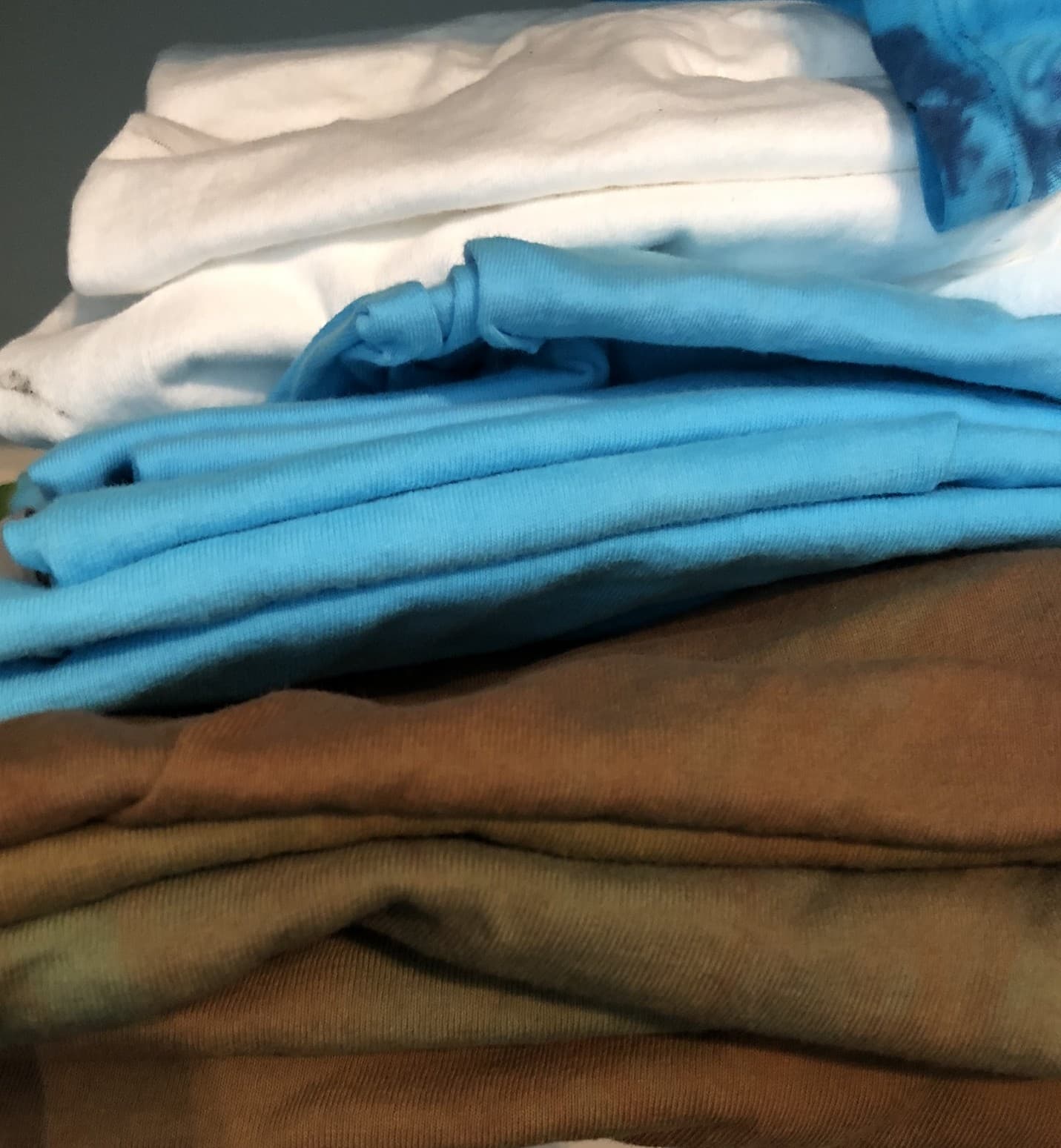
Farm rooted clothing · Est. 2005
The guides are free. The shop is the business.
Sun & Rain Works is a small apparel outfit in Eugene, Oregon, with agricultural roots and a slow path toward farming. The 1943 leaders' handbook you just read comes from the same place as the shirts.