
Oven drying the surplus
Issued in August, when the glut arrives. The preserving method that needed no jars, no sugar and no pressure canner, and the one that has become harder to do since, because of the ovens.
What this is. A folded 12-page leaflet issued by the Bureau of Human Nutrition and Home Economics at the U.S. Department of Agriculture as series AWI-59 in August 1943, covering thirty-nine fruits and vegetables from apples to turnips. Scanned by the National Agricultural Library and hosted at the Internet Archive.
The scan is damaged, and it matters here. This is a fold-out, and the scanner flattened its columns into one stream: passages appear twice, once in order and once in fragments, and the big drying table has come apart, headings float free of their rows, fractions read as “1M” and “y2”, and several crops have lost the line naming them. We quote only the rows that survive whole, and the annotation on yields says which those are. Reconstructing plausible numbers for a table about preserving food is precisely what this archive exists not to do.
How we transcribed the rest. The prose reads cleanly enough. “Hd” for “lid”, “Httle” for “little”, “shced” for “sliced”, “occasionaUy”, all repaired, and nothing else. Everything in a quoted block is the USDA's; everything beneath it is ours.
The one method that got harder
Canning needed jars, rings, sugar and a burner running for hours, all of which were rationed, scarce or both. Drying needed an oven, some soft lumber and a length of curtain netting. This leaflet is the campaign's answer for the household that had a surplus and none of the equipment.
Almost every word of it still works. The exception is the temperature, and the reason is an appliance rather than a technique: the leaflet wants 150°F, a gas range with a pilot light could hold 150°F, and a great many modern ovens will not go below 170°F at all. A method that assumed the commonest kitchen equipment of 1943 now assumes equipment a modern kitchen may not have.
One practice has genuinely been dropped, burning sulfur under a box to keep light fruit from browning. The leaflet's own alternative is what survived it.
- 01
Never leave it unattended
Still holdsOven drying is a watchman's job. Never go off and leave food drying in an oven. Gas pressure may change. If trays should catch fire, turn off the heat and close the oven door.
Every clause of this is still right, and the last one is the part worth memorising because the instinct runs the other way. A fire in an oven goes out when it runs out of air; opening the door to look feeds it. Turn off the heat, shut the door, leave it shut. The trays in question are wood and cotton netting sitting in a hot box for most of a day, which is why the leaflet raises it at all, a modern electric dehydrator has neither the fuel nor the fluctuating gas pressure, and this is one of the few places where the newer appliance is straightforwardly safer.
- 02
150°F, and why your oven may not manage it
Mostly holdsUsual drying temperature is 150° F.
Modern home-drying guidance runs a little cooler than this, broadly 130–140°F depending on the crop, and the reason is case-hardening: too much heat sets the outside of a piece while the middle is still wet, and the result looks perfectly dried and then spoils in the jar. But the practical trap today is the opposite of the 1943 one. A gas range with a pilot light could sit at 150°F; a great many modern ovens have a floor of 170°F or above, which is why oven drying now generally requires the door propped open, something the leaflet also instructs, for airflow rather than for temperature. Check what your oven's lowest setting actually is before buying trays.
- 03
You need a thermometer
Still holdsWithout a thermometer it is almost impossible to control temperature in oven drying. Any deep-fat, candy, dairy, or oven thermometer will do, provided it registers below 150° and up to 250° F. or higher.
Unchanged, and the reason has not improved with digital displays: an oven's dial reports what the thermostat was asked for, not what the cavity is doing, and being 25 to 50°F out is ordinary rather than a fault. At baking temperatures that error is absorbed. At drying temperatures it is the difference between drying the food and cooking it. A separate thermometer sitting on the tray is still the only way to know.
- 04
Sulfuring
SupersededThe sulfur — 1 level teaspoon per pound of prepared fruit — is wrapped in paper and put in a discarded dish or pan beside trays. The paper is lighted and the box set snug against ground over trays and dish to prevent loss of sulfur fumes.
Burning sulfur produces sulfur dioxide, which is why the leaflet is emphatic that this happens outdoors and under a box. It works, sulfured fruit keeps its colour and retains more vitamin C and carotene than untreated fruit, and it has still been dropped from home guidance, because a minority of people, concentrated among asthmatics, react to sulfites badly enough that the FDA moved in the 1980s to restrict their use on fresh produce and require them to be declared on labels. Home practice replaced it with the leaflet's own alternative: an acid dip. Lemon juice, or ascorbic acid in water, before the food goes on the tray. Less effective on colour, and it does not require setting fire to anything in the garden.
- 05
The star next to sweet corn
Still holdsIf there's a star on the list, it's dried sweet corn because of its good flavor and because corn is the hardest vegetable to can successfully at home.
Both halves have survived eighty years intact. Corn is low-acid and packs densely, so heat penetrates the middle of a jar slowly and unevenly, it needs a pressure canner, exact timings, and it is one of the foods that turns up repeatedly in botulism case reports when those timings are missed. Drying removes the problem instead of managing it: no water, no anaerobic jar, nothing for the organism to grow in. The flavour claim is not marketing either. Dried sweet corn concentrates rather than dulls, which is why it has outlived the campaign as a regional speciality in Pennsylvania.
- 06
What not to dry
Still holdsHome drying doesn't suit lettuce, melons, cucumbers, radishes. Asparagus can be dried, but is not so good as most dried vegetables.
The list is right and the principle behind it is worth extracting, because it is the one the leaflet leaves implicit. Drying concentrates whatever is not water. A crop that is almost entirely water with very little structure or flavour dissolved in it has nothing left to concentrate, you get a fragment of tissue that does not rehydrate into anything resembling what you started with. Lettuce, cucumber and radish are the clearest cases in the vegetable garden, and all three are crops better answered by sowing a short row every fortnight than by trying to store them.
- 07
The knife
Still holdsPare with as sharp a knife as you have with a blade of stainless steel, glass, plastic, or silver — so foods won't be discolored.
True, and now largely obsolete for a reason that has nothing to do with whether it is true. Iron from a carbon-steel blade accelerates the enzymatic browning that begins the moment a fruit is cut, so the same apple pared with two different knives browns at two different rates. The advice faded from home guidance because carbon-steel kitchen knives did, a modern kitchen is stainless by default and the problem solved itself. Worth knowing if you have inherited a carbon-steel knife and wondered why the fruit goes grey.
- 08
Bone dry is not dry
Mostly holdsCool the food, then package at once. Foods that seem “bone dry” may be spoiled by dampness in storage. Insect saboteurs can enter tiny cracks in a seal or seaming.
The observation is exactly right and modern practice has added two steps in front of it. Conditioning: pack the cooled food loosely in a jar for a week to ten days and shake it daily, so moisture equalises between pieces, if condensation appears on the glass, it was not dry and goes back in the oven. Pasteurising: forty-eight hours in a freezer, or a short spell at low heat, to kill insect eggs already in the food before it is sealed. The leaflet's own version of that second step is reactive, reheat if you later find moisture, where the modern one is done once, at the start, on everything. As for “insect saboteurs”, that is a wartime leaflet reaching for the war in a paragraph about pantry moths.
- 09
How long it keeps
Mostly holdsProperly dried and stored, most vegetables keep well about 6 months. Tomatoes and mushrooms are exceptions; use within about 3 months. Fruits well dried keep a year or longer.
Comparable to modern figures, with one assumption the leaflet does not state: those numbers are for a cool, dark store. Dried food keeps roughly twice as long at 60°F as it does at 80°F, so a jar in a heated modern kitchen is on the short end of every figure above while the same jar in an unheated pantry is on the long end. The leaflet's own storage instruction, dry, cool, dark, and a blackout for glass jars, is the missing half of its shelf life table.
- 10
Save the soaking water
Still holdsSoak dried foods in just enough cold water to cover, and just until food is plump... Use same water for cooking as for soaking.
Still the instruction, still routinely ignored. Vitamin C and the B vitamins are water-soluble and a good deal of the mineral content goes the same way, so the soaking water holds a real fraction of what you spent a day drying to keep. Pouring it down the sink discards the argument for drying the food in the first place. The related instruction, just enough water to cover, is there for the same reason: less water, less to lose.
- 11
The arithmetic of drying
Still holdsAn oven can take 4 to 8 pounds — preferably 6 — of a prepared fruit or vegetable at one drying load. It takes most of a day for the load to dry.
Set that against the yields printed at the back and the leaflet quietly tells you what drying is for. Of the rows that survive the scan legibly, 18 lb of corn gives 2½ lb dried, 8 lb of peas gives about ¾ lb, 14 lb of tomatoes gives about ½ lb, and 3 lb of greens gives about ¼ lb, somewhere between seven and twenty-eight to one, depending on how much water the crop was carrying. A full oven, all day, for well under a pound of food. That is not a way to feed a household through a winter, and the leaflet's title does not claim it is: it is a way to save a surplus that would otherwise rot, which is a much smaller and much more honest promise. The rest of that table is illegible in the scan and we have not guessed at it.
A surplus is a planning problem first
A full oven, running all day, yields well under a pound of dried food. Drying rescues a glut; it does not undo one. The cheaper fix is upstream, sowing a short row every fortnight rather than the whole packet in April, which is what the crop guides and the sowing calendar are for.
More from the archive
We're working through the USDA's victory garden material and marking what still holds. Occasional notes from Eugene, Oregon, an art business with agricultural roots, working its way toward farming.
We'll email you to confirm before sending anything. After that, occasional seasonal notes from Sun & Rain Works, we won't share your address, and every email has an unsubscribe link.
Source: Bureau of Human Nutrition and Home Economics, U.S. Department of Agriculture, “Oven Drying: One Way to Save Victory Garden Surplus”, series AWI-59, August 1943. Digitised by the National Agricultural Library; archive identifier ovendryingoneway59unit. Public domain as a work of the U.S. federal government. Annotations are our own and are not endorsed by the USDA. Nothing on this page is food-preservation guidance, for current instructions consult the National Center for Home Food Preservation or your state extension service.
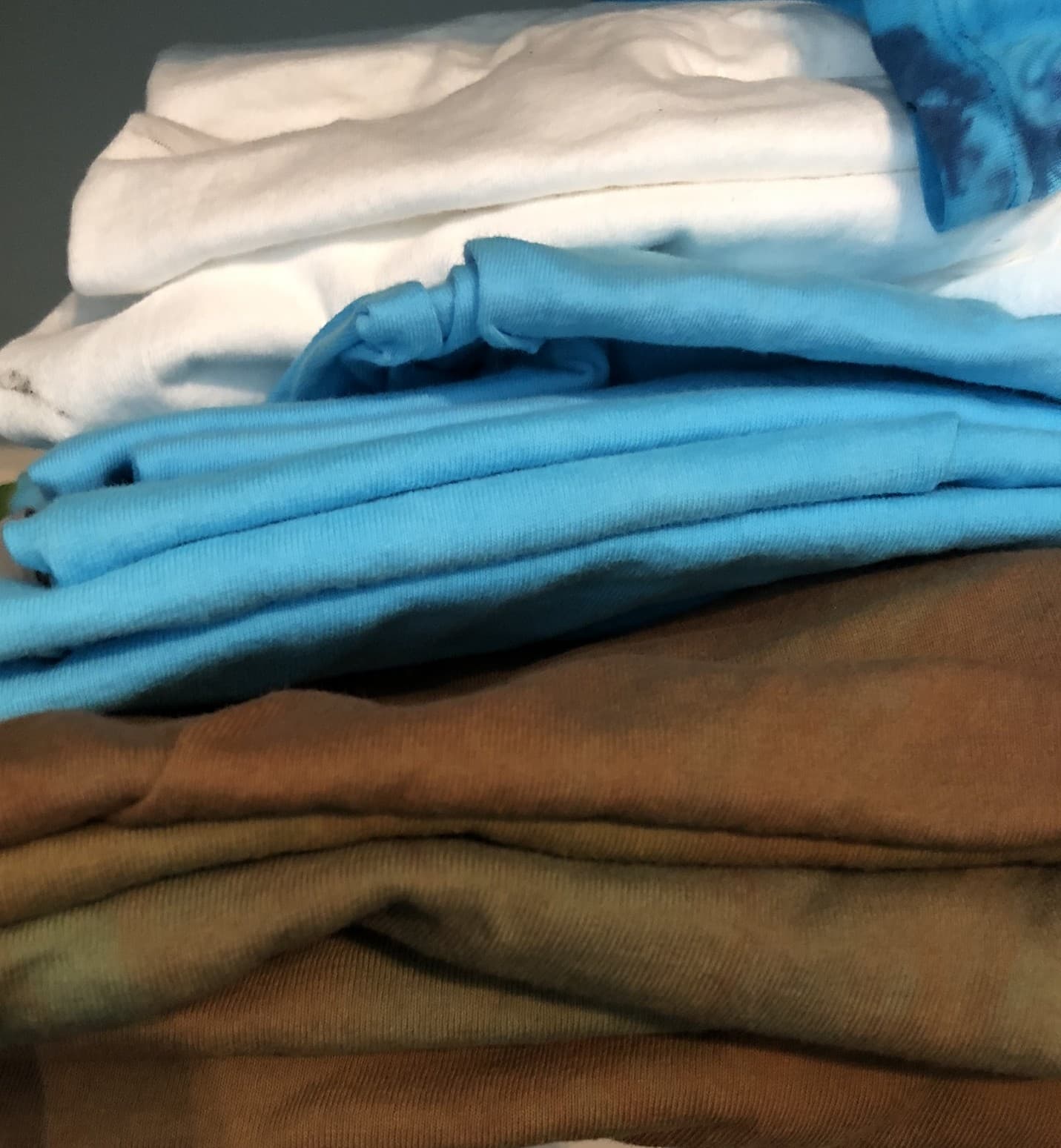
Farm rooted clothing · Est. 2005
The guides are free. The shop is the business.
Sun & Rain Works is a small apparel outfit in Eugene, Oregon, with agricultural roots and a slow path toward farming. The 1943 preserving leaflet you just read comes from the same place as the shirts.