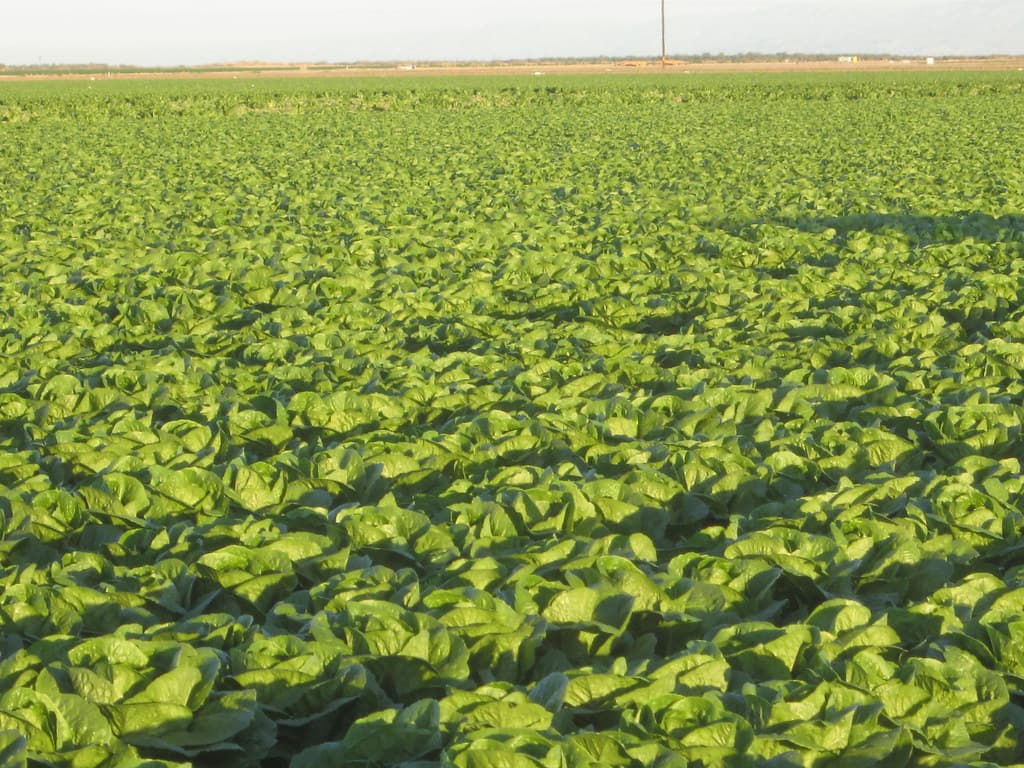
The 1944 Victory Garden Program
Twenty million home gardens had just produced 40 percent of America's fresh vegetables. So the government raised the target and started talking about yield.
What this is. A 6-page program statement from the Inter-Department Victory Garden Committee, chaired by H. W. Hochbaum and issued through the Extension Service, War Food Administration on January 20, 1944. Scanned by the National Agricultural Library and hosted at the Internet Archive.
Why we can publish it. It is a work of the United States federal government and therefore not subject to copyright. The contributing library states the item is not in copyright.
A heavier transcription caveat than usual. This scan is much worse than the others in the archive, a mimeographed typescript photographed at an angle, where whole phrases dissolve into noise and the chairman's own name comes out as “Hy My Hochbatn, Ghaiepan”. Repairing that would be guesswork rather than artefact correction. So the quotations below are restricted to passages whose wording is unambiguous, and several otherwise interesting sentences are left out for that reason rather than an editorial one. Ellipses mark omissions. Two figures, the national canning total and a percentage in a vitamin C study, are garbled beyond safe repair and are described rather than quoted.
The year the campaign had numbers
The 1943 program had to argue that home gardens would work. This one opens with the result, and the result was extraordinary enough that the whole tone of the document changes.
With recruitment largely solved, the advice turns to yield: bigger plots, longer seasons, better soil preparation, and keeping space-hungry crops out of small gardens. It is the most practical of the annual programs, and the sentence about fertilizer is the best in the series.
- 01
What the first year actually produced
Of its timeLast year, 20 million Victory Gardens … produced some 8 million tons of food. This is enough food to fill 160,000 freight cars, or 800 Liberty ships loaded with 10,000 tons each. It is 40 percent of the total fresh vegetable production in the United States.
The number that justifies everything else in the document, and it is genuinely startling: home gardens supplied two fifths of the country's fresh vegetables. No modern food system has a comparable decentralised component. Note the units, freight cars and Liberty ships, not tons, because the argument for gardens was always partly about what would otherwise need moving.
- 02
Raising the target
Of its timeTwenty-two million Victory Gardens is the minimum goal set for 1944. About 16 million city, town, and suburban gardens would be involved.
Up from eighteen million the year before, and the growth is all urban. The 1943 program split its target six million farm to twelve million town; this one wants sixteen million non-farm gardens, which means the campaign had concluded the remaining capacity was in cities.
- 03
Getting to the plot
Of its timeThough convenience to home is most desirable, even that may need to be sacrificed. The gasoline shortage may require many to use busses, streetcars, or even bicycles.
A revealing constraint. Petrol rationing meant a community garden had to sit on a transit line or it would not be used, which is exactly the siting logic that determines whether an allotment site succeeds now, for cost and time reasons rather than rationing. The variable changed; the calculation did not.
- 04
How big is big enough
Mostly holdsA garden of only 500 square feet, though better than nothing, is small. Three or four times that size should be the goal on city gardens, and a half acre or more for farm gardens.
The reasoning holds, people consistently underestimate the ground needed to feed a family, but the numbers are pre-intensive. Fifteen hundred to two thousand square feet was a realistic target when rows were spaced for a horse and a hoe. Close spacing, raised beds and succession planting mean a well-run modern bed produces what took considerably more ground then. Aim at the yield, not the footprint.
- 05
What not to plant in a small plot
Still holdsPotatoes, sweetpotatoes, sweet corn, squash, and other space-taking crops should not be planted in small gardens - gardens of perhaps less than 1,500 feet. But on farms and wherever adequate garden space permits, these crops … should be grown.
Still the right triage, and the crops named are still the offenders. Sweet corn is the clearest case: it occupies ground for a whole season, must be grown in a block for pollination, and yields perhaps two ears per stalk. In a small plot the same ground under beans or greens produces several times the food.
- 06
Soil before fertilizer
Still holdsEarly and thorough preparation of the garden soil pays big dividends. Fertilizer will never make up for poorly prepared soil.
The best sentence in the document. Fertiliser corrects a nutrient shortage and nothing else, it cannot fix compaction, poor drainage, or a seedbed too rough for small seed to make contact with. Beginners reliably reach for the bag before the fork, and this is the corrective, stated in 1944 as plainly as anyone states it now.
- 07
Timing the weeding
Still holdsMuch better crops of finer vegetables will reward their labor if the weeds are eliminated while they are still small.
Weeds are cheapest to remove before they are worth removing. Pulled at seedling stage they come out with a hoe drawn through dry soil; left three weeks they have rooted among the crop and take hand work. The whole difference between a manageable plot and an abandoned one is usually a fortnight of this.
- 08
Getting ahead of pests
Still holdsInsect pests are much less of a "plague" if he eradicates them before they multiply or have a chance to do damage.
The principle survives intact even though almost every product recommended in this era does not. Scouting early and acting on small populations is the core of integrated pest management, which is what replaced the spray-on-a-schedule approach the campaign's other leaflets promoted. Same insight, minus the arsenic.
- 09
Eating from the garden
Mostly holdsThe Department of Agriculture says that everyone should eat from 4 to 7 servings of fruits and vegetables every day.
Word for word the same guidance as the 1943 program, which is worth noticing: the campaign kept its nutritional target fixed across years while everything else about it moved. The figure still sits close to modern advice, five a day lands inside this range, though the unit has changed from servings to cup-equivalents.
- 10
Which vegetables carry the nutrition
Still holdsBecause of the daily need for an adequate intake of the vitamins A and C, and the minerals, calcium and iron, far more reliance should be placed on green and leafy vegetables, yellow vegetables, and tomatoes in supplying these health-protecting elements.
The crop selection is correct and the reasoning is the modern one: choose by nutritional return rather than by yield or preference. Dark leafy greens remain the densest thing a small plot can produce, and they are also among the most expensive vegetables to buy, which makes them the best economic argument for a garden as well as the best nutritional one.
- 11
Nothing wasted, again
Still holdsNot one bit of garden or orchard produce should be allowed to go to waste. All surpluses from home gardens and orchards, or where available, local market surpluses of good-quality vegetables and fruits should be canned or otherwise preserved for use in homes, school lunches, or for welfare purposes.
Carried over from the 1943 program almost word for word, with orchards added. The repetition is the point, this was the instruction the campaign considered worth restating verbatim rather than rewriting. Modern food recovery works the same way and still finds fresh produce the hardest category to place.
- 12
Recruiting the leaders
Still holdsWe need men and women volunteers who will recruit gardeners, find ground for them, show them how to prepare it, hold garden schools, help gardeners to make garden plans …
A job description for a community garden coordinator, written before the role existed. Every item is still the work, and the order is right: find the ground before you recruit the people. Programs that recruit first and then go looking for land are the ones that lose their gardeners in the first season.
“Produce all summer and late into the fall”
The 1944 push for longer seasons runs into the one thing a national program could never supply: the dates. When to sow a fall crop, and how late is too late, depends entirely on where you are standing.
Find your frost dates →More from the archive
We're working through the USDA's victory garden material and marking what still holds. Occasional notes from Eugene, Oregon, an art business with agricultural roots, working its way toward farming.
We'll email you to confirm before sending anything. After that, occasional seasonal notes from Sun & Rain Works, we won't share your address, and every email has an unsubscribe link.
Source: Inter-Department Victory Garden Committee (H. W. Hochbaum, Chairman), “The 1944 Victory Garden Program”, Extension Service, War Food Administration, January 20, 1944. Digitised by the National Agricultural Library; archive identifier CAT31066120. Public domain as a work of the U.S. federal government. Annotations are our own and are not endorsed by the USDA.
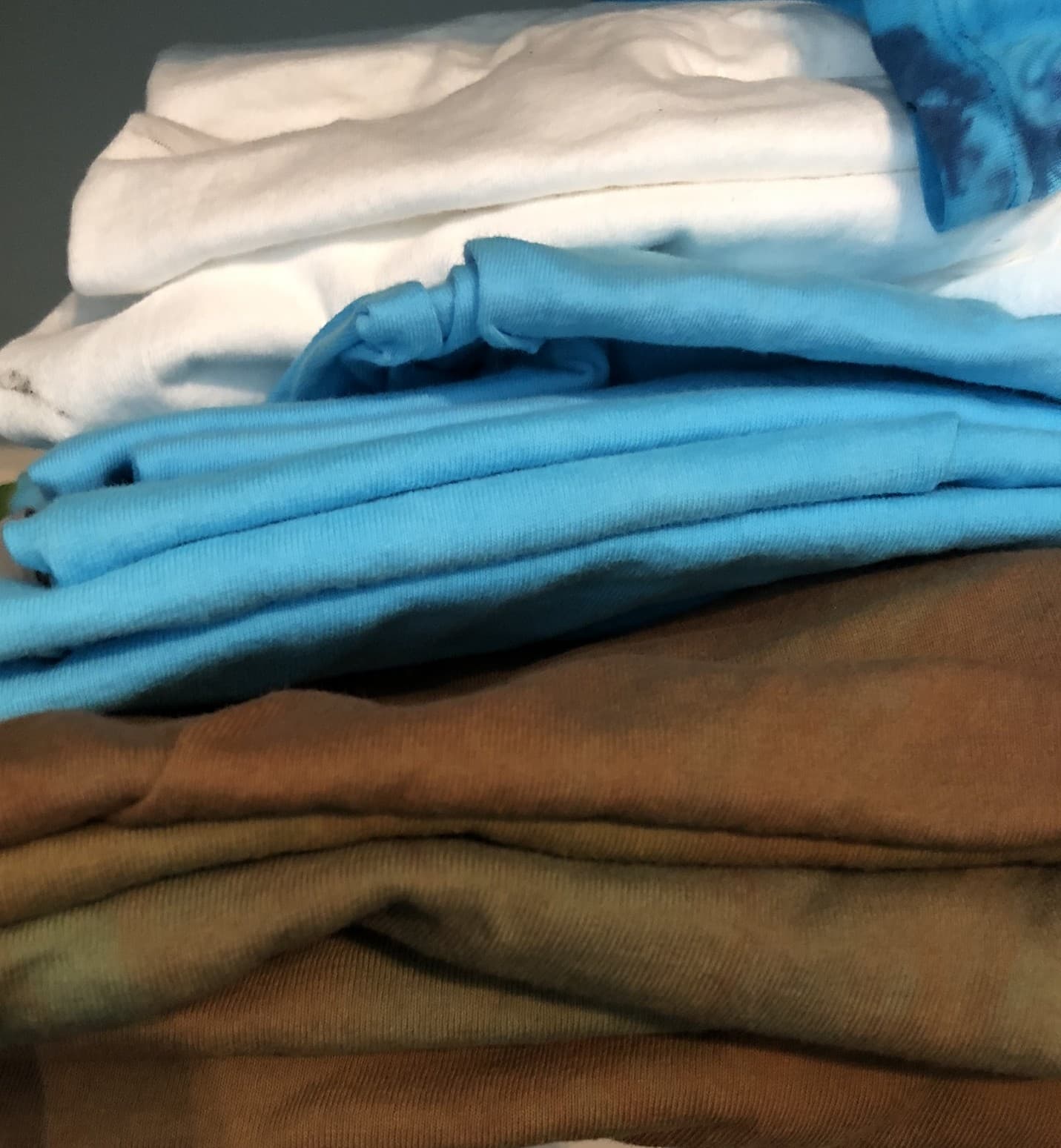
Farm rooted clothing · Est. 2005
The guides are free. The shop is the business.
Sun & Rain Works is a small apparel outfit in Eugene, Oregon, with agricultural roots and a slow path toward farming. The 1944 victory garden programme you just read comes from the same place as the shirts.