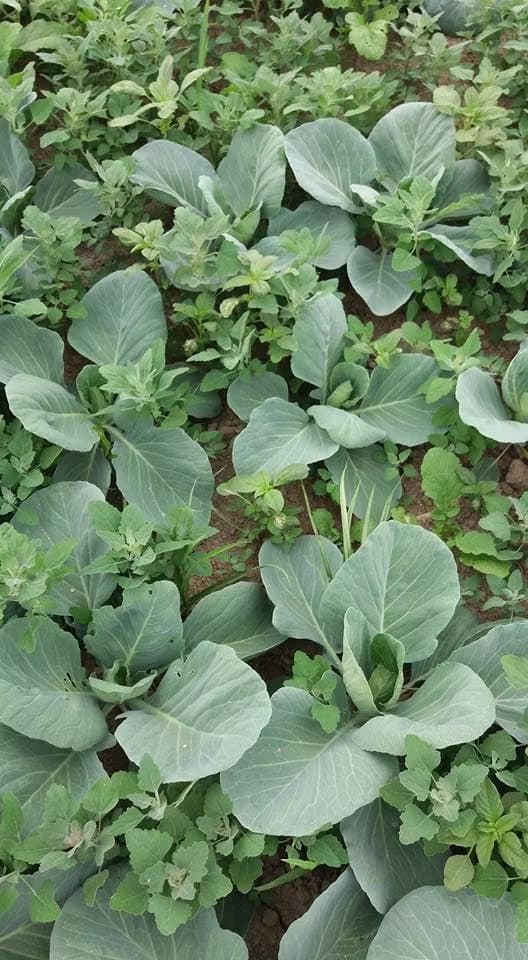
The Question Box
Nineteen broadcasts of listeners' letters, answered by USDA scientists across two growing seasons. The bulletins record what the Department wanted households to know. This is the only source that records what they were still asking.
What this is. 19 scripts from the USDA's Homemakers' Chat, broadcast between January 1943 and August 1944. Each ran about ten typed pages and answered three or four letters. Scanned by the National Agricultural Library and hosted at the Internet Archive, every script is listed and linked at the foot of this page.
Why it is one page and not nineteen. Question Box was a slot, not a publication. Any single script carries three unrelated answers, how deep to sow, why sugar went to distillers, how to clear a blocked sink, and read alone it is thin. Read together the run is the most useful thing in this archive, because it is the only source here that records what people actually got wrong. So every quote below carries its broadcast date, which is what makes it checkable against a specific scan.
Not all of it is gardening. We read all 19 and quote 7. The rest are listed anyway, because “read and took nothing” is a different statement from “not read”, and several are genuinely about ration points, sugar policy or a nutrition committee rather than a garden.
How we transcribed them. Typewritten on a mimeograph, and the worst machine reading in the archive: “TThat is compost?”, “oean plants” for “bean plants”, “oexly frost” for “early frost”. Repaired, and nothing else, no wording or spelling has been modernised. Everything in a quoted block is the USDA's; everything beneath it is ours.
What people were still asking
A bulletin tells you what an agency decided a household needed. A mailbag tells you what the household did with it. These nineteen scripts are the second thing, and the questions in them are recognisably the questions people ask now: how deep does seed go, why are my carrots forked, when are the onions ready, what do I do if frost comes early.
Most of the answers have aged extremely well. The one that has not is the one we care about most, a listener asking, in August 1943, whether she should save her own seed, and the Department telling her no.
- 01
Which vegetables are worth the ground
Still holdsHigh on the list, for food value, are tomatoes, cabbage, chard, kale, and beet greens. All these are easy to grow. Other good vegetables for nutrition are limas, snap beans, carrots, green lettuce, spinach, and turnips. Potatoes, sweetpotatoes, and sweet corn are excellent for energy, and have other values, but they take a great deal of growing space.
The reasoning is the one a home gardener should still use, and it is not really about nutrition, it is about nutrition per square foot. Potatoes and sweet corn are not being demoted for being poor food; they are being demoted for occupying ground all season and being cheap in the shops. Worth noticing which crops top a federal list in 1944: chard and kale, both of which spent the 2010s being sold to us as discoveries.
- 02
Parsley is food, not decoration
Still holdsYou'll probably want to include parsley — it's rich in vitamin A and vitamin C, so put it right into foods, where it'll be eaten, instead of using it as a garnish to be left on the plate.
Still true and still ignored. Parsley is one of the densest sources of vitamin C in the garden by weight, and the reason nobody counts it is that the standard serving is a sprig pushed to the side of the plate. The 1944 fix, chop it into the dish, costs nothing and is the whole of the advice.
- 03
What compost is for
Still holdsOrganic matter is necessary to maintain the life of soil. It helps any kind of soil to soak up and retain water — which is one form of insurance against summer drought. It holds fertilizing materials so that they can't readily get away, but instead are released when the crop needs them.
A clean statement of what organic matter does, and it names both halves: water-holding and nutrient exchange. What 1944 could not say is why, that clay and humus carry negative surface charges which hold positively charged nutrient ions against leaching, released as roots exchange hydrogen for them. The mechanism arrived later; the description of the effect needs no correction.
- 04
Never let the pile dry out
Mostly holdsFinish off the pile flat so it will slope down toward the center. In this way it will catch and hold rain water. Never allow your compost pile to get dry. Once a month, or so, take a spading fork and turn the whole pile, cutting from top to bottom, and give it a rather good soaking.
The dish-shaped top and the insistence on moisture are exactly right, and drying out is still the commonest reason a home pile does nothing for a year. The timing is a cold-composting schedule: two or three turnings over a year. Hot composting, turn weekly, keep the pile above a cubic yard, balance carbon against nitrogen at roughly 25 or 30 to one, finishes in months and kills weed seed, which the slow method does not. The layers described here are heavy on leaves and light on nitrogen, which is why it took them a year.
- 05
Don't burn the leaves
Still holdsDon't burn leaves or dead grass — put them to work to help make our food supply go farther — by putting 'em in your compost pile.
A thrift argument in 1944 that has since become a legal one. Leaf and yard-waste burning is now restricted or banned across much of the country on air-quality grounds, and the Willamette Valley is one of the places where it is tightly controlled, because the same inversions that give us fog in November hold smoke at head height. The instruction is unchanged; only the reason for it has been added to.
- 06
Reading the plant instead of testing the soil
SupersededYou may have wished you could find some such device, or gadget, to help you in your Victory Gardening. Who wouldn't? There are no such things, of course... but there is no need to worry as far as using fertilizer is concerned. Your plants can tell you whether or not they are getting the proper amount of nourishment. If they are a sickly yellow color, the chances are, it's fertilizer that's needed.
The gadget they said did not exist is now a soil test through any state extension service, costs less than a bag of fertilizer, and reports pH and phosphorus and potassium rather than a guess. Which matters, because the diagnostic offered here is a bad one: a yellow plant is nitrogen shortage, or waterlogged roots, or root damage, or iron locked up by a high pH, and the last of those gets worse if you answer it with fertilizer. This is the clearest case in the archive of advice that was reasonable when the alternative was nothing.
- 07
Where the fertilizer goes
Still holdsThe most effective way to use the fertilizer is to scatter it in a band 3 or 4 inches wide and at least 2 inches from the row where the seeds or plants will go in... Of course, you know that fertilizer must never come in contact with the seed.
Banding beside the row rather than broadcasting over the bed is still the efficient placement, the roots find it, the weeds between rows mostly do not. And the warning is a real one with a real mechanism: concentrated fertilizer is a salt, it pulls water out of a germinating seed by osmosis, and the seedling dies of drought in wet soil. Two inches of separation is still about the margin quoted.
- 08
How deep to sow
Still holdsIn general, seed should be planted only deep enough to make sure that it is down in soil that is moist... In general the rule is to plant small seeds about a half inch deep and larger seeds an inch or even deeper.
Current, and the first sentence is better than the second. Depth is not a number, it is whatever reaches reliable moisture, which is why the same packet wants a different depth in April and in July, and in sand rather than in clay. The half-inch and one-inch figures are a fair default for a spring sowing into settled ground; in a dry August, sowing to moisture may mean twice that.
- 09
The best soil for carrots
Still holdsThe garden specialists say carrots produce misshapen roots, and don't yield well, in soil that's wet, clayey, heavy, stony or trashy... If your soil tends to form a crust at the surface, start the carrots by covering the seeds only about one-fourth inch deep with soil, and then cover the row with some fine material such as leafmold or peat.
Both the forked-root problem and the answer to the commonest carrot failure of all, which is not forking but a row that never comes up. Carrot seed is tiny, slow, and sown shallow; a rain followed by sun sets a crust the seedling cannot lift. Covering the row with something that will not crust, leafmould, sifted compost, vermiculite, is still the fix, and it is still the single most useful trick anyone can be told about carrots.
- 10
Don't manure the tomatoes
Still holdsOver fertilizing with manure, or other fertilizer rich in nitrogen, also causes the plants to “go to leaves” and produce little fruit... Work a handful of victory garden fertilizer into about a bucketful of soil at the spot where each plant will be set. Don't use manure.
Correct, and read it against the Department's own tomato broadcast of a year earlier, which told listeners tomatoes do best in ground prepared with plenty of rotted manure. Both scripts came from the USDA; they contradict each other on the same crop in the same campaign. This one is right: nitrogen in excess buys vegetative growth at the expense of fruit set, which is why a tomato in a well-manured bed makes a magnificent plant and very little dinner.
- 11
Navy beans are not worth the ground
Still holdsThe garden experts think dried beans, such as navy beans, aren't desirable for the average small victory garden. Compared with some of the other vegetables they yield a small amount of food, and anyway they're available all year round.
The value-per-square-foot argument again, and dry beans are still the crop it disqualifies hardest: they hold the ground the whole season, they are among the cheapest things in any shop, and a row that would give you weeks of snap beans gives you about one meal dried. Grow them for a variety you cannot buy, which is a good reason, rather than for the calories, which is not.
- 12
Lime and snap beans
Mostly holdsBeans do well on any good garden soil, but be sure you don't give them too much lime, as that is definitely harmful to snap beans.
The instruction is right, and the mechanism is worth having because it explains a lot of other garden trouble. Lime is not poisoning the beans; it is raising pH, and above roughly 6.8 manganese and iron drop out of availability. The plant starves for micronutrients in soil that contains plenty of them. Beans want about 6.0 to 6.8, which is also the range most of a vegetable garden wants, one more argument for testing before liming.
- 13
When onions are ready
Mostly holdsYou can be sure onions are growing as long as their tops stay upright. When the tops turn down and lose their green color, you can harvest your onions... Lay the onions, bulb and dry top, on a surface of the row for about a day. Then they are ready to store.
Still the signal, with one refinement and one warning. Wait until something like half to three-quarters of the tops have gone over on their own, rather than the first few. And do not bend them over by hand to hurry it, which was once widely taught: the tops fall when the neck softens, and forcing it early interrupts the bulb's own shutdown and shortens how long it will keep. A day on the row is the start of curing, not the end, two to three weeks somewhere dry and airy is what makes the difference between January and October.
- 14
Parsnips want the frost
Still holdsI hope this new gardener has some parsnips for she can leave these right in the garden row. Some of our old-time gardeners wouldn't tolerate using parsnips until they had had a few weeks of cold weather.
The old-timers were right and the reason is now well understood: cold triggers the root to convert stored starch into sugars as an antifreeze, and a parsnip lifted in September against one lifted after a hard frost are not the same vegetable. Carrots do a milder version of the same thing. We have no parsnip guide, the crop is on our list and blocked for want of an honest photograph, so for the moment this broadcast is the parsnip advice on this site, which is a fair illustration of what an archive is for.
- 15
Saving the garden from an early frost
Still holdsTomatoes, peppers and egg plants can be kept for two weeks or longer if brought in before damaged by the frost. The tomatoes may be used green or those nearly mature would probably ripen on a shelf or window sill... Some gardeners pull up the vine, leave the fruit on it, and hang in the basement for ripening.
All of it, including the vine trick, which is still recommended and still slightly startling to anyone who has not seen it done. Fruit at the mature-green stage carries what it needs to finish; what it wants is a cool room rather than a sunny window, because heat above about 75°F stops lycopene forming and you get an orange tomato instead of a red one. The frost date this all hangs on is the one thing a 1944 listener had to guess at.
- 16
Watch the pods, don't spill the beans
Still holdsShe should watch the pods after they are well filled with beans and pick them as they ripened but before the pods burst open and “spill the beans.” The pods will turn yellow or brown and begin to wither. They should be spread in a warm, dry place until thoroughly dry.
Exactly the modern instruction for dry beans, including the timing problem that makes them awkward: pods do not ripen together, and a pod left one week too long shatters and sows next year's volunteers. The practical addition since is what to do after drying, a spell in the freezer kills bean weevil eggs before the beans go into a jar, which is the same pasteurising step the oven-drying leaflet's readers now take.
- 17
Turnips after the beans
Still holdsYou can put the late turnips in the garden where snap beans grew. Your crop of snap beans will be about over when it's time for the late turnips to go in.
Succession planting, described as a matter of course rather than as a technique with a name. The pairing is a good one for a second reason the script does not give: beans are legumes and leave the ground in better nitrogen condition than they found it, and a leafy brassica following them is the crop best placed to use that. Rotation and succession happening to be the same move.
- 18
The Department says don't save seed
Mostly holdsUnfortunately, no. Horticulturists of the Department of Agriculture say it might be a good plan if it would work — but it won't, especially for those vegetables you named: carrots, beets, cabbage, kale, onions and turnips. Those vegetables, and a good many others, are biennial in their seeding habit. It takes two seasons of growth, with a winter rest in between, to get seed.
The biology is right, and it is the same biology our seed-saving page is built on: all six named crops are biennial, seed comes in the second summer, and for a household hoping to sow in 1944 it would have arrived a year late. The second argument, that seed might have crossed with a neighbour's and you would have no way of knowing, is also right, and is the isolation problem stated plainly. What does not follow is the conclusion the answer moves to, that the safe course is to buy from a reliable dealer every season. That was a true statement about a wartime household in a hurry, and it outlived the war to become the thing most gardeners now believe about seed in general. It is not true of beans, peas, lettuce or tomatoes, which are annual, self-pollinating, and about as difficult to save as remembering to leave one plant alone.
“It might be a good plan if it would work, but it won't”
The biology in that 1943 answer is correct and we use it: carrots, beets, cabbage, kale, onions and turnips are all biennial, and seed comes in the second summer. What does not follow is the conclusion, that the safe course is to buy fresh every year. That was true of a household in a hurry in wartime, and it outlived the war to become what most gardeners now assume about seed in general.
All 19 broadcasts
In order. Marked scripts are quoted above; the rest we read and took nothing from, which is worth saying rather than leaving them off the list.
Cleaning imitation leather · renewing ironer padding · ploughing now for a victory garden · a stopped-up sink drain
Whether herbs are worth garden space in wartime
- March 16, 1943Quoted
Which fertilizer to buy · seed beans and peas under rationing · how deep to sow · backyard chickens
- April 22, 1943Quoted
When to plant turnips and rutabagas · when to start a compost pile · what not to plant
Herbs in the victory garden · reheating canned tomatoes · making winter vegetables appetising in spring
Mixed household and garden questions
Whether to dust bean plants in damp weather
- August 5, 1943Quoted
Saving seed from the victory garden · fruit butter without sugar · brining snap beans
- February 1, 1944Quoted
Which vegetables for food value · when and how to plant berries · herbs in the victory garden
Whether water-bath canners will be manufactured this season
Second script of the same date, on the same canner question
- April 18, 1944Quoted
Which beans for a victory garden · how to plant tomatoes · the best soil for carrots · why a permit to burn brush
Finding your nutrition committee · what help it offers · regional food shortages
Sugar for canning · sugar for jelly sold at market · ration points on home-made products · why sugar goes to distillers
- June 14, 1944Quoted
What compost is · how to start a pile · how best to use fertilizer. The one broadcast given over entirely to soil.
Keeping the garden going · what to plant for storage · when to pick okra
Mixed garden questions
Mixed garden questions
- August 31, 1944Quoted
Knowing when vegetables are ready · drying beans without spilling them · saving the garden from an early frost
More from the archive
We're working through the USDA's victory garden material and marking what still holds. Occasional notes from Eugene, Oregon, an art business with agricultural roots, working its way toward farming.
We'll email you to confirm before sending anything. After that, occasional seasonal notes from Sun & Rain Works, we won't share your address, and every email has an unsubscribe link.
Source: U.S. Department of Agriculture, Office of Information, “Question Box”, Homemakers' Chat, 19 broadcasts 1943–1944. Digitised by the National Agricultural Library; archive identifiers are linked in the list above. Public domain as works of the U.S. federal government. Annotations are our own and are not endorsed by the USDA.
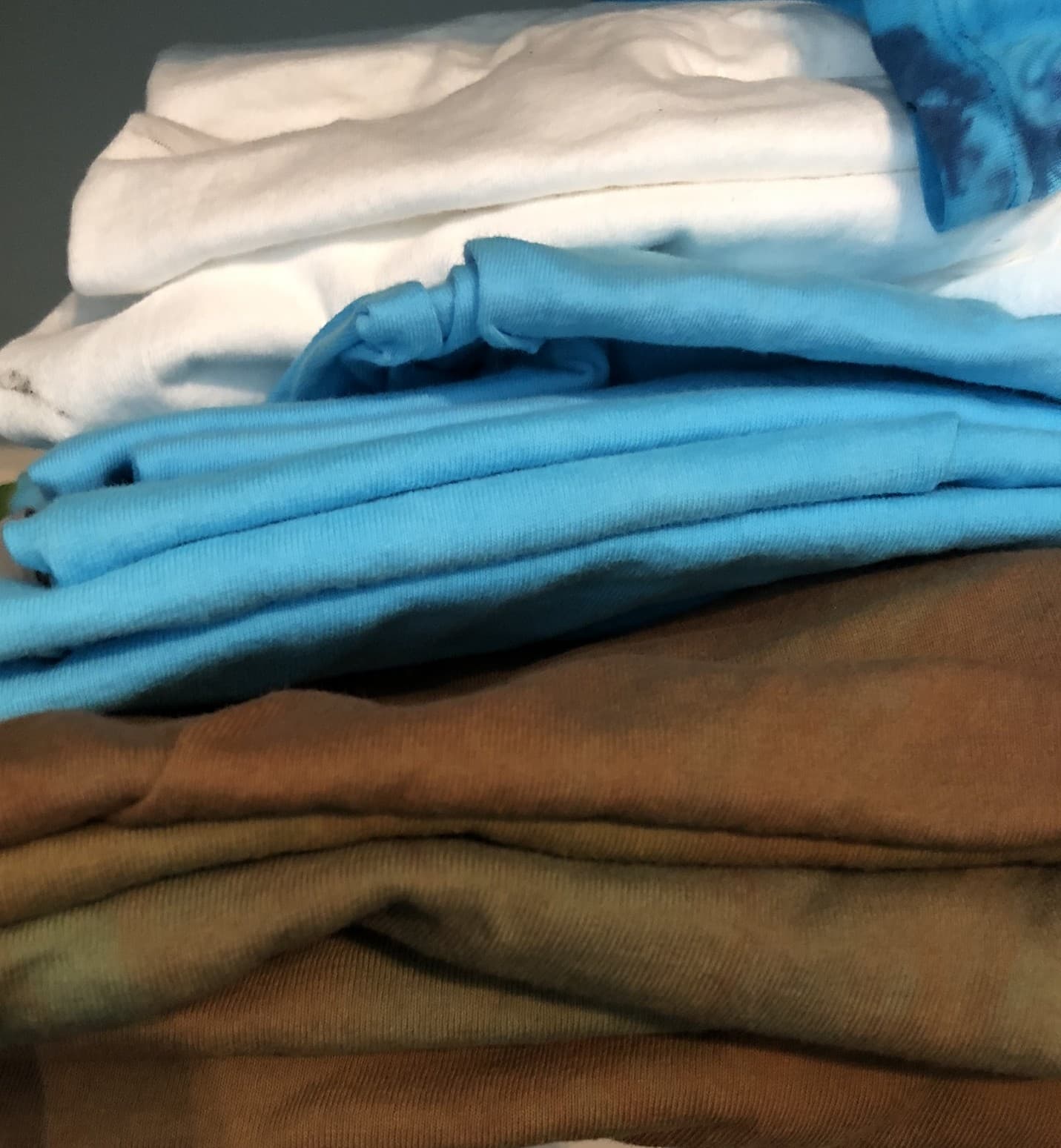
Farm rooted clothing · Est. 2005
The guides are free. The shop is the business.
Sun & Rain Works is a small apparel outfit in Eugene, Oregon, with agricultural roots and a slow path toward farming. The wartime radio programme you just read comes from the same place as the shirts.