
Saving the crop
Not how to can, but what to do instead, and what to do with what is still standing in October. Canning is the last resort here, not the default.
What this is. 4 USDA bulletins from 1943 and 1944, the preserving material that remained once the two “Canning Your Victory Garden” scripts had been recognised as Consumer Time episodes and moved to that page. We read all 4 and quote 4.
One of them proofread another page. The 1943 oven-drying item here is not a leaflet at all but a Farm and Home Hour interview about the oven-drying leaflet, whose fold-out scan is badly damaged and which this archive annotates separately. The interview states in clear speech two details we had to piece together from that wreckage. A broadcast about a document is an unusual way to check a transcription, and it worked.
How we transcribed them. That interview carries the worst character substitution in the archive, “VAI7 DEI'/IAxT” for “VAN DEMAN”, because the typist's W and M keys strike badly throughout. Elsewhere: “taoatoes”, “rhen” for “when”, “storpge”. Repaired, and nothing else. Everything in a quoted block is the USDA's; everything beneath it is ours.
Can last, not first
Canning is the most equipment-hungry, most fuel-hungry and most exacting way to keep food, and in 1943 the jars, lids, sugar and pressure canners were all rationed or scarce. So the Department told households to work down a list, store it, dry it, brine it, pickle it, and reach for the canner only for what was left.
That was forced by shortage. It is also, on the merits, the right order, and it is the opposite of how most people who own a canner behave. Onions, garlic, squash and roots keep for months in a cool corner with no processing at all.
The rest is the end of the season: which cabbage survives a frost and which does not, how to store a few bushels of roots with no cellar, and one claim about kale that turns out to be exactly right.
- 01
Can last, not first
Still holdsThe garden advisors of the U. S. Department of Agriculture say to limit canning this year to the garden products you can't preserve so well in any other way... You'll want to store some vegetables, put some in freezer-locker storage, dry others, and brine or pickle still others.
Forced by rationing and right on the merits. Canning is the most equipment-hungry, most fuel-hungry and most exacting way to keep food, and a good deal of a garden does not need it: onions, garlic, squash and roots keep for months in a cool corner with no processing at all, and several crops are better frozen or dried than boiled in a jar. The instruction is to work down that list and reach for the canner only for what is left, which is the opposite of how most people who own a canner behave.
- 02
The pressure rule, with the exception that closed
Mostly holdsTo can snap beans, lima beans, peas, and corn — in fact, all vegetables except tomatoes — the canning specialists recommend canning only under steam pressure. The reason is that certain spoilage organisms are not [destroyed at boiling temperature].
The rule is exactly current and the reasoning is right: vegetables are low-acid, botulinum spores survive boiling water indefinitely, and only the higher temperature a pressure canner reaches will destroy them. The exception is the part that has moved. Tomatoes were treated as acid enough to stand outside the rule, and current guidance no longer assumes that, acid is added to every jar regardless of method. Set out in full on the 1943 tomato script page, which carries a notice.
- 03
Open kettle, argued on nutrition
Mostly holdsMany people inquire about the “open-kettle” method of canning tomatoes, but the home economists say that tomatoes lose a great deal of vitamin C when you use this method... Housewives sometimes ask about saving tomatoes by making catsup and chili sauce. The nutritionists say it's all right to make these relishes in small amounts to add zest to your meals, but not to count on them as a source of vitamin C.
The conclusion survives and the argument for it has been replaced by a much stronger one. Open-kettle canning is rejected today because it is unsafe, hot food into a jar with no processing seals in whatever was already there, not because of vitamin loss. Reading the two together is instructive: in 1943 the Department was reaching for the nutritional objection, and by May 1944 it had switched to the safety one and was exasperated about repeating it. The relish point is still fair, though: long cooking with spices is not a way to keep vitamin C.
- 04
Confirming a reading from a damaged scan
Mostly holdsKADDERLY: You have to keep the heat pretty low, don't you, to dry fruits and vegetables right? VAN DEMAN: Yes, down around 150 degrees with the oven door propped open. And you need to keep the oven heat steady as well as low. It's surprising how easily fruits and vegetables will scorch as they're drying if the heat gets too high even for a short time.
This is a broadcast about the oven-drying leaflet annotated elsewhere in this archive, whose fold-out scan is badly damaged, and it independently confirms two things we had to piece together from that wreckage: the 150-degree working temperature, and the propped door. It also states plainly what the leaflet only implies, which is that the door is propped for temperature as much as for airflow. The caveat is the same as on that page: modern home-drying guidance runs cooler, and a modern oven often will not go this low at all, so the propped door has become mandatory rather than advisory.
- 05
Shift the trays
Still holdsKADDERLY: Well, it sounds to me as though you had to be a good watchman to dry food successfully in the home oven. VAN DEMAN: Right. A good clock watcher and a good mover. Every half hour you have to shift trays, to keep the food drying evenly. For vegetables, it takes from four to eight hours to dry them in a gas or electric oven. Fruits dry in about six hours.
Still necessary, and the reason is that a domestic oven is not an even box, the back is hotter than the door and the top hotter than the bottom, which in baking is absorbed and in an eight-hour dry is not. Rotate the trays and swap top for bottom every half hour or the top tray scorches while the bottom is still wet. The timings here are shorter than the leaflet's “most of a day”, which is a fair reminder that both are estimates and the dryness test is what actually decides.
- 06
One serving of kale
Mostly holdsFood specialists say one serving of turnip greens or kale will give us all the vitamin A we need for an entire day, and about a third of the vitamin C and calcium we need, and a fifth of the riboflavin and iron.
This page first called the claim simply correct, and said a serving carries several times a day's vitamin A. Checking it against USDA's own current figures shows something more interesting, and we were wrong. Raw kale is 4,812 IU of vitamin A per 100 g against the 5,000 IU daily allowance of the period, so in 1943's units the claim is almost exactly right. The same kale is 241 µg RAE against a 900 µg Daily Value today, which is 27 percent. Nothing about kale changed. The accounting did: in 2001 retinol activity equivalents replaced retinol equivalents and roughly halved the credit given to beta-carotene from food, and the claim fell with it. A second correction while we are here, we assumed cooking concentrated it, and boiled kale is lower than raw, at 146 µg, because boiling leaches. The vitamin C and calcium proportions in the quote hold.
- 07
Don't cut it up early
Still holdsJust remember when you're using cabbage — or any fresh vegetables or fruits — the vitamins escape rapidly once you cut or shred them, so don't prepare them too far ahead of mealtime.
Correct, and the mechanism is worth knowing because it explains several other kitchen rules at once. Cutting ruptures cells and releases enzymes that oxidise vitamin C, and every new cut surface accelerates it, which is why shredded cabbage loses more than a wedge, why a salad dressed and left is worse than one dressed at the table, and why the pre-cut vegetables sold for convenience are a genuine if modest nutritional trade. Cut late.
- 08
Half-grown cabbage takes the frost
Still holdsWhat can you do if you have a lot of late cabbage, that's only half grown, when frost hits the garden? Well, the garden specialists say that if cabbage is only half grown, it can stand quite a lot of freezing. It's the mature heads that can't take it. So just eat the half-grown cabbage as greens.
Counterintuitive and correct, and it rescues a crop most people write off. A mature cabbage head is dense and full of water, so a hard freeze ruptures the interior and it rots from the middle out, while a loose half-grown plant freezes and thaws without structural damage and goes on growing when the weather turns. The advice to eat it as greens is the right one: young cabbage leaves cook like collards, which is what they are.
- 09
Storing roots without a root cellar
Mostly holdsPeople who have only a few pecks, or bushels, can put them in bushel baskets, lined with old newspapers, and they'll keep for several weeks. In the garage, in a corner of the back porch, or in the basement. However, if you store root crops in the basement, be sure it's the coolest corner you can find.
The right answer for a household with no cellar, and the caveat about the basement is the one that decides it, a heated modern basement is far too warm, and the difference between forty degrees and sixty is the difference between March and Christmas. Damp matters as much as cold: roots stored dry go limp, which is why the traditional method packs them in moist sand or leaves. Newspaper in a basket is the version that requires nothing you do not already own.
- 10
Cut the tops off flush
Mostly holdsIn preparing these vegetables for storage — beets, carrots, turnips and rutabagas — cut the tops off flush with the top of the roots.
Right for three of the four and wrong for the first. Carrots, turnips and rutabaga want the top cut close, because any leaf left on draws moisture out of the root and the root goes soft. Beets are the exception every experienced grower learns the hard way: cut a beet flush and it bleeds, losing colour and keeping quality, so leave an inch or two of stem and do not trim the root tail. Twist the tops off rather than cutting if you can.
- 11
A parade of vegetables in uniform
Of its timeHave you ever thought about your fall victory garden as an army?... the beets, marching along in their dark red uniforms, the carrots and turnips in yellow, cabbages in pale green, tomatoes and peppers in bright red... The vegetable volunteers are carrying weapons — weapons we call vitamins and minerals — to help fight against the hidden hunger of malnutrition.
September 1943, and the campaign's rhetoric at full stretch: a nutrition broadcast staged as a military review, complete with battalions, uniforms and battle dress. It is easy to smile at and worth noticing what it is doing, “hidden hunger” was a real public-health term of the period for deficiency disease in people who were not visibly starving, and the parade is a way of making an invisible problem into something a listener can picture marching past. The device is dated. The problem it was addressing was not.
“Let nothing go to waste”
Storing, drying and brining come first because the equipment for them is a basket and a cool corner. The crop guides carry the same order forward, grow what keeps, and process only what will not.
All 4 bulletins
In order, each linked to its scan. Every one of them is quoted above.
- May 14, 1943Quoted
Hamlet on the canning question. Which crops are worth a jar and which are better stored, dried or brined, plus why open-kettle tomatoes cost you vitamin C.
- June 29, 1943Quoted
A Farm and Home Hour interview about the oven-drying leaflet, which independently confirms two details our copy of that leaflet had lost to a bad scan.
- September 22, 1943Quoted
The autumn garden reviewed as a military parade, vegetable by vegetable, with the nutrition presented as weaponry. Contains one genuinely accurate claim about kale.
- October 4, 1944Quoted
The last of the season: which cabbage survives a frost and which does not, and how a city gardener with no root cellar stores a few bushels of roots.
More from the archive
We're working through the USDA's victory garden material and marking what still holds. Occasional notes from Eugene, Oregon, an art business with agricultural roots, working its way toward farming.
We'll email you to confirm before sending anything. After that, occasional seasonal notes from Sun & Rain Works, we won't share your address, and every email has an unsubscribe link.
Sources: U.S. Department of Agriculture, 4 bulletins and broadcasts 1943–1944. Digitised by the National Agricultural Library; archive identifiers are linked above. Public domain as works of the U.S. federal government. Annotations are our own and are not endorsed by the USDA. Nothing on this page is home-canning guidance, for current instructions consult the USDA Complete Guide to Home Canning or your state extension service.
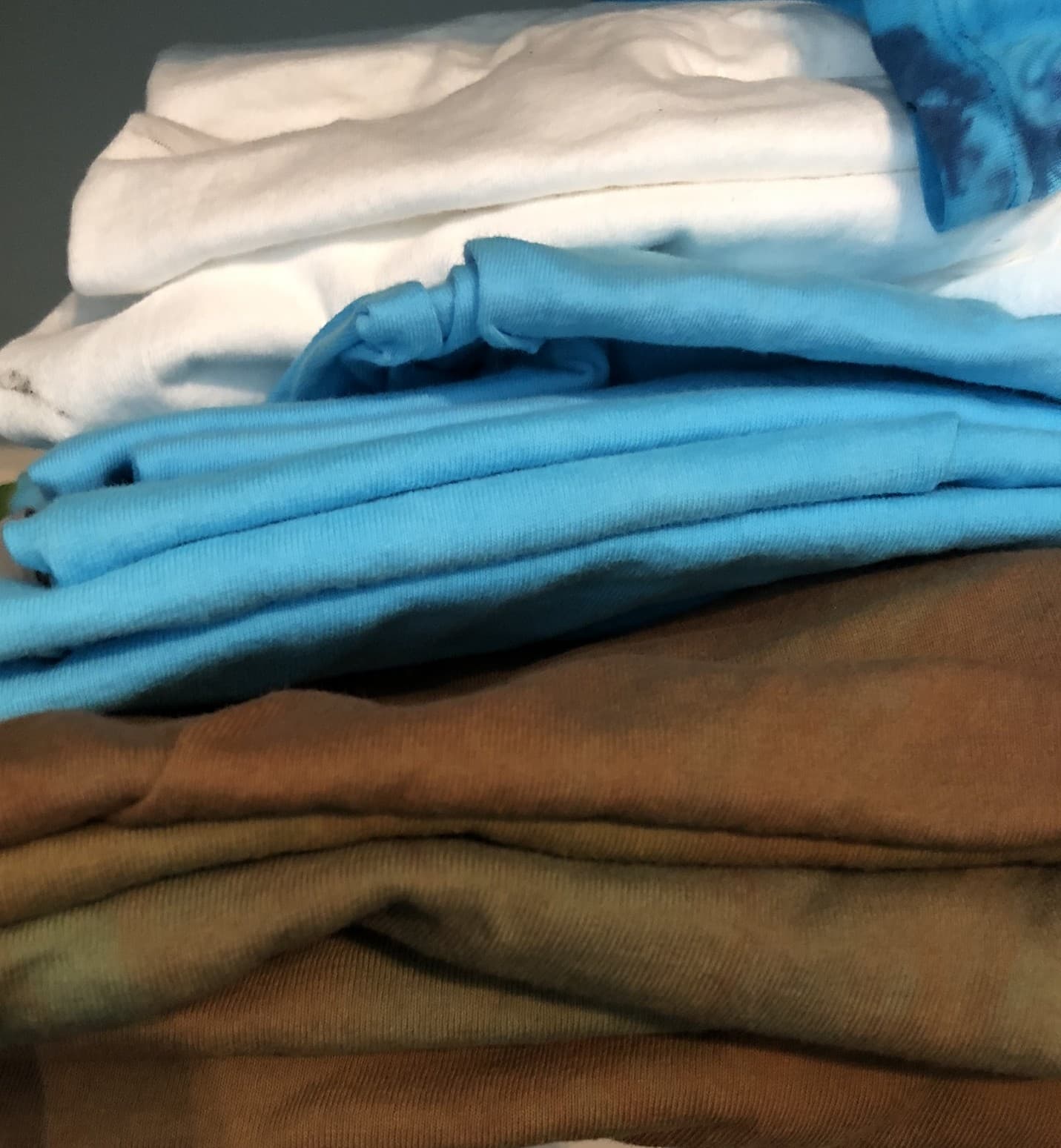
Farm rooted clothing · Est. 2005
The guides are free. The shop is the business.
Sun & Rain Works is a small apparel outfit in Eugene, Oregon, with agricultural roots and a slow path toward farming. The wartime garden bulletin you just read comes from the same place as the shirts.