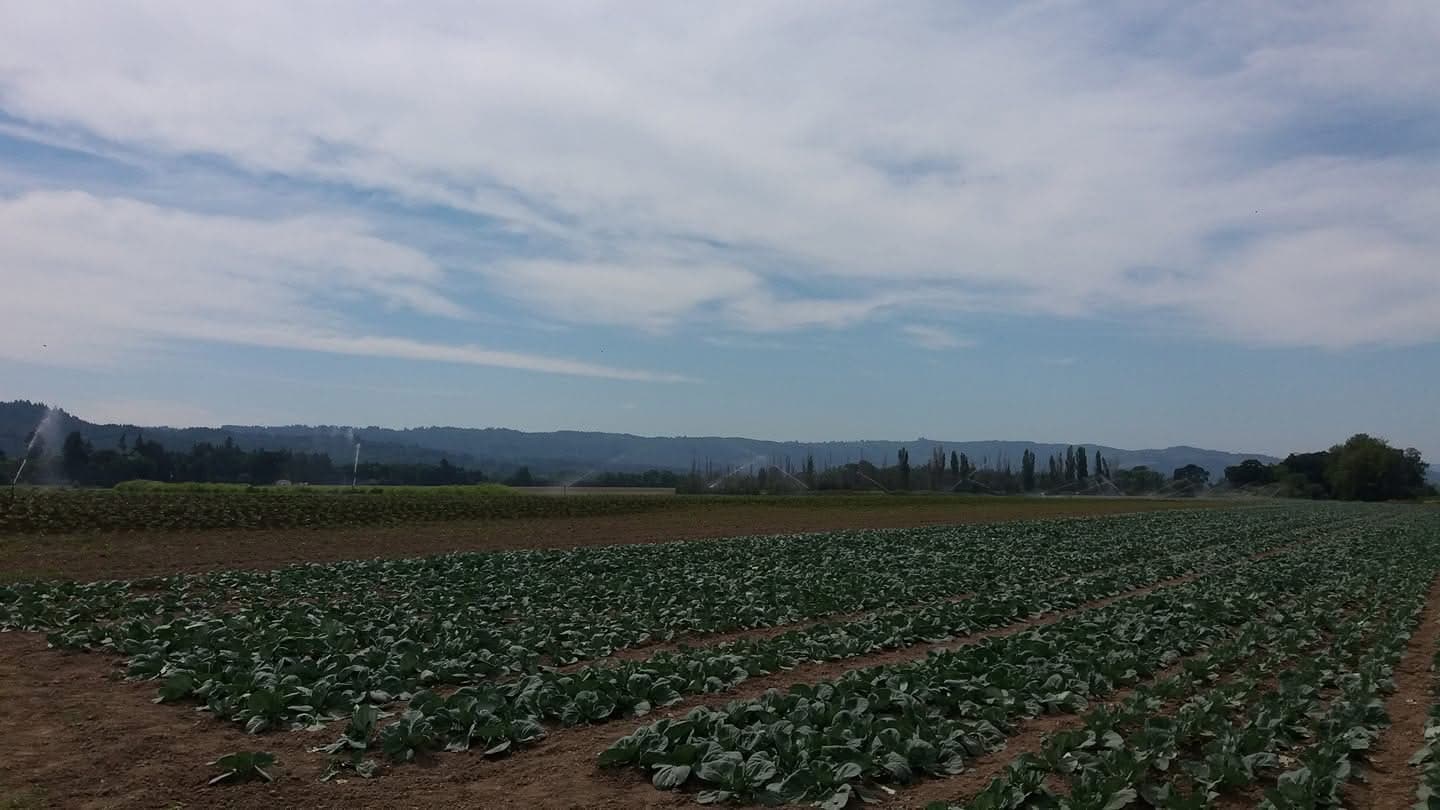
Victory Garden Tomatoes
Fifteen minutes of radio, broadcast a fortnight before most of the country could plant. Nine tenths of it would be printed unchanged today. The tenth is the reason this page opens with a warning.
Read this first
Do not follow this script's canning advice
Do not use this script as canning instructions. It tells listeners that tomatoes need no pressure canner and can go into a boiling-water bath like fruit, with nothing added. That was the federal recommendation in 1943 and it is not the federal recommendation now. Current USDA guidance requires acid to be added to every jar of tomatoes, bottled lemon juice or citric acid, in a measured amount per jar, whichever method you then use, because tomato varieties, ripeness and growing conditions all move the fruit's pH and it cannot be assumed to stay below the 4.6 threshold that prevents Clostridium botulinum from growing. Botulism from home-canned tomatoes is rare precisely because that step was added. We have not reproduced the script's processing times. For current instructions use the USDA Complete Guide to Home Canning or your state extension service.
What this is. A 10-page Homemakers' Chat script from the U.S. Department of Agriculture, Office of Information, drawing on the Department's plant scientists and broadcast on Monday, April 12, 1943. Scanned by the National Agricultural Library and hosted at the Internet Archive.
The first single-crop document here. Everything else in this archive addresses a garden. This one addresses one plant, which is what makes it a fair test of how the advice aged, there is nowhere for a general instruction to hide.
How we transcribed it. A typewritten script, so the machine reading is worse than the printed bulletins: “GAED2D1J” for “GARDEN”, “natter” for “matter”, “freeh” for “fresh”, “veather” for “weather”. Those are repaired. “Spindling” and “catsup” are the typist's own and stand. Everything in a quoted block is the USDA's; everything beneath it is ours.
The growing held. The preserving did not.
Bury the spindly stem. Set plants out in the cool of the evening. Water the ground rather than the leaves. Blossom-end rot comes from uneven watering. Put a paper collar round each plant against cutworms. Every one of those is current advice, given here in April 1943 in almost the words an extension service would use now.
Then the script tells a household that tomatoes are acid enough to can like fruit, in a water bath, with nothing added. That was the federal recommendation at the time. It has since acquired a step, and the step is not optional.
What makes the document worth keeping is that both halves came from the same building on the same day. Advice does not age evenly, and knowing which parts moved is the whole reason to read an old bulletin rather than admire it.
- 01
Grow tomatoes before anything else
Still holdsNo matter how small your garden is... no matter what other vegetables you have to slight... no matter if you have only a flower border to grow them in.... be sure to have tomatoes.
Still the right first crop, though for a reason the script does not give. Tomatoes are near the top of any list by value per square foot, but the stronger argument now is that tomatoes are the crop where homegrown and shop-bought are least alike: supermarket fruit is picked at the mature-green stage and ripened with ethylene so it survives shipping, which fixes the colour without ever developing the sugars and volatiles. Almost nothing else in a garden beats its supermarket equivalent by that margin.
- 02
How many plants
Of its timeThe answer is: Anywhere from a dozen to 15 plants for each member of your family. Have some early-variety tomatoes and some intermediate or late variety. That will give you tomatoes all season long.
Forty-eight to sixty plants for a family of four, which sounds absurd until you notice what the script is budgeting for. This is not an eating figure, it is a canning figure, enough fruit to carry a household through to the following spring, in a year when canned goods were rationed. For fresh eating alone the modern rule of thumb is two or three plants a person. The staggering advice underneath it is untouched: early and late varieties together are still how you avoid a single overwhelming fortnight and nothing either side of it.
- 03
Tomatoes as a vitamin C source
Of its timeTomatoes rank up at the top of the list for vitamin C. Ripe or green, fresh or canned, tomatoes are rich in C.
As a ranking this is wrong and was wrong then: a raw tomato carries roughly 14 mg of vitamin C per 100 g against about 89 mg for broccoli and well over 100 mg for a sweet pepper. As a wartime argument it is sound, and the difference is the word canned. Tomatoes are acid enough that a large share of their vitamin C survives processing and storage, which is not true of most canned vegetables, so with citrus scarce and shipping rationed, tomatoes were the vitamin C you could actually still be eating in February. The claim is about logistics wearing the clothes of nutrition.
- 04
Bury the stem
Still holdsSet the plants fairly deep, 3 or 4 inches in the ground. The best are stocky bushy plants, 6 to 10 inches high. If your plants are long and spindling, bury part of the stem along with the roots. That will make stronger plants because new rootlets will come out along the buried stem.
Completely current, and the single most useful sentence in the script. Tomato stems carry dormant root initials the whole length, so buried stem becomes root, which is why a leggy transplant is a recoverable problem rather than a wasted one. Strip the leaves off whatever you bury. The reason this is worth calling out is that it is nearly unique: bury a brassica or a squash to the same depth and the stem rots. Tomatoes and their close relatives are the exception, not the rule.
- 05
When to set plants out
Still holdsBe sure all danger of frost is past before you set plants out in the garden. Tomatoes like it warm rather than wintry. But set them out in the cool of the evening or on a cloudy day so they can establish themselves before they have to take the sun.
Both halves still stand, and the second is the one people skip. A transplant has lost most of its root hairs and cannot yet replace the water its leaves are losing, so an evening or overcast planting buys it a full dark period to recover before it has to face a sunny afternoon. West of the Cascades the binding constraint is usually soil temperature rather than frost, a tomato set into cold ground sulks for a fortnight and is overtaken by one planted a fortnight later.
- 06
Paper collars against cutworms
Still holdsGuard against them by putting a paper collar around each tomato plant as you set it in the garden. The paper collar should go down into the soil and also stand 2 or 3 inches above ground.
Still the standard control, and the dimensions given are the right ones, the collar has to go below the surface, because a cutworm reaches the stem from underneath, not over the top. Worth reading alongside the Department's own insect guide of the following year, which gives the same instruction for the same insect. Two USDA documents a year apart both landing on a strip of newspaper is a fair indication of how well it works.
- 07
Poison bait
SupersededThe best way to kill cutworms is with poison bait, but in a small home garden paper collars are easier.
The baits meant here were arsenical, and every one of them has since been withdrawn from garden use; arsenic does not break down, so ground treated with it stays contaminated. What is striking is the second clause. The script recommends the chemical and then, in the same sentence, tells a home gardener to use the piece of paper instead. Eighty years of integrated pest management arrived at the same ranking and dropped the first half.
- 08
Water the ground, not the plant
Still holdsSprinkling tomatoes is not the best way of supplying water to tomatoes. Sprinkling wets the leaves and fruit... is likely to encourage disease and crack the tomatoes. A better way to water is to run water into a furrow beside the plants, or run it directly into the soil from a pipe or hose.
This is drip irrigation, described in 1943 in the only vocabulary available. The reasoning is exactly the modern one: early blight and septoria leaf spot both need free water on a leaf to establish, and both arrive by splash from the soil, so overhead water does the spreading and the wetting in one action. Water at the base, water in the morning, and mulch to stop the splash, that last step is the only thing the script leaves out.
- 09
Blossom-end rot
Mostly holdsOne of the troubles in growing tomatoes is blossom-end rot. This is due mostly to an uneven supply of water. You can help avoid blossom end rot by keeping the soil evenly and moderately moist.
The advice is right and the diagnosis is incomplete in an interesting way. Blossom-end rot is a calcium failure at the far end of the fruit, but the soil almost always contains enough calcium, the problem is delivery. Calcium moves only in the transpiration stream, so a plant that swings between dry and flooded cannot get it into a fruit that is expanding fastest. That is why even watering fixes it and why the calcium sprays sold for it usually do not. The 1943 script names the lever that works without naming the mechanism, which is the better half to get right.
- 10
Staking and pruning to a single stem
Mostly holdsSave space in your garden by staking tomato plants and pruning them to a single stem. That way you can set plants as close as 2 feet in each direction.
Correct for indeterminate varieties, which is nearly all of what a 1943 gardener could buy, and wrong in a way that will cost a modern reader their crop if applied to the wrong plant. Determinate, bush, varieties stop growing when the stem ends in a flower truss and set their whole crop on a fixed number of those; prune one to a single stem and you have pruned off the harvest. The packet will say which it is, and that is a check the script's audience never had to make.
- 11
Phosphorus
SupersededBut tomatoes do best in ground prepared with plenty of rotted manure, with superphosphate added... or with a balanced garden fertilizer, high in phosphorus.
The manure half is fine. Adding phosphorus as a matter of course is not, and the reason is the manure. Compost and manure carry phosphorus in far higher proportion than a crop removes it, so ground that has been gardened and fed for years usually tests high in phosphorus already, and adding more does nothing for the plants, suppresses the mycorrhizal associations that help them take up other nutrients, and leaves in run-off. The modern instruction is one word long and unglamorous: test first. A soil test through your extension service costs less than a season's fertiliser.
- 12
Write to Washington
Of its timeWrite the U. S. Department of Agriculture, Washington, D. C. for either of 2 free bulletins that will give you more details on growing tomatoes and other Victory Garden vegetables. Write for the “Farm Garden” or the “City Home Garden.”
The address no longer does anything, but the arrangement it describes is the reason this archive exists. A household heard a fifteen-minute broadcast, posted a card, and a federal bulletin came back free. The bulletins survived that system, they were scanned by the National Agricultural Library and are readable now without the card or the wait, which is the only part of the process that got better.
“Be sure all danger of frost is past”
The script's one unanswerable instruction, because in 1943 a listener had to guess. Our tomato guide carries the rest of this advice forward with the varieties, spacings and problems the broadcast had no time for, and the sowing calendar will tell you when your own last frost actually falls.
More from the archive
We're working through the USDA's victory garden material and marking what still holds. Occasional notes from Eugene, Oregon, an art business with agricultural roots, working its way toward farming.
We'll email you to confirm before sending anything. After that, occasional seasonal notes from Sun & Rain Works, we won't share your address, and every email has an unsubscribe link.
Source: U.S. Department of Agriculture, Office of Information, “Victory Garden Tomatoes”, Homemakers' Chat, Monday, April 12, 1943. Digitised by the National Agricultural Library; archive identifier victorygardentom1943unit. Public domain as a work of the U.S. federal government. Annotations are our own and are not endorsed by the USDA. Nothing on this page is home-canning guidance, for current instructions consult the USDA Complete Guide to Home Canning or your state extension service.
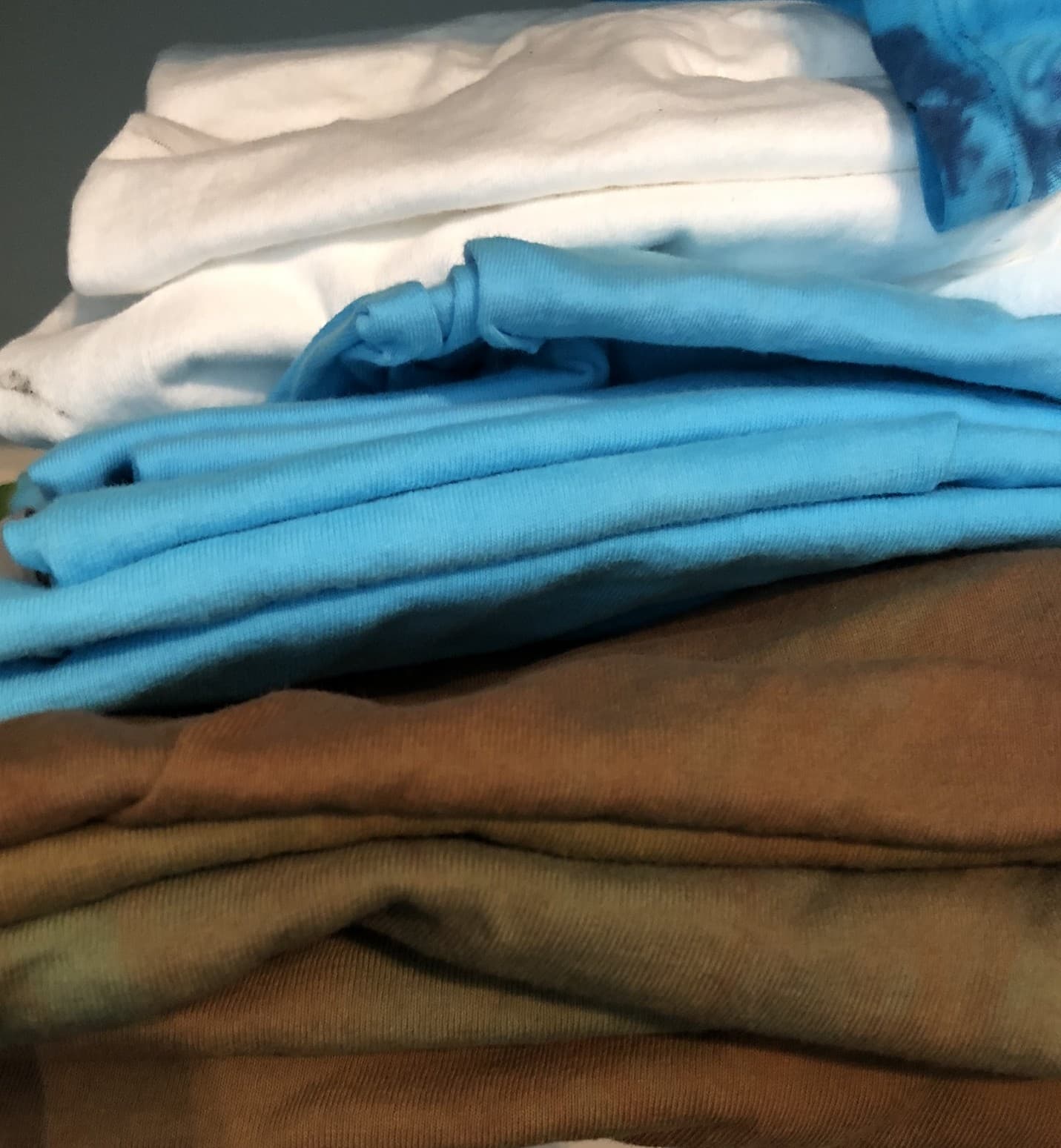
Farm rooted clothing · Est. 2005
The guides are free. The shop is the business.
Sun & Rain Works is a small apparel outfit in Eugene, Oregon, with agricultural roots and a slow path toward farming. The 1943 tomato broadcast you just read comes from the same place as the shirts.