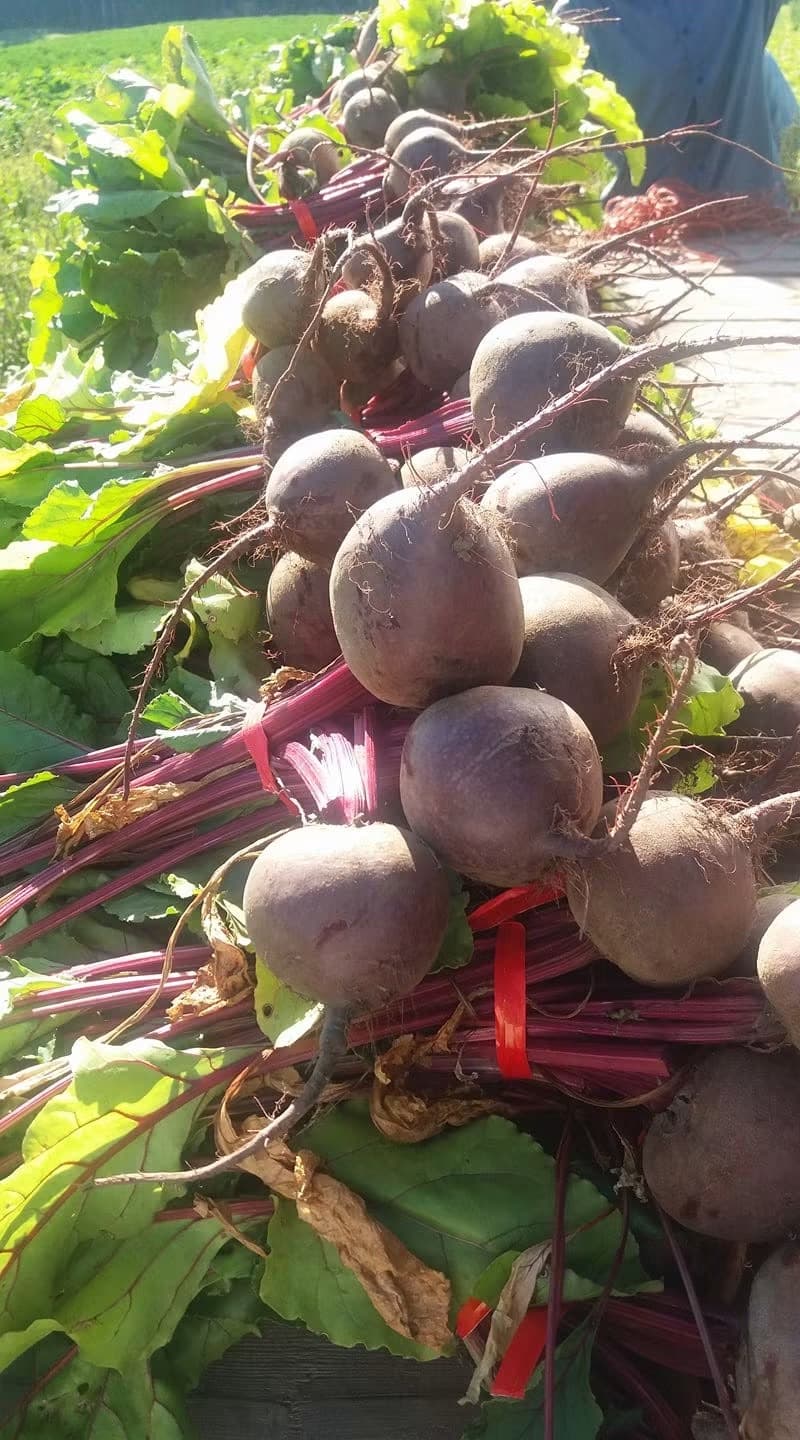
The kitchen
Eight broadcasts that follow the food indoors, jars, closures, rationed pressure canners, the day after canning, and the argument for planning a garden backwards from the pantry.
What this is. 8 USDA radio scripts from 1942 to 1945, grouped by subject, the third themed group drawn from the archive's loose broadcasts. We read all 8 and quote 7. Scanned by the National Agricultural Library; every script is listed and linked at the foot of this page.
The unusual thing about this group. Preserving is the one subject in the archive where the Department was already arguing against dangerous practice at the time, rather than recommending something later withdrawn. Both methods it condemns, oven canning and open-kettle canning, are still condemned now, for the same two reasons it gives.
The one gap. The exception these scripts grant, that tomatoes can go in a boiling-water bath while other vegetables need pressure, is the one current guidance has closed: tomatoes may still be water-bath canned, but only with acid added to every jar. That is set out in full on the 1943 tomato script, which carries a notice above its annotations.
How we transcribed them. Mimeographed typescript: “snail equipment” for “small equipment”, “hand” for “band” throughout the day-after script, “nore” for “more”. Repaired, and nothing else. Everything in a quoted block is the USDA's; everything beneath it is ours.
“It hardly seems necessary to mention it again”
That is a federal broadcast in May 1944, audibly tired of repeating itself about oven canning, and eighty years later extension services are still repeating it. Both practices it names are still condemned, for the same two reasons: dry oven air never gets the centre of a jar to the temperature the dial claims, and mason jars are not made for dry heat.
The rest is the ordinary competence of a working kitchen. Take the bands off after a day. Label with a lot number so a spoiled jar tells you something. Never put the canner lid in water, and keep the vent and safety valve clear. All current.
And one idea worth more than the rest: plan the garden backwards from what you intend to put up, rather than forwards from the seed rack.
- 01
Count the vegetables before you plant them
Still holdsRemember the old warning about don't count your eggs before they're hatched? It's good advice. But it has nothing to do with your garden. The United States Department of Agriculture says do count your vegetables before you plant them. And to follow up that idea, it's suggested that the home canner help make the garden plans.
Plan the garden backwards from the pantry rather than forwards from the seed rack, which is the single change that most improves what a garden is actually worth. Decide how many jars of tomatoes you want in February; work back to plants; work back to row feet. Done the other way round, the usual outcome is four gluts nobody can process and a shelf with nothing on it, which is the failure the oven-drying leaflet is trying to rescue people from in August.
- 02
A yield figure you can plan with
Mostly holdsA bushel of tomatoes, which will give — on the average — about 15 to 20 quarts of canned goods, can be grown in about 50 row feet.
Rare and useful: a number that converts ground into jars, which is exactly what the previous annotation needs and almost nothing else in the archive supplies. Fifty row feet to fifteen or twenty quarts is still a fair planning figure for staked indeterminate tomatoes in decent ground. The caveat is that it hides the variables, a determinate variety, a short season, a bad blight year or a drought will all move it a long way, so treat it as an order of magnitude rather than a promise, and keep your own figure once you have one.
- 03
Not oven canning. Again.
Still holdsSo much has been said about the danger of oven canning and of trying to can vegetables any way except under steam pressure that it hardly seems necessary to mention it again. But every year some homemakers risk trying to can by methods no longer recommended by canning specialists... Oven canning is dangerous for more than one reason. Harmful bacteria may not be completely destroyed. Also jars may explode and cause a great deal of damage. Open kettle canning is not reliable, either.
Both practices are still condemned and for the same two reasons. Dry oven air is a poor conductor, so the centre of a jar never reaches the temperature the oven dial claims, and mason jars are not designed for dry heat and can fail violently. Open-kettle canning, where hot food goes into a jar and the lid is expected to seal on its own, skips processing altogether and seals in whatever was already there. What is striking is the tone: this is a federal broadcast audibly tired of repeating itself in 1944, and eighty years later extension services are still repeating it.
- 04
The seven rules
Still holdsCan only fresh food, in tip-top condition. Have food, jars, everything used in canning thoroughly clean. Work quickly, so as to can “freshness.” Heat food hot enough and long enough to make bacteria and other organisms harmless... Follow up-to-date directions and time-tables, backed up by scientific research. Make sure jars are sealed airtight... Store canned food in a cool, dark, dry place.
Seven rules, and a modern list would keep all seven. The fifth is the one carrying the weight and the one the campaign kept having to defend, follow current, research-backed times, not a method somebody remembers. That is the rule that rules out oven canning, rules out open kettle, and today rules out the version of tomato canning the Department itself was recommending in 1943.
- 05
Take the bands off
Still holdsTake off any screw bands that have a glass or metal lid underneath. You can use these bands over again to help seal other jars. If a band sticks, don't force it. Cover it with a hot, damp cloth for a minute or two, to loosen it. That nearly always works. If it doesn't, leave the band on. Forcing it might break the seal.
Right instruction, and current guidance adds a reason more serious than reuse. A band left screwed down can hold a lid that has not actually sealed, so a jar that failed looks identical to one that worked until it is opened months later. It also traps moisture against the rim and rusts. Off after twenty-four hours, and the softer detail, the hot damp cloth, and don't force it, is exactly what to do about a stuck one.
- 06
Testing the seal
Mostly holdsTest a flat metal lid by tapping the center with the tip of a teaspoon. If it has sealed right, the teaspoon makes a clear ringing sound. A dull, flat note means a poor seal... a poor seal gives you one of two choices: you can use the food up right away, and use the jar over again... Or can the food again.
The tap test is real and still described, but it has been demoted. The primary checks now are simpler and harder to misread: the lid should be curved down in the centre and should not flex when pressed. The dull note the broadcast describes can also be produced by food touching the underside of the lid on a jar that sealed perfectly well, which is why it is a second opinion rather than a verdict. The two remedies given are still the two remedies, eat it now, or reprocess within twenty-four hours with a new lid.
- 07
Label it with a lot number
Still holdsLabel each jar so you'll know the contents and the date when you canned the food. If you canned more than one lot in a day, add a lot number. For example, you might put on the label, “Green snap beans, lot #2, July 1, 1944.” Then if you find later that a jar has spoiled, you can tell which jars were in that lot.
Batch traceability in a home kitchen, and the reasoning is a commercial food safety practice arrived at from first principles. A spoiled jar is not one bad jar, it is evidence about a batch, same processing time, same lid box, same afternoon of distraction. Without a lot number you learn nothing from it and have to decide about everything on the shelf. It costs one extra character on a label.
- 08
Never put the canner lid in water
Still holdsIf you used your steam pressure canner, wash the bottom part only. Never put the lid into water. Wipe it off and make sure that the pet cock, safety valve, and the edges of the lid and canner are perfectly clean. If the openings of the pet cock and safety valve are not absolutely clear, use a toothpick or small pointed tool to clean them.
Unchanged, and it is the maintenance instruction that actually matters. The vent and the safety valve are the two things standing between a pressure canner and an accident, and both are small openings that food residue can block, a blocked vent means trapped air the gauge cannot account for, so the contents never reach the temperature the dial claims. Submerging the lid gets water into the gauge and the valve seat. Wipe, clear the openings, check them before every use.
- 09
Not every jar is a canning jar
Still holdsIt is poor economy — a waste of food and time — to try to use old mayonnaise jars, or old peanut-butter jars for canning if they won't take a standard top.
Still true and still a common mistake, and the modern reasons go beyond the fit of the lid. Commercial food jars are made for a single filling: the glass is thinner, the shoulders and threads are not designed for repeated thermal cycling, and the sealing surface is not machined to the tolerance a canning lid expects. They break in the canner, and they break at the worst possible moment. The 1943 objection was that they waste your food and your afternoon, which is reason enough.
- 10
Rationed canners, and what that produced
Of its timeLast year manufacturers made 64 thousand steel pressure canners... This year the Government is allowing metal for the manufacture of 150 thousand steel canners of this same 7-quart type... But the supply of canners will be far short of the demand. So the canners manufactured in 1943 will be under rationing.
The numbers explain an institution. A hundred and fifty thousand pressure canners, rationed, against twenty million gardens, which is why the community canning centre exists at all, and why the 1945 Consumer Time episode is built around a family driving to one. The same broadcast records zinc going out of the familiar screw top because zinc was a critical war metal, and the three-piece flat-lid closure arriving as a substitute. The reusable metal band on today's two-piece lid is the surviving descendant of that wartime improvisation.
- 11
What conserving actually means
Still holdsYou are conserving when you plan balanced meals. You are conserving when you shop with your eyes open and buy foods that give good values in nutrition. And you're conserving when you unload a food basket in the kitchen and take care from then on that nothing goes to waste. You are conserving when you cook meals well, so the family gets all the good from food. And you are conserving, of course, when you preserve food for the future.
A definition worth borrowing, because it puts preserving last. Conserving here is a chain that starts at the meal plan and the shopping list, and canning is what you do with what is left over at the end of it, not the main event. Household food waste in the United States is still measured in the tens of percent of what is bought, and almost all of it is lost at the stages this broadcast names before it ever gets near a jar.
- 12
Buy it local to keep the freight cars free
Mostly holdsThe Department of Agriculture is asking us to consider transportation, and buy fruits and vegetables from local markets whenever possible. This means that many manhours may be saved which might otherwise be used in getting these foods to distant markets. It also means that freight cars, trucks and other conveyances, which would be used to haul these foods, can be put to more needed purposes.
A food-miles argument in 1942, and the reasoning is honest about what it is: this is about rolling stock and labour in a war, not about the climate. Which is worth noting, because the modern version of the argument is weaker than most people assume. Transport is usually a small share of a food's total footprint compared with how it was produced, so local is not reliably lower-impact, a heated local greenhouse can be worse than a shipped field crop. The good reasons for buying local are the ones this broadcast gives, plus freshness and keeping the money nearby.
- 13
Twenty acres, and hundreds of millions
Of its timeOur feelings today are much like those of the little group that marked our country's first Thanksgiving Day, 321 years ago. The Pilgrims were fighting to build a better world for themselves and their children, fighting to survive in an unfriendly wilderness, and they thanked God for the yield of a little more than 20 acres. Today we are offering our thanks for the yield of hundreds of millions of acres. We need it just as badly as the Pilgrims needed their first crop.
The Secretary of Agriculture reaching for the founding harvest eleven months into the war, and the rhetorical move is the campaign's characteristic one, take something enormous and abstract and put it beside something small enough to picture. It is also a fair reminder of scale. Twenty acres fed a colony through a winter, and the difference between that and hundreds of millions is not effort but three centuries of breeding, machinery and fertiliser, none of which the comparison mentions.
“Do count your vegetables before you plant them”
Decide how many jars you want in February, work back to plants, work back to row feet, fifty of them to a bushel of tomatoes, on the Department's own figure. Done the other way round, the usual result is four gluts nobody can process and a shelf with nothing on it.
All 8 broadcasts
In order, each linked to its scan. Marked scripts are quoted above; the rest we read and took nothing from, which is worth saying rather than leaving them off the list.
A Victory Food Special: beets and beans are in glut, so eat them now, and buy from local markets to keep freight cars free for war materials.
- November 26, 1942Quoted
A Thanksgiving broadcast: the Secretary of Agriculture setting the year's harvest against the Pilgrims' twenty acres, then the production figures.
- March 5, 1943Quoted
Two words for the whole home food programme, produce and conserve, and a definition of conserving that runs from meal planning to the compost heap.
- April 2, 1943Quoted
Jars, lids and pressure canners under wartime allocation: which closures were still being made, what zinc shortages did to the familiar screw top, and why canners were rationed.
A news round-up, chiefly on the 600,000 town and city women who went out to farm work for the first time in 1943. Little on preserving; read and not quoted.
- May 26, 1944Quoted
The season's canning outlook, an exasperated warning against oven and open-kettle canning, and the seven rules for canning success.
- July 14, 1944Quoted
What to do once the last jar is out: cleaning the canner, testing seals, taking the bands off, and labelling by lot so a later spoilage can be traced.
- February 23, 1945Quoted
Plan the garden backwards from the pantry, count the vegetables before you plant them, with a yield figure for tomatoes in row feet.
More from the archive
We're working through the USDA's victory garden material and marking what still holds. Occasional notes from Eugene, Oregon, an art business with agricultural roots, working its way toward farming.
We'll email you to confirm before sending anything. After that, occasional seasonal notes from Sun & Rain Works, we won't share your address, and every email has an unsubscribe link.
Sources: U.S. Department of Agriculture, Office of Information, 8 radio scripts 1942–1945. Digitised by the National Agricultural Library; archive identifiers are linked above. Public domain as works of the U.S. federal government. Annotations are our own and are not endorsed by the USDA. Nothing on this page is home-canning guidance, for current instructions consult the USDA Complete Guide to Home Canning, the National Center for Home Food Preservation, or your state extension service.
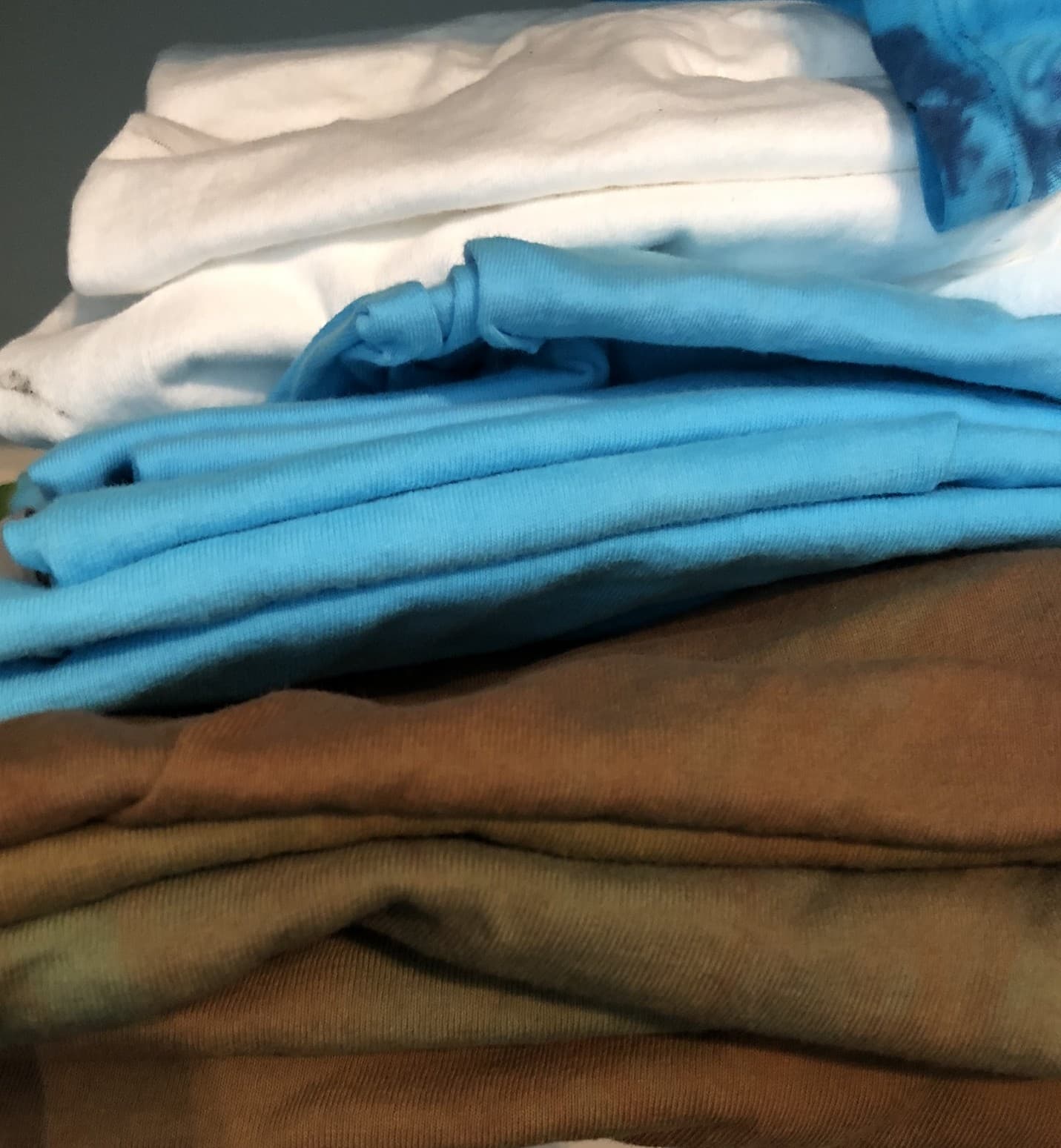
Farm rooted clothing · Est. 2005
The guides are free. The shop is the business.
Sun & Rain Works is a small apparel outfit in Eugene, Oregon, with agricultural roots and a slow path toward farming. The wartime radio broadcast you just read comes from the same place as the shirts.