The last year of the campaign
The war was over. Two documents from 1946, the machine that reached twenty million households, and the survey that asked how many of them meant to carry on.
Why this page has two sources. The 1946 “program” is not a program in the sense the earlier ones were. It is an inventory of what the Office of Information sent out and to whom, wires, letters, radio slots, magazine placements, with almost no gardening advice in it. On its own it would make a thin page about a document that is actually fascinating for a different reason: it is the only one in the series that shows the machinery rather than the message.
So it is paired here with a Homemakers' Chat broadcast from a few weeks later, reporting the Bureau of Agricultural Economics's survey of the 1945 season. That supplies what the inventory cannot: what people actually grew, how many meant to continue, and why the ones who stopped gave up.
It also closes a loop. This archive opens with a Homemakers' Chat script from March 1943 telling first-time gardeners how to begin. It ends with one from April 1946 counting how many of them stayed.
Rights and transcription. Both are works of the United States federal government and therefore not subject to copyright; both were scanned by the National Agricultural Library, which states the items are not in copyright. These scans read better than the 1944 and 1945 mimeographs, though the broadcast's typewriter renders years as “19^5” and “19^6” throughout. We repaired that and nothing else. One correction is a judgement and is flagged rather than made silently: the inventory lists a CBS programme as “Old Dirt Bobber”, which was “The Old Dirt Dobber”, a misread letter, not a different show.
Document one · March 26, 1946
1946 Victory Garden Program: USDA Materials and Activities
10 pages, U.S. Department of Agriculture, Office of Information. View the scan (CAT31063331).
Read as a piece of campaign machinery, this is the most revealing document in the series. Ten standing radio programmes. Wires to every governor over the Secretary's signature. Bespoke copy for a teenage magazine and a service club monthly. Free creative from the Advertising Council.
The gardening leaflets sound folksy. The distribution plan behind them does not.
- 01
Starting at the top
Still holdsWire to Governors (Secretary's signature). Wire to Mayors of large cities (Secretary's signature). Wire to State Extension Directors. Wire to specific State Garden Committees. Wire to Industry groups.
The first page is not addressed to gardeners at all. It is a list of people who could make other people act, wired over the Secretary's signature because the signature was the point. Any campaign that has to reach millions of households still starts here, with the intermediaries, and the 1943 Leader's Handbook is what those intermediaries were handed.
- 02
Saturating the radio
Of its timeRadio Roundup. Good Eating. RFD Letter. Food Makes A Difference. Homemakers Chats. Farm Flashes. Farm and Food News. Timely Farm Topics (transcriptions). Consumer Time (NBC). American Farmer.
Ten standing radio programmes, plus national and regional garden shows, all carrying the same message in the same weeks. Homemakers' Chats is on the list, the series that produced the 1943 broadcast this archive opens with, still running three years later. No modern agency commands that kind of unbroken attention, which is worth remembering before treating the campaign's reach as purely a matter of public enthusiasm.
- 03
Buying the rest
Of its timeAds prepared by Advertising Council. … Pictorial and Home and Garden magazines supplied with photos and materials. Story sent to "Woman's Day", March 8. Letter by Paul Stark in June issue of "Seventeen". "Forecast" magazine received 300 word article. Article supplied Kiwanis Magazine.
The War Advertising Council, which became the Ad Council, supplied campaign creative at no charge, the same mechanism behind Smokey Bear. What stands out is the targeting: a teenage magazine, a service club magazine, and the women's weeklies, each getting bespoke copy. This is media planning, and it is more sophisticated than the folksy tone of the gardening leaflets suggests.
- 04
Segregated channels
Of its timeNegro Health Week stressing Victory Gardens beginning March 31. … Negro Press — Material sent to Negro papers.
The terminology is of its period; the structure it describes is the substantive point. Federal outreach ran on separate tracks because agricultural extension was itself racially segregated, with Black agents working through the 1890 land-grant colleges until desegregation in the 1960s. National Negro Health Week was not a USDA creation, it was founded by Booker T. Washington in 1915, ran annually until 1951, and ended when the Public Health Service closed its Office of Negro Health. The campaign attached itself to an established Black-led institution, which is a more accurate reading than either ignoring the line or treating it as outreach.
- 05
The reading list, still
Still holdsPublications: "Growing Vegetables in Town and City", MP 538. "The Farm Garden", Farmers' Bulletin 1673. "Victory Garden Insect Guide", AWI-95. "Family Food Plans", AWI-78.
Farmers' Bulletin 1673 has been on every list in this archive, the 1943 program, the Leader's Handbook, and now here, three years and a war later. It was published in 1931. The campaign's reading list was substantially older than the campaign, which is a decent argument that the horticulture in these documents was settled knowledge rather than wartime improvisation.
- 06
A new reason to garden
Of its timeInternal distribution of President Truman's message of February 21 … What foreign countries are doing to help themselves.
The 1946 campaign is not about American supply at all. Truman's February appeal was about famine in Europe and Asia, and the argument for growing at home became that it freed grain and canned food for export. In three years the same activity was justified by military necessity, then by household economy, and finally by famine relief abroad.
Document two · April 1946
What the 1945 Garden Survey Shows
8 pages. A Homemakers' Chat script from the U.S. Department of Agriculture, Office of Information, Radio Service, drawing on the Bureau of Agricultural Economics. View the scan (what1945gardensu1946unit).
Almost everything else in this archive states goals. This one reports outcomes, and the outcomes are more interesting than the goals were, including a bad season the campaign's own literature never mentions.
- 01
The last target
Of its timeLeaders attending the National Garden Conference set a goal of 20 million home gardens for 1946. … Economists of the U.S. Department of Agriculture tell us that it's a million and a half more gardens than we had in 1945.
Which puts 1945 at around 18.5 million, against the 22 million the campaign aimed for in 1944. The series read end to end shows a peak in 1943 and 1944 and a slow decline after, and, in this document, an organisation still setting growth targets against it.
- 02
Whether people carried on
Still holdsBut once a gardener … you're likely to keep on being a gardener. The habit grows. Families with gardens found that they were eating more fresh vegetables than they ordinarily would. They liked the garden-fresh products.
The survey's central finding, and the one worth carrying forward: most 1945 gardeners intended to continue after the war ended. Growing your own changes what you eat, which is a more durable motivation than any campaign message, and it is why the habit outlived the emergency that created it, even as the organised programme wound down.
- 03
What people actually grew
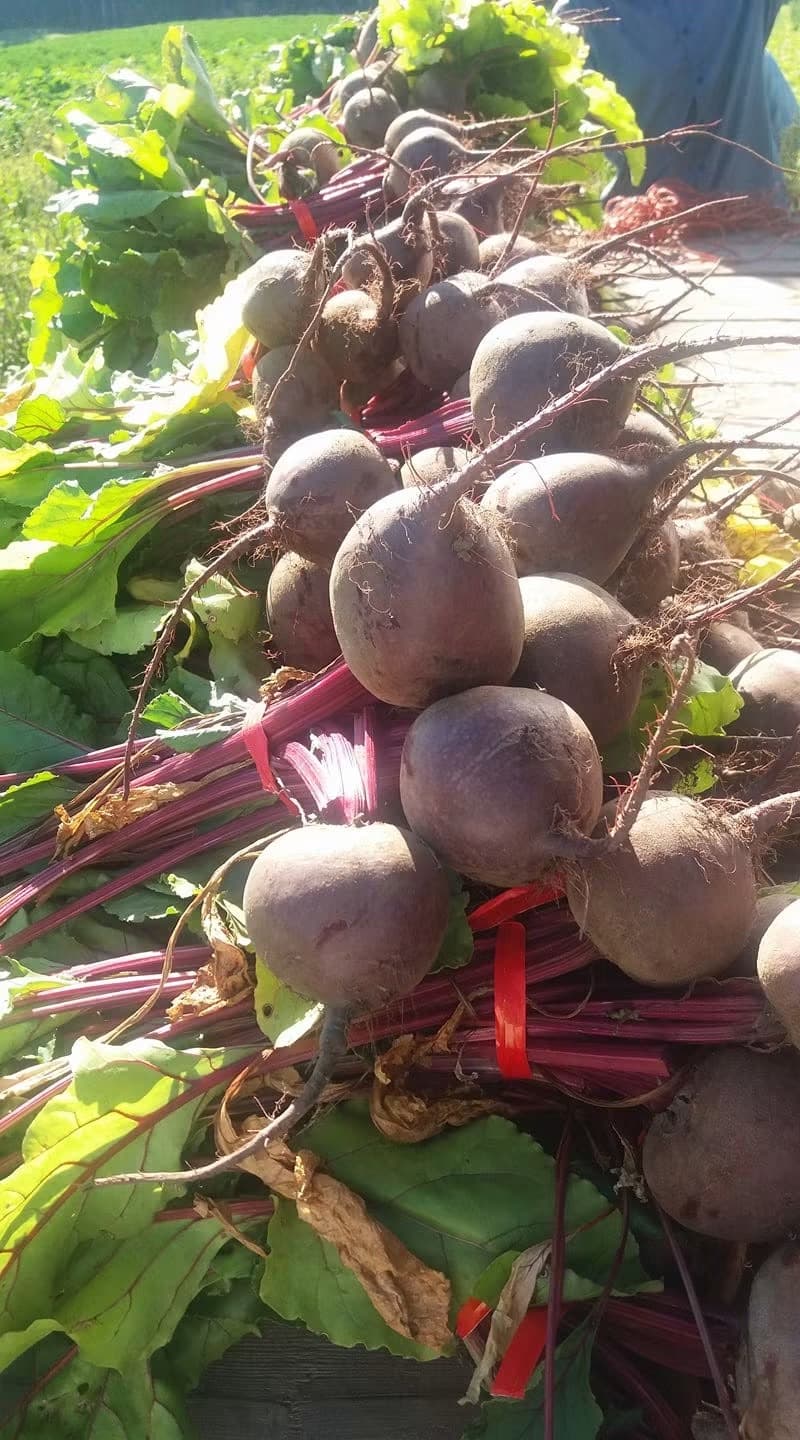
Still holdsThe survey shows that tomatoes was the most widely grown vegetable in Victory gardens of 1945. Tomatoes led in both farm and town gardens. Other vegetables popular with Victory gardeners were string or wax beans, onions, lettuce, radishes, beets and carrots.
Eighty years on, this is still very close to what people plant. Tomatoes lead every modern home-gardening survey by a wide margin, for the same reason they did then, the gap between a supermarket tomato and one off the plant is larger than for almost anything else. Note what is absent: none of the campaign's nutritional priorities, the leafy greens and yellow vegetables, made the popular list.
- 04
A bad season
Still holdsThe 1945 garden season was not as good as 1944. The weather was not so favorable. Although Victory gardeners had plots just as large as the year before they didn't harvest as bountiful crops. … The sugar shortage also cut down on food preservation.
A useful corrective to the campaign's own literature, which reports goals far more often than outcomes. Same plots, same effort, worse weather, smaller harvest, the variable no amount of organising controls. The sugar detail is a reminder that preserving a crop depended on a supply chain of its own.
- 05
Why people quit
Still holdsThose who said they wouldn't continue to garden gave as their reasons … lack of time … lack of space … uncertainty of plans … and poor health. Only a few said they would quit gardening because the war had ended.
The most quietly interesting result in the series. The campaign spent four years on patriotic motivation, and when it ended almost nobody stopped for that reason, they stopped for time, space and health, which are the same reasons people give up a plot today. Patriotism recruited gardeners; it was not what kept them, and it was not what lost them either.
Four years, four different reasons
Read end to end, the series argues for the same activity from a different premise every year. In 1943 it is military supply. In 1944 it is yield, because recruitment had already worked. In 1945 the shortage is over and the case becomes money, health and neighbourhood. By 1946 it is famine abroad.
The gardeners, meanwhile, gave the same answer throughout. They were doing it to save money, they carried on because the food tasted better, and when they stopped it was for lack of time or space, not because the war had ended.
More from the archive
We're working through the USDA's victory garden material and marking what still holds. Occasional notes from Eugene, Oregon, an art business with agricultural roots, working its way toward farming.
We'll email you to confirm before sending anything. After that, occasional seasonal notes from Sun & Rain Works, we won't share your address, and every email has an unsubscribe link.
Sources: U.S. Department of Agriculture, Office of Information, “1946 Victory Garden Program: USDA Materials and Activities”, March 26, 1946 (archive identifier CAT31063331); and U.S. Department of Agriculture, Office of Information, Radio Service, “What the 1945 Garden Survey Shows”, Homemakers' Chat, April 1946, information from the Bureau of Agricultural Economics (archive identifier what1945gardensu1946unit). Both digitised by the National Agricultural Library. Public domain as works of the U.S. federal government. Annotations are our own and are not endorsed by the USDA.
Farm rooted clothing · Est. 2005
The guides are free. The shop is the business.
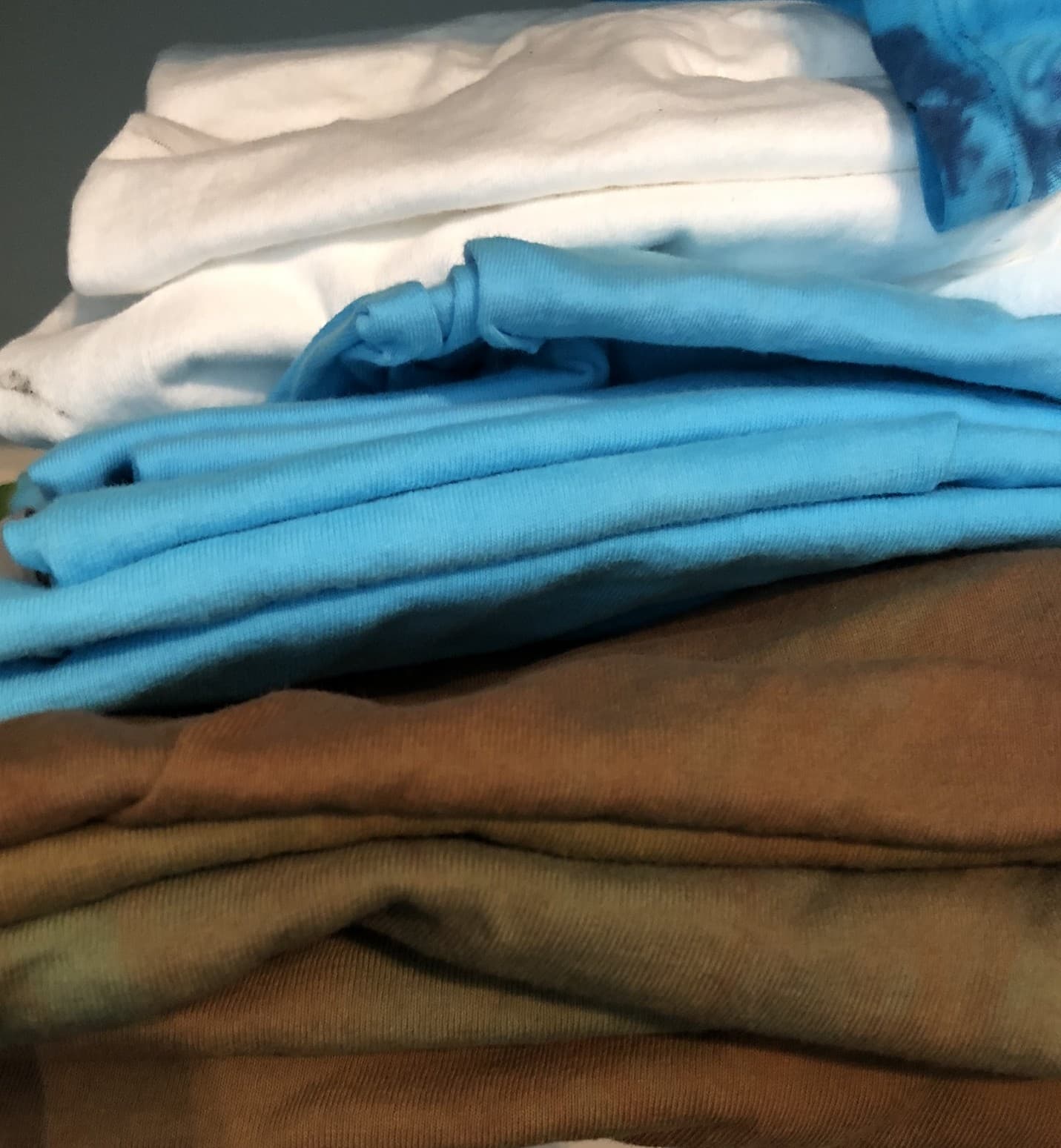
Sun & Rain Works is a small apparel outfit in Eugene, Oregon, with agricultural roots and a slow path toward farming. The 1946 victory garden programme you just read comes from the same place as the shirts.