Growing guide
How to grow green onions
The most forgiving thing in the vegetable garden, and the only crop where you cannot really be late. There is no head to form, no root to size and nothing to ripen, you simply pull them when you want them.
Allium fistulosum, and Allium cepa pulled young · Amaryllidaceae, with onion, garlic, leek, shallot and chive
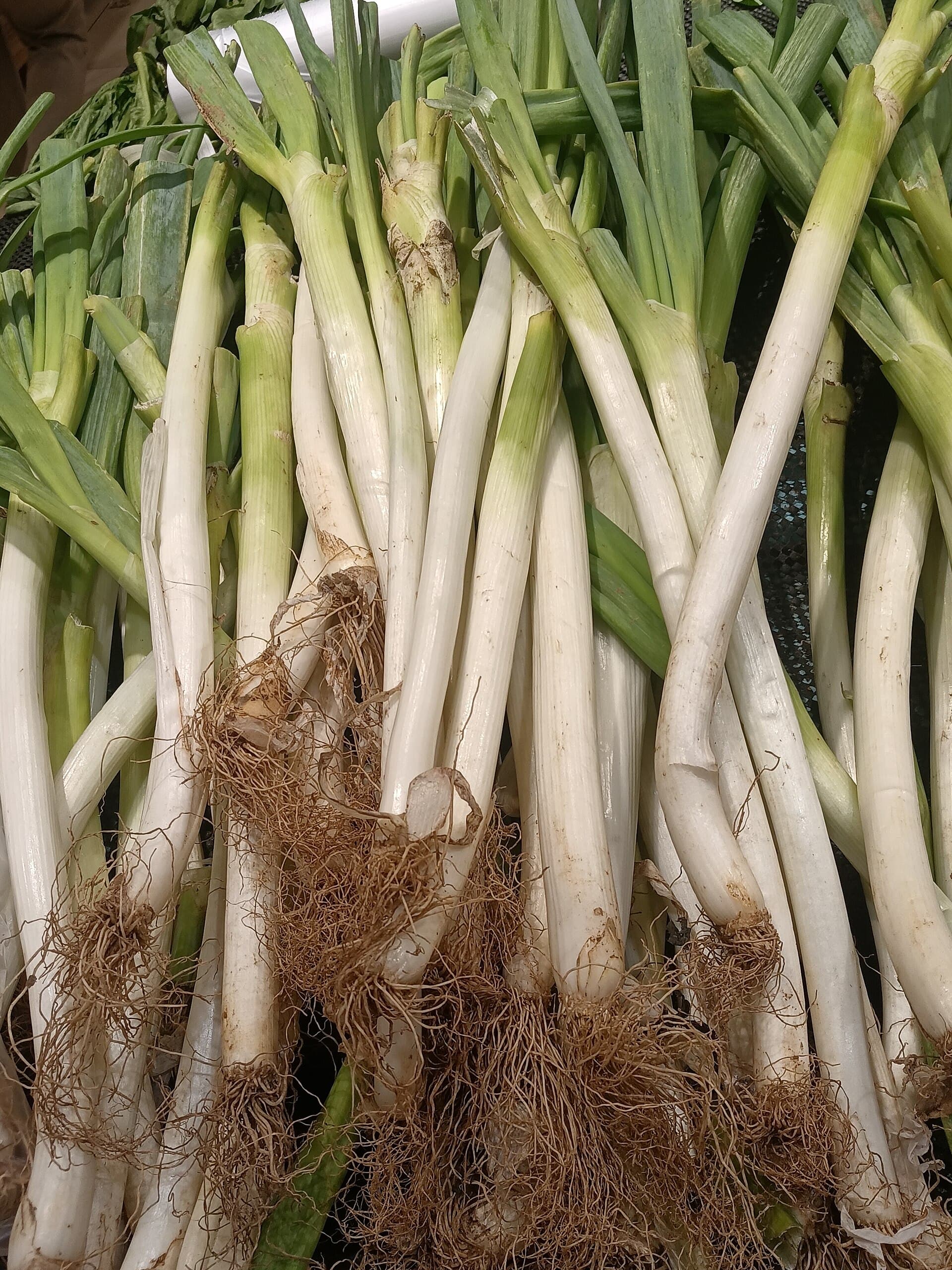
Above: Fumikas Sagisavas · CC0

easy. Genuinely easy, and one of the few crops where that word is earned. It has no critical stage, no harvest window to miss, and it forgives crowding, the main way to fail is to plant once and never again.
At a glance
- Family
- Amaryllidaceae (onion family)
- Life cycle
- Perennial, usually grown as an annual
- Hardiness
- Very hardy, overwinters in mild climates
- Sowing method
- Direct sow, or nursery-sow and transplant
- Germination
- 7–14 days in warm soil, slower in cold
- Soil
- Any decent soil; wants steady moisture, not depth
- Sun
- Full sun to part shade, tolerant either way
- Days to maturity
- 60–80 from sowing, but pull any time
- Succession
- Every 2–3 weeks; the whole game is succession
- Biggest single risk
- Forgetting to sow again
When to sow, where you actually live
Every other guide prints a month, and a month is only true somewhere. What transfers between locations is the offset: green onions go in about 4 weeks before the last spring frost, wherever that falls for you. Give us a ZIP and we will count it from your own NOAA weather station.
Current spacing: 1″ apart in rows 12″ apart, sown 0.5″ deep. Roughly 60–80 days to a first picking, though variety moves that more than any general figure admits.
Get your sowing dates →First, work out which plant you actually have
This is the source of nearly every contradiction you will read about green onions, so it is worth two minutes. Three different plants are sold under overlapping names.
The true bunching onion, Allium fistulosum, never forms a bulb. It makes a straight, hollow-leaved plant with a clean white shank, it is extremely hardy, and it is perennial, clumps divide and go on for years. Japanese negi and most seed sold as “bunching onion” or “Welsh onion” are this. If you want scallions specifically, this is the plant to buy.
The ordinary bulb onion, Allium cepa, pulled young. Any onion variety can be a green onion if you pull it before it bulbs, which is why thinnings from a bulb-onion row are a free scallion crop. It is also why some of what supermarkets sell has a visible swelling at the base.
The perennial clumps, Egyptian walking onions, potato onions, chives, and various divided bunching types, which somebody gave you and which will outlive you. These need no sowing advice at all, only dividing.
The practical upshot: if a packet says bunching, expect no bulb and expect it to survive winter. If it is a named bulb onion, expect a swelling if you leave it, and pull earlier.
- Bunching onion (A. fistulosum) makes no bulb and is perennial and hardy.
- Any bulb onion pulled young is also a green onion, thinnings count.
- Buy bunching seed if you want scallions rather than thinnings.
Sowing, and the succession that is the whole method
Sow thinly in a shallow drill, about half an inch deep, in rows a foot apart. Do not agonise over spacing, this is a crop grown deliberately crowded, and an inch apart in the row is plenty because you will be pulling every other one long before they touch.
The one thing that matters is doing it again. A single sowing gives you two good weeks and then a row of things that have got coarse and started to think about flowering. Sowing a short row every two or three weeks from early spring into late summer gives continuous supply from the same small piece of ground, and it is genuinely the only technique this crop requires.
Onion seed is short-lived, noticeably worse in its second year and largely gone by its third. If germination is patchy, suspect the seed before you suspect yourself.
The other route is transplanting. Sow thickly in a nursery patch, then lift the seedlings when they are about pencil-thick and set them out where you want them. It sounds like extra work and it is how commercial growers do it, because you can grade the plants and space them exactly. Solomon uses it to grow scallions in the wet half of the year: a nursery sowing about mid-July, transplanted an inch apart in October when the rains return, pulled through winter.
- Half an inch deep, an inch apart, rows a foot apart. Crowding is fine.
- Sow a short row every 2–3 weeks. This is the entire technique.
- Use fresh seed, onion seed fades fast in its second year.
How to get a long white shank
The white part is not a variety trait so much as a growing technique: shank is white because it grew in the dark. Left alone, a scallion gives you an inch or two of white. Hilled up as it grows, drawing loose soil around the stems, an inch at a time, every couple of weeks, it will give you six or eight, which is what the long Japanese negi in the picture below are.
Do it in stages and keep the soil out of the leaf joint where the leaves split away from the stem, or you will be washing grit out of the layers for the rest of its life. Loose, dry-ish soil hills better than wet.
This is optional. If you want scallions for chopping into things, the extra white is not worth the work. If you want them to grill or braise whole, it is transformative.
- White shank = grown in the dark. Hill up an inch at a time.
- Keep soil out of the leaf joint or you will be washing grit out later.
- Skip it entirely if you only want them chopped.
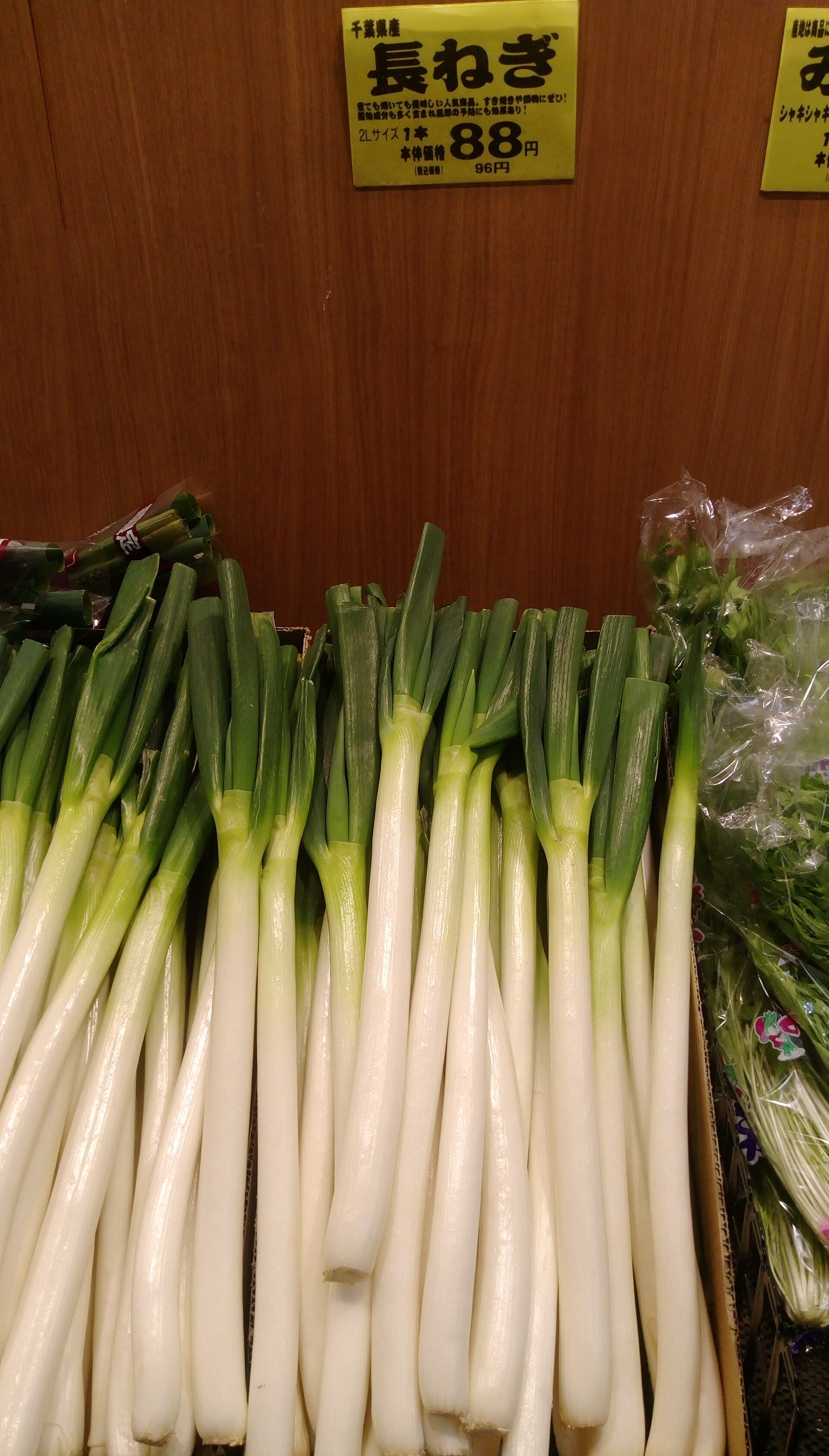
Japanese negi with the shank taken to an extreme. A market display rather than a garden, but it shows what hilling buys you, that entire white length grew underground. The same seed left unhilled would be mostly green.
Negi grown in Chiba, Japan, photographed 30 January 2017
Hst0129 · CC BY-SA 4.0

There is no wrong time to pull one
This is the crop's real virtue and worth stating plainly, because almost nothing else in the garden works this way. There is no head to form, no root to size, no fruit to ripen. A green onion is edible at every stage from the thinnings you pull at pencil-thickness to the coarse thing that has started to send up a flower stem. It only ever gets stronger and tougher, never inedible.
So harvest by thinning: pull every other one, use them, and let the rest take the room. The row thins itself into the plants you leave, and you never have to make a decision about timing.
You can also cut rather than pull. Take the tops an inch above the soil and a bunching onion will regrow, two or three times, though each cut is thinner than the last. For a perennial clump this is the normal way to use it.
They do not store. A scallion is at its best within a day or two of pulling and there is no technique that changes that, which is exactly why growing your own beats buying them, and why succession sowing matters more than any storage advice.
- Edible at every stage. Harvest by thinning and the row spaces itself.
- Cut an inch above soil and bunching types will regrow two or three times.
- No storage. Pull what you need, when you need it.
Overwintering, and the perennial trick
Bunching onions are properly hardy, a good deal hardier than bulb onions, and in a mild maritime winter they simply stand in the ground. A late-summer sowing gives you something to pull from November through early spring, which is the hungry part of the year for fresh green things.
Better still, stop pulling some of them. Left alone, a bunching onion divides at the base into a clump, and the clump can be lifted, split and replanted indefinitely. A row started once and divided every couple of years becomes a permanent crop that needs no seed at all. This is what people mean when they say they have had the same onions for twenty years.
The catch is spring. Overwintered plants bolt, they send up a flower stem, and the stem is tough and the plant stops making new leaf. Solomon notes flatly that scallions bolt in April. Use them up before then, or let a few flower deliberately for seed and the bees.
- Late-summer sowings give you winter pulling in a mild climate.
- Leave some to clump, then divide, a permanent crop from one sowing.
- Overwintered plants bolt in spring. Eat them before they do.
Very little goes wrong
Onions are among the least troubled crops in a home garden, and green onions are pulled so young that most of what afflicts bulb onions never gets the chance.
Onion fly maggots tunnel into the base and are the one serious pest; rotation and a fine mesh cover deal with them, and the crop's short occupancy makes it easy to move around. Thrips cause silvery streaking on the leaves in hot dry spells and are mostly cosmetic on a crop you eat this young. Downy mildew shows as pale patches in long wet weather, which in the maritime Northwest means it is worth spacing rows where air moves rather than tucking them against a fence.
The most common actual complaint is not a pest at all: thin, weak, pale plants, which is a fertility and water problem. Onions are shallow-rooted and compete badly with weeds, so a scallion row that has been left to fend for itself in dry ground gives you exactly what it was given.
Sources
- Rotate and cover against onion fly; almost nothing else needs action.
- Weak pale plants mean weeds, drought or hunger, not disease.
- Onions are shallow-rooted and lose to weeds. Keep the row clean.
How this crop used to be spaced
A single spacing figure reads as a fact about the plant. It is not, it is a judgement about your cultivation method and your water, and two books on our shelf disagree with our figure and with each other for reasons worth knowing.
- Through a rainless summer, unwatered
- Transplanted in October with the returning rains, about 1 inch apart in rows at least 2 feet apart. Solomon grows scallions in the wet half of the year rather than spacing them for drought, started in a nursery about mid-July and moved out when the rains come, so they size up over winter and are pulled before the ground dries. Our notes on the book.
Which type to grow
Grouped by what each is for rather than by catalogue order, because the useful question is which one suits your ground.
Japanese bunching / negi onions
Straight, no bulb, long shank when hilledBest for: The classic scallion, and for hilling
True Allium fistulosum. Hardy, perennial if you let it clump, and the type that rewards hilling with a long white shank. The default choice if you want scallions rather than thinnings.
White Lisbon and similar
Slim, slight swelling at the baseBest for: Fast spring and summer succession
The standard fast scallion, ready quickly and mild. Solomon names Lisbon as his preference for sweetness and tenderness. Less hardy than the bunching types, so it is a succession crop rather than an overwintering one.
Red-shanked onions
Slim, with red or purple at the baseBest for: Looks, and slightly stronger flavour
Behave like White Lisbon with more colour and usually a bit more bite. Worth growing alongside rather than instead, the colour is mostly lost in cooking.
Bulb onions pulled young
Whatever the variety would have beenBest for: Free scallions from a crop you are already growing
Not a variety so much as a habit. Thin a bulb-onion row and eat the thinnings. Overwintered bulb onions do the same job in late winter, which is precisely the rotation Solomon describes for a dry garden.
Perennial clumps and walking onions
Clumping, wandering, indestructibleBest for: Never sowing onions again
Egyptian walking onions and similar propagate themselves by bulbils or division. Not the tidiest scallion, but the least work of anything in this guide, and the plant most likely to still be there when you move house.
What went wrong
Listed by what you can see, not by what the plant has, you arrive here holding the evidence and without the vocabulary. Where the answer is that nothing can be done this year, it says so.
Plants thin, pale and weak
Fixable nowWhy: Almost always competition or hunger. Onions are shallow-rooted, lose badly to weeds, and stall in dry ground.
What to do: Weed the row, water it, and give a nitrogen-leaning feed. They recover quickly, this crop responds within a week or two.
A hard flower stem up the middle
Fixable nowWhy: Bolting. Normal in overwintered plants come spring, and triggered in others by a cold spell after sowing.
What to do: Use them immediately, the stem is tough but the rest is fine, and flavour is unaffected for a while yet. Sow a fresh succession row. Leave a few to flower if you want seed or bees.
Barely any white at the base
Fixable nowWhy: Not a fault. Shank is white because it grew in the dark.
What to do: Hill soil up around the stems an inch at a time as they grow, or accept green onions that are mostly green. Both are correct.
Grit trapped between the layers
Next seasonWhy: Soil got into the joint where the leaves split from the stem, usually from hilling too fast or hilling wet soil.
What to do: Split the shank lengthways to wash it. Next time hill in smaller stages with drier, looser soil, and keep it below the leaf joint.
Patchy germination
Fixable nowWhy: Old seed, most likely. Onion seed is noticeably worse in its second year and largely gone by its third.
What to do: Re-sow with fresh seed. Test doubtful seed on a damp saucer first rather than losing another three weeks.
Tunnels and rot at the base of the plant
Next seasonWhy: Onion fly maggots.
What to do: Pull and destroy affected plants, do not compost them. Rotate the crop well away next year and cover a new sowing with fine mesh from the start.
Silvery streaks and speckling on the leaves
Fixable nowWhy: Thrips, usually in hot dry spells.
What to do: Largely cosmetic on a crop eaten this young. Water more evenly; a hard spray of water knocks numbers down. Not worth spraying for.
2 kinds, in 1863
Only two, and that is the finding. Burr describes the true bunching onion, Allium fistulosum, which he calls the Welsh Onion, in 1863 and then dismisses it: they are, he writes, of little value except in cold latitudes, and rarely found in the vegetable gardens of this country. Against twenty-six kinds of bulb onion in the same book, the crop an American kitchen now takes for granted barely registered. When a nineteenth-century American wanted a green onion, they pulled a young bulb onion.
Common or Red Welsh Onion · White Welsh Onion
Our reading of twenty-two tomatoes →What’s in green onions
Per 100 grams raw, from USDA FoodData Central. The range is what USDA actually measured across its samples — it is usually wide, and your own crop sits somewhere in it rather than on the headline number.
| Nutrient | Per 100 g | % daily | Range measured |
|---|---|---|---|
| Fibre | 2.3 g | 8% | 1.8–3 (n=8) |
| Iron | 1.044 mg | 6% | 0.475–2.13 (n=8) |
| Potassium | 232 mg | 5% | 199–273 (n=8) |
| Calcium | 59.44 mg | 5% | 38.6–93.2 (n=8) |
| Magnesium | 18.94 mg | 5% | 13.9–28.6 (n=8) |
| Protein | 0.66875 g | 1% | 0.2851875–1.088125 |
| Water | 91.67 g | , | 88.36–94.45 (n=8) |
Source: USDA FoodData Central, “Green onion, (scallion), bulb and greens, root removed, raw” (Foundation, published 4/24/2025). Percentages are of the FDA adult Daily Value, a labelling reference rather than a personal requirement. Raw values; boiling leaches water-soluble vitamins and some carotene, so a cooked serving is not the same figure.
Saving your own seed
Easy, and the one part of this crop that rewards patience. Bunching onions are perennial rather than biennial, so an established clump will flower without any of the lift-and-replant business that carrots and bulb onions demand, simply stop harvesting a few plants and let them run.
The flower is a globe of small white flowers on a stem about eighteen inches high, exactly as Burr describes it. Bees work it heavily. Let the heads dry on the plant, cut them as they turn papery, and rub the black seed out over a bowl.
Sow it soon. Onion seed of every kind is short-lived: Burr gives Welsh onion seed two years, which matches what modern growers find, and a third-year sowing is a gamble rather than a plan.
Isolation is a mild concern rather than a serious one. Allium fistulosum does not cross with ordinary bulb onions readily enough to worry a home grower, so the main risk is two bunching varieties flowering together, separate them, or simply keep one.
Farm rooted clothing · Est. 2005
The guides are free. The shop is the business.
Sun & Rain Works is a small apparel outfit in Eugene, Oregon, with agricultural roots and a slow path toward farming. The green onions guide you just read comes from the same place as the shirts.
More growing guides
We're working through the vegetables one at a time, with dates counted from your own frost station and the old books read properly. Occasional notes from Eugene, Oregon, an art business with agricultural roots, working its way toward farming.
We'll email you to confirm before sending anything. After that, occasional seasonal notes from Sun & Rain Works, we won't share your address, and every email has an unsubscribe link.
Growing advice here is current horticultural practice, drafted with AI assistance and checked against the sources this page names. Where it quotes a book, the book is named and linked. Where practice is genuinely contested, or local enough that we would be guessing, the text says so, your county extension service beats any national guide, including this one, on pest timing.
The photographs are not AI-generated. Every one is our own work, public domain, or licensed, and carries its author and licence beneath it.