Growing guide
How to grow onions
The one crop where you can do everything right and still fail, because you bought the wrong variety for your latitude. Get that decision right and the rest is straightforward.
Allium cepa · Amaryllidaceae, with garlic, leek, shallot and chive
Above: Hardscarf · CC BY-SA 4.0

moderate. Undemanding to grow and easy to get wrong before you start, because the variety has to match your latitude. Long in the ground, poor at competing with weeds, and fussy about curing.
At a glance
- Family
- Amaryllidaceae (onion family)
- Life cycle
- Biennial, grown as an annual
- Hardiness
- Hardy, overwinters in mild climates
- Sowing method
- Sets, seed, or bought transplants
- Germination
- 7–14 days; seed is short-lived
- Soil
- Loose, fertile, well-drained. Not acid
- Sun
- Full sun, shade costs you bulb size
- Days to maturity
- 90–110 from sets
- Variety choice
- Must match your latitude. See below
- Biggest single risk
- Wrong day-length type for where you are
When to sow, where you actually live
Every other guide prints a month, and a month is only true somewhere. What transfers between locations is the offset: onions go in about 4 weeks before the last spring frost, wherever that falls for you. Give us a ZIP and we will count it from your own NOAA weather station.
Current spacing: 4″ apart in rows 14″ apart, sown 1″ deep. Roughly 90–110 days to a first picking, though variety moves that more than any general figure admits.
Get your sowing dates →Long-day, short-day, and why this decides everything
An onion grows leaves until the days reach a certain length, and then it stops making leaves and starts making a bulb. Each leaf becomes one ring, so the size of the bulb is set by how many leaves the plant managed before the switch flipped. This is the whole crop in one sentence.
Long-day varieties need about fourteen to sixteen hours of daylight to trigger bulbing. They suit roughly the northern half of the United States, anywhere above about 37 degrees latitude, which includes the whole Pacific Northwest.
Short-day varieties bulb at about ten to twelve hours, and suit the south. Grow a short-day onion in Oregon and it will start bulbing in spring while the plant is still small, and give you a crop of golf balls no matter how well you feed it.
Day-neutral or intermediate varieties bulb at twelve to fourteen hours and work across a broad middle band, which makes them the safe choice if you are unsure.
Seed racks very often do not say. It is worth checking the catalogue description before buying, because no amount of good growing recovers from this, and it is the reason a great many people conclude they cannot grow onions.
- Bulbing is triggered by day length, not heat or age.
- Northern gardens, including all of the PNW, need long-day varieties.
- Each leaf is a ring, bulb size is set by leaf count before bulbing starts.
Sets, seed, or transplants
Sets are small immature bulbs grown the previous year, planted like a bulb and by far the easiest route. They are forgiving, they establish quickly, and they are what most gardeners should use for a first crop. Our calendar treats onions as a sets crop, going in about four weeks before the last frost.
The catch with sets is bolting. A set is a plant that has already been through a winter once, and if it experiences another cold spell after planting it can conclude it is in its second year and run to seed. Choosing small sets, under about three quarters of an inch, markedly reduces this, because very small sets are less likely to have vernalised.
Seed gives a much wider variety choice, better keeping quality and no bolting risk, at the cost of a longer season and more work. Onion seed is notoriously short-lived, noticeably worse in its second year, so buy fresh every year rather than using leftovers.
Bought transplants are the middle path: variety choice close to seed, convenience close to sets.
Whichever you use, plant shallow. A set should sit with its tip just at the surface, not buried. Onions bulb at the soil surface and burying them produces tall necks and small bulbs.
- Sets are easiest; choose small ones to reduce bolting.
- Seed gives better choice and keeping, but buy it fresh every year.
- Plant shallow, the tip at the surface. Buried sets make small bulbs.
The crop that cannot compete
Onions have sparse, shallow roots and thin upright leaves that shade almost nothing. They are among the worst competitors in the vegetable garden, and a weedy onion bed produces small onions, not sometimes, reliably.
So the single most valuable thing you can do for this crop after choosing the right variety is keep the bed clean from the start. Hoe shallowly and often rather than deeply and occasionally; the roots are close to the surface and easily damaged.
Feed early and stop early. Nitrogen while the plant is making leaves is what builds bulb size, because leaves become rings. But nitrogen once bulbing has begun produces soft bulbs with thick necks that will not cure and will not keep. Stop feeding once you see the bulbs starting to swell.
Water steadily through the leaf-building phase and then ease off as the bulbs mature. A wet finish makes onions that rot in store.
- Onions lose to weeds badly. A clean bed is worth more than fertiliser.
- Feed while leaves are forming; stop as soon as bulbs start to swell.
- Ease off water at the end, a wet finish means rot in storage.
Bolting, and what to do when it happens
A bolting onion sends up a thick, hollow flower stem from the centre. It happens because the plant has been convinced it has been through a winter, a cold spell after planting, most often, or an oversized set that had already vernalised.
Once the stem is up, that bulb will not keep. The flower stalk leaves a hollow core running down through the bulb which lets rot in, and the plant stops putting energy into the rings.
So the response is simple: pull bolted onions and eat them first. They are perfectly good, just not storable. Do not bother snapping the stem off in the hope of saving them, that is folk wisdom and it does not undo the hollow neck.
The photograph below is what a whole field looks like when it has gone this way, or when it has been deliberately grown on for seed, which looks the same. It is a useful thing to be able to recognise.
Prevention: small sets, planting into soil that has warmed rather than at the earliest possible date, and growing from seed if bolting is a recurring problem.
- A bolted onion has a hollow core and will not keep. Eat it first.
- Snapping off the flower stem does not save the bulb.
- Prevent with small sets and by not planting into cold ground.
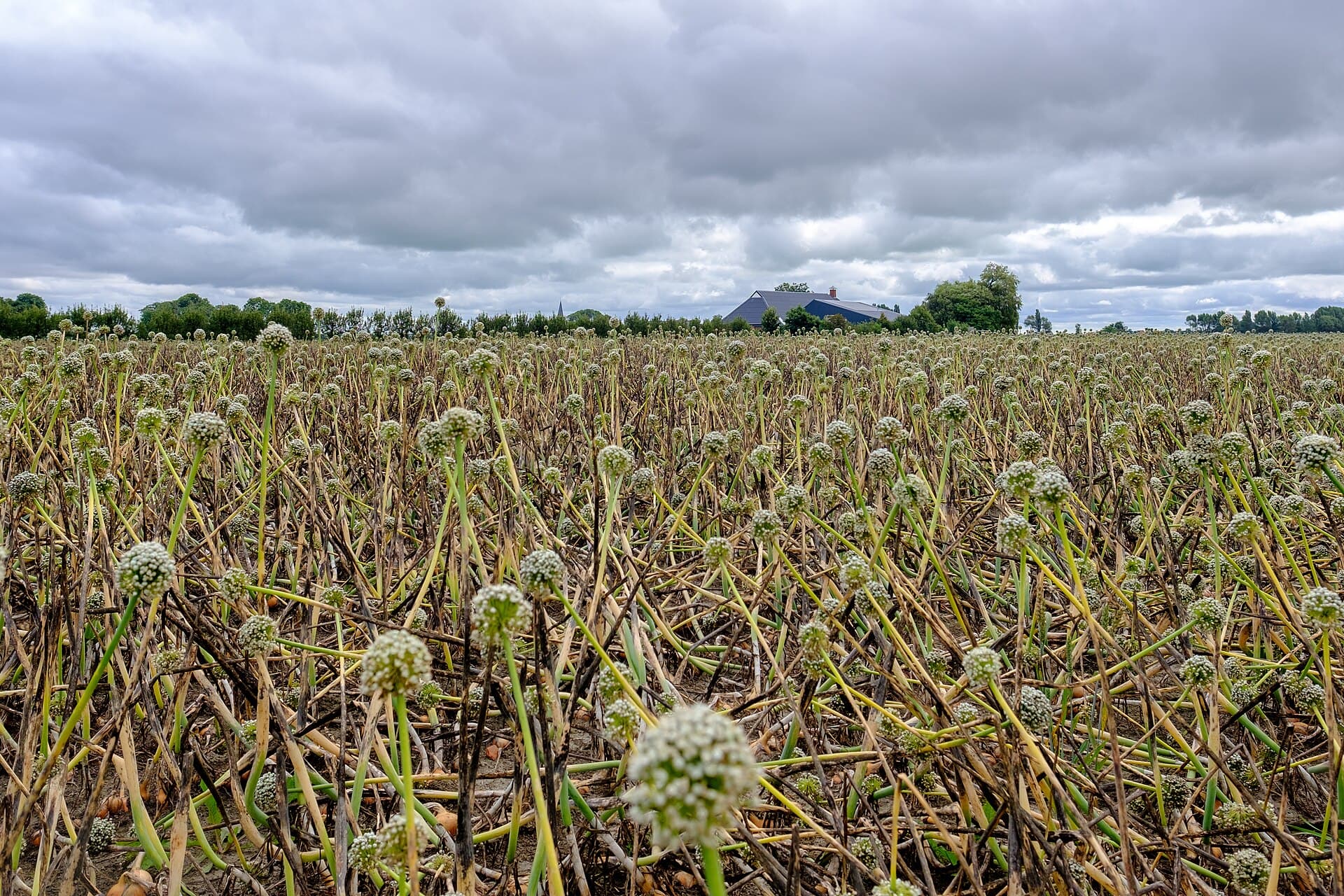
Onions that have run up to flower. Each of those white globes sits on a hollow stem running down into the bulb, which is exactly why a bolted onion will not store. A field like this is either a seed crop grown on deliberately, or a bulb crop that has been lost.
Near De Horn, Saaxumhuizen, Groningen, Netherlands
Hardscarf · CC BY-SA 4.0

Curing, the step that decides whether they keep
This is where home crops are lost, and it is entirely avoidable.
Onions are ready when the tops fall over of their own accord and start to yellow. Wait for that rather than bending the tops over yourself, which is a very old practice that mostly just damages the plant and brings the harvest forward without improving it.
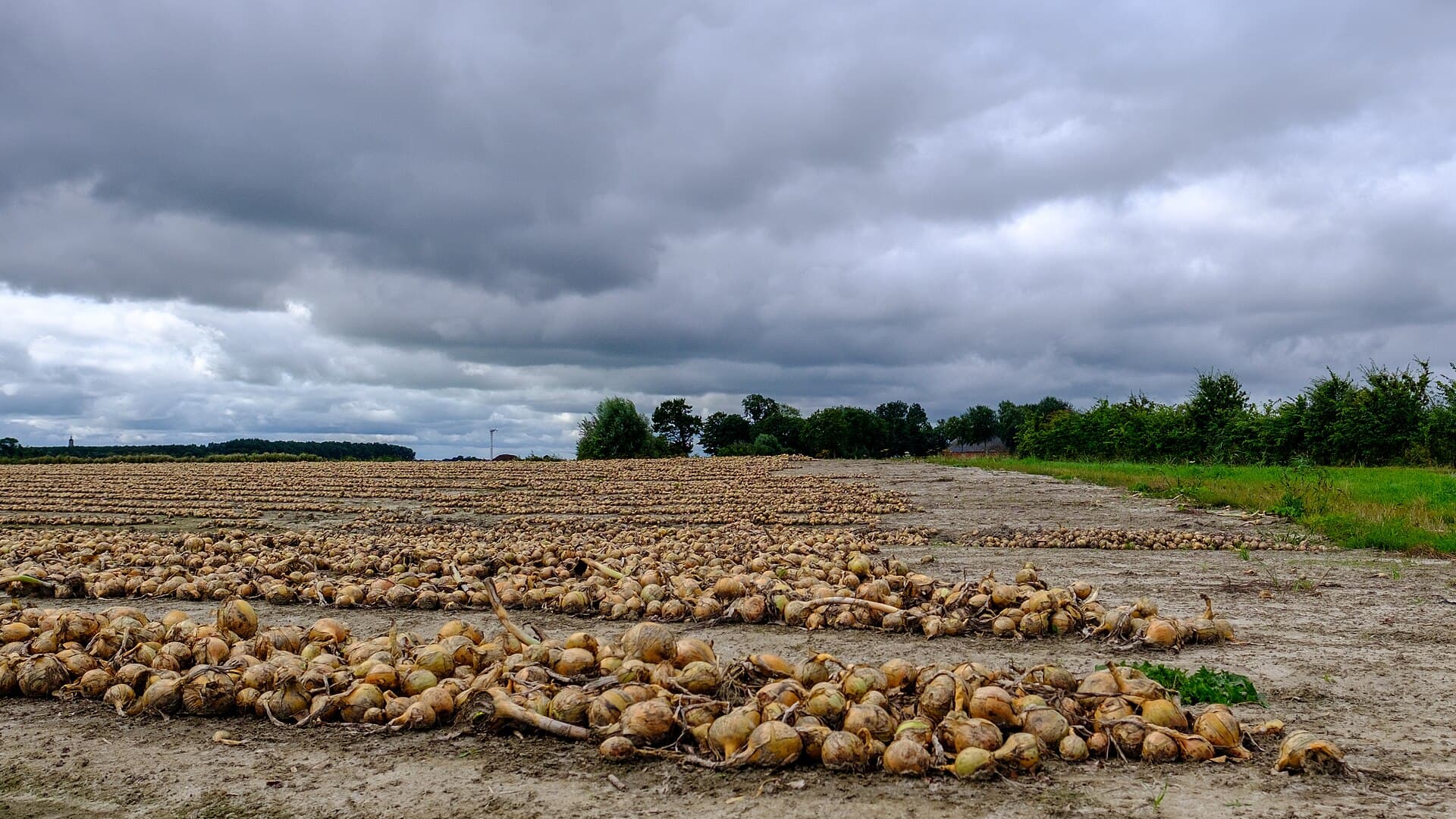
Lift them and lay them out to dry somewhere with air moving, in the field if the weather is settled, as in the photograph at the top of this page, or under cover if it is not. They need one to three weeks depending on conditions.
The test is the neck. Curing is finished when the neck has shrivelled to a dry, papery, tightly closed point and the outer skins rustle. A neck that is still thick or soft means the onion is not cured, and an uncured onion rots in storage within weeks no matter how good it looked coming out of the ground.
Then trim the roots, cut or plait the tops, and store cool, dark and dry with air around them. A well-cured long-day storage onion keeps until spring. A poorly cured one keeps until roughly Christmas, and you will lose a lot of it.
- Wait for the tops to fall naturally. Do not bend them over yourself.
- Cure one to three weeks with air moving around them.
- The neck is the test: dry, papery and tightly closed, or it will rot.
What goes wrong
Onion fly is the main pest: the maggots feed at the base and the plant yellows, wilts and collapses. Rotation and fine mesh from planting are the effective answers. Sets are less vulnerable than seedlings because they establish faster.
Downy mildew appears as pale patches on the leaves with grey growth in damp weather, which in a maritime spring is most of it. Space the rows so air moves, avoid overhead watering, and rotate, it persists in the soil.
White rot is the serious one: white fluffy growth and small black specks at the base, and it stays in the soil for many years. There is no cure. Do not move soil or plants between beds, and rotate alliums as far and as long as possible.
Thrips cause silvery streaking in hot dry spells and are largely cosmetic on a bulb crop.
And a common non-problem: onions with thick necks and soft bulbs that will not cure. That is almost always nitrogen applied too late in the season rather than any disease.
Sources
- Rotate hard. Onion fly, downy mildew and white rot all persist in soil.
- White rot is permanent, never move soil or plants from an affected bed.
- Thick necks that will not cure mean late nitrogen, not disease.
How this crop used to be spaced
A single spacing figure reads as a fact about the plant. It is not, it is a judgement about your cultivation method and your water, and two books on our shelf disagree with our figure and with each other for reasons worth knowing.
- 1912, worked by hand
- Rows 12 to 18 in., plants 4 or 5 to ft., sown 1 to 2 in.deep. That is the hand-cultivation column, the same table's horse column is far wider, because a horse and cultivator had to walk between the rows, and quoting that one is how old manuals got their reputation for wasting ground. We reproduce the table in full.
- Through a rainless summer, unwatered
- About 4 or 5 inches apart in a single row with a couple of feet of elbow room on either side. Solomon's figure is for overwintered onions, and he is blunt that the usual spring-sown summer bulb onion “only works with abundant irrigation”. Without water the answer is to move the crop into the wet half of the year, not to space it differently. Our notes on the book.
Which type to grow
Grouped by what each is for rather than by catalogue order, because the useful question is which one suits your ground.
Long-day storage onions
Firm yellow or brown globesBest for: Northern gardens, and keeping until spring
The right default for the Pacific Northwest. Firm, pungent and long-keeping, pungency and storage life go together, which is why the sweetest onions keep worst. Burr's Yellow Globe and Danvers are still sold under those names.
Sweet onions
Large, flattened, paleBest for: Eating fresh, soon
Walla Walla and its relatives, low in the sulphur compounds that make an onion sharp, which is exactly why they do not keep. Solomon names Walla Walla Sweet as very mild but poorly keeping, and grows it overwintered. Treat them as a summer crop to eat, not store.
Red onions
Deep purple-red globesBest for: Salads and colour
Generally milder than yellow storage types and generally shorter-keeping. Burr lists Large Red, Early Red Wethersfield and Blood-red in 1863, and Wethersfield is still available.
Overwintering onions
Varies; usually mild and earlyBest for: A crop in early summer, before the main one
Sown or planted in autumn to stand the winter and bulb in early summer. In a mild maritime climate this is genuinely useful, Solomon's whole dry-garden onion strategy is built on it, sowing a nursery bed about mid-August and transplanting when the seedlings are pencil-thick.
Multiplier and perennial onions
Clumping, propagated by division or bulbilsBest for: Never buying onion sets again
Potato onions and Egyptian walking onions divide or set bulbils instead of relying on seed, and persist year after year. Both are in Burr's 1863 list, Potato Onion and Top or Tree Onion, and both are still passed hand to hand rather than sold.
What went wrong
Listed by what you can see, not by what the plant has, you arrive here holding the evidence and without the vocabulary. Where the answer is that nothing can be done this year, it says so.
Bulbs stayed small no matter what you did
Next seasonWhy: Usually the wrong day-length type for your latitude, a short-day variety in a northern garden bulbs before the plant is big enough. Weed competition is the other common cause.
What to do: Nothing this year. Buy long-day or day-neutral varieties next season and keep the bed genuinely clean from the start.
Thick hollow flower stem up the middle
Fixable nowWhy: Bolting, triggered by a cold spell after planting or by an oversized set.
What to do: Pull and use them first, they will not store, because the stem leaves a hollow core. Snapping the stem off does not help. Use smaller sets next year and plant into warmer soil.
Bulbs rot in storage within a few weeks
Next seasonWhy: Not cured properly. The neck was still thick or soft when they went into store.
What to do: Sort through and use anything soft immediately. Next time cure for one to three weeks until the neck is dry, papery and tightly closed, that is the test, not the calendar.
Thick soft necks that will not dry down
Next seasonWhy: Nitrogen applied after bulbing started.
What to do: Feed only while the leaves are forming and stop once bulbs begin to swell. Bulbs from this crop will not keep, eat them first.
Plants yellow, wilt and pull out easily
Fixable nowWhy: Onion fly maggots feeding at the base.
What to do: Remove and destroy affected plants; do not compost. Rotate well away next season and cover a new planting with fine mesh from day one.
White fluffy growth and small black specks at the base
Next seasonWhy: White rot, a soil-borne fungus that persists for many years.
What to do: Remove and destroy everything affected. Never move soil, tools or plants from that bed to another, and grow alliums as far away and for as long as you can manage. There is no cure.
Pale patches on leaves with grey fuzz in damp weather
Fixable nowWhy: Downy mildew, which thrives in a maritime spring.
What to do: Remove affected leaves, improve spacing for airflow, and stop overhead watering. Rotate, it persists in the soil.
27 kinds, in 1863
Twenty-seven, with an unusually good survival rate for this census, Danvers, Early Red Wethersfield, Yellow Globe, White Portugal and White Lisbon are all still sold under those names, which almost nothing else here can claim. Two entries are not seed onions at all: Potato Onion and Top or Tree Onion are the perennial multipliers that propagate by division and bulbils, and they survive today largely by being passed between gardeners rather than sold.
Blood-red · Brown Portugal · Danvers · Deptford · Early Silver Nocera · Early Red Wethersfield · Early Silver-skin · Fusiform, or Cow-horn · Intermediate Red Wethersfield · James's Keeping · Large Red · Madeira · New Deep Blood-red · Pale Red · Paris Straw-colored · Pear-shaped · Potato Onion · Silver-skin · Strasburg · Top or Tree Onion · Tripoli · Two-bladed · White Globe · Yellow Globe · White Lisbon · White Portugal, or Spanish · Yellow Onion
Our reading of twenty-two tomatoes →Related crops
Worked out from the botany rather than from a hand-written list, so it stays correct as the library grows.
- The same genus
The same genus, Allium. Close enough to share most pests and diseases, so keep them apart in a rotation.
What’s in onions
Per 100 grams raw, from USDA FoodData Central. The range is what USDA actually measured across its samples — it is usually wide, and your own crop sits somewhere in it rather than on the headline number.
| Nutrient | Per 100 g | % daily | Range measured |
|---|---|---|---|
| Vitamin C | 7.4 mg | 8% | 7.3–8.2 (n=17) |
| Fibre | 1.7 g | 6% | 1.4–1.9 (n=10) |
| Folate | 19 µg | 5% | 18–25 (n=17) |
| Potassium | 146 mg | 3% | 84–228 (n=89) |
| Magnesium | 10 mg | 2% | 5–13 (n=90) |
| Protein | 1.1 g | 2% | 0.79–1.19 (n=25) |
| Calcium | 23 mg | 2% | 10–36 (n=89) |
| Iron | 0.21 mg | 1% | 0–0.55 (n=90) |
| Vitamin K | 0.4 µg | 0% | 0.2–0.7 (n=9) |
| Vitamin A | 0 µg | 0% | , |
| Water | 89.11 g | , | 85.57–93.2 (n=34) |
| Energy | 40 kcal | , | , |
Source: USDA FoodData Central, “Onions, raw” (SR Legacy, published 4/1/2019). Percentages are of the FDA adult Daily Value, a labelling reference rather than a personal requirement. Raw values; boiling leaches water-soluble vitamins and some carotene, so a cooked serving is not the same figure.
What the wartime archive says about onions
5 passages from the USDA’s 1943–46 victory garden material, with our note on whether each still holds. Pulled from the annotations themselves rather than listed here by hand.
- When onions are readyMostly holds
You can be sure onions are growing as long as their tops stay upright. When the tops turn down and lose their green color, you can harvest your onions... Lay the onions, bulb and dry top, on a surface of the row for about a day. Then they a…
The Question Box · August 31, 1944
- The Department says don't save seedMostly holds
Unfortunately, no. Horticulturists of the Department of Agriculture say it might be a good plan if it would work — but it won't, especially for those vegetables you named: carrots, beets, cabbage, kale, onions and turnips. Those vegetables,…
The Question Box · August 5, 1943
- Knowing when you cannot winStill holds
No means of control on the growing crop is known, as any soil treatment sufficient to kill the worms will injure the plants. … Avoid planting carrots, onions, and other root crops on soil known to be infested.
Victory Garden Insect Guide
- Why they had to start their ownOf its time
Other years northern gardeners have bought early tomato plants — or cabbage, pepper or onion plants that were grown in the South and shipped north. This year with labor and shipping short, you may not be able to buy these southern-grown pla…
Planning and starting · March 17, 1943
- Can last, not firstStill holds
The garden advisors of the U. S. Department of Agriculture say to limit canning this year to the garden products you can't preserve so well in any other way... You'll want to store some vegetables, put some in freezer-locker storage, dry ot…
Saving the crop · May 14, 1943
Saving your own seed
Genuinely hard, and the poorest return on effort of any crop on this site, which is worth saying plainly rather than encouraging.
Onions are biennial. Saving seed means selecting good bulbs, storing them through winter without letting them rot, replanting in spring, and waiting for them to flower, two seasons and a winter for a crop you could buy seed for cheaply.
They are also insect-pollinated and cross readily with any other Allium cepa flowering nearby, including a neighbour's bolted onions or a forgotten set. Twenty to forty bulbs is the sensible minimum population.
And the seed you get is short-lived: one to two years, so the effort does not even bank you a supply. Unless you are keeping a variety that is genuinely unavailable, buy fresh onion seed each year and put the effort into tomatoes, beans, peas and lettuce.
The exception is the multiplier types. Potato onions and walking onions propagate vegetatively, you simply replant a bulb or a bulbil, so keeping those going is trivial, and it is why they have survived two centuries largely outside the seed trade.
Farm rooted clothing · Est. 2005
The guides are free. The shop is the business.
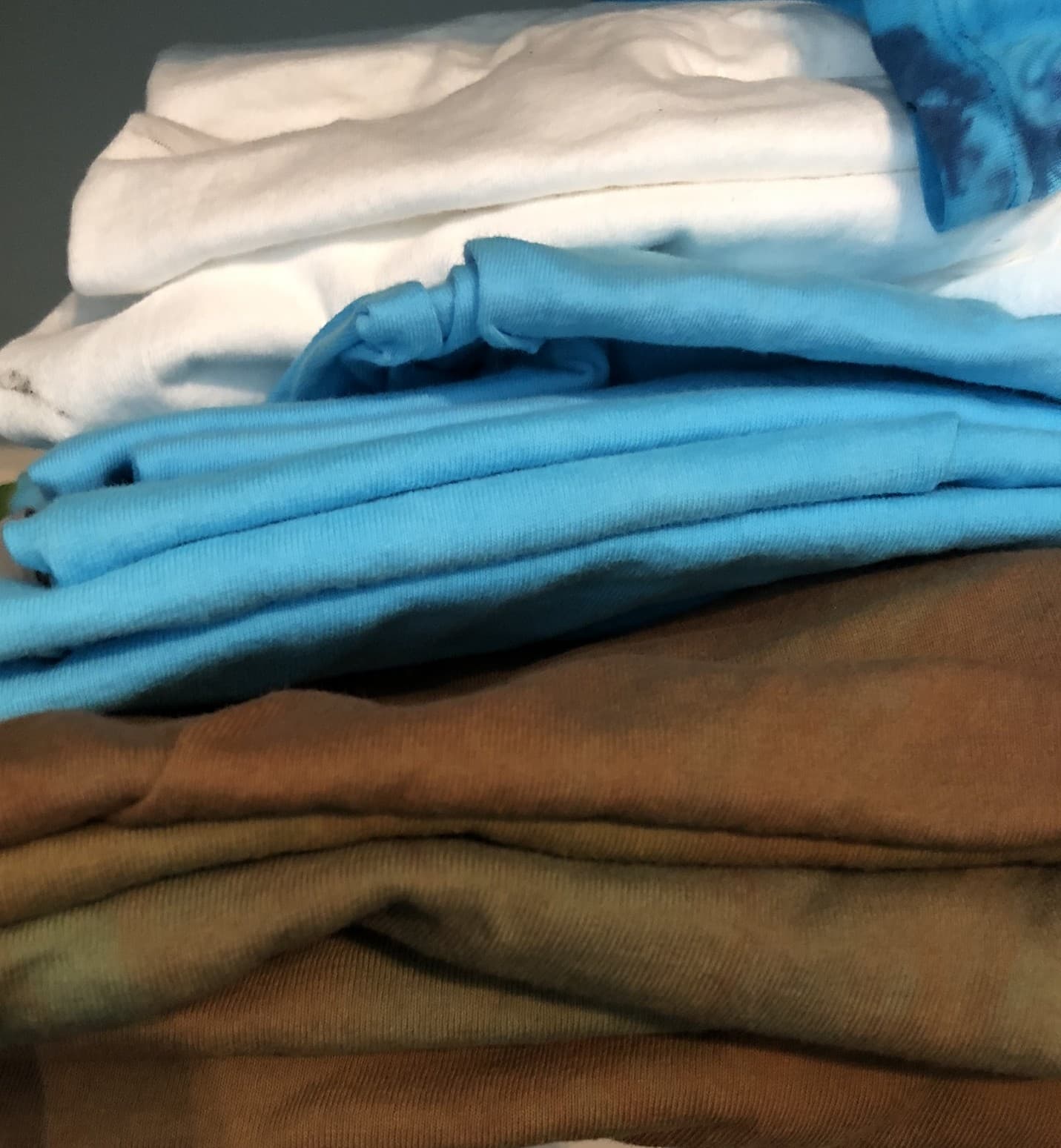
Sun & Rain Works is a small apparel outfit in Eugene, Oregon, with agricultural roots and a slow path toward farming. The onions guide you just read comes from the same place as the shirts.
More growing guides
We're working through the vegetables one at a time, with dates counted from your own frost station and the old books read properly. Occasional notes from Eugene, Oregon, an art business with agricultural roots, working its way toward farming.
We'll email you to confirm before sending anything. After that, occasional seasonal notes from Sun & Rain Works, we won't share your address, and every email has an unsubscribe link.
Growing advice here is current horticultural practice, drafted with AI assistance and checked against the sources this page names. Where it quotes a book, the book is named and linked. Where practice is genuinely contested, or local enough that we would be guessing, the text says so, your county extension service beats any national guide, including this one, on pest timing.
The photographs are not AI-generated. Every one is our own work, public domain, or licensed, and carries its author and licence beneath it.