Growing guide
How to grow broccoli
A cool-weather crop that most people plant into the wrong season. Get the timing right and it is generous for months; get it wrong and you get a head the size of a coin and nothing else.
Brassica oleracea var. italica · Brassicaceae, with cabbage, kale, cauliflower and Brussels sprouts
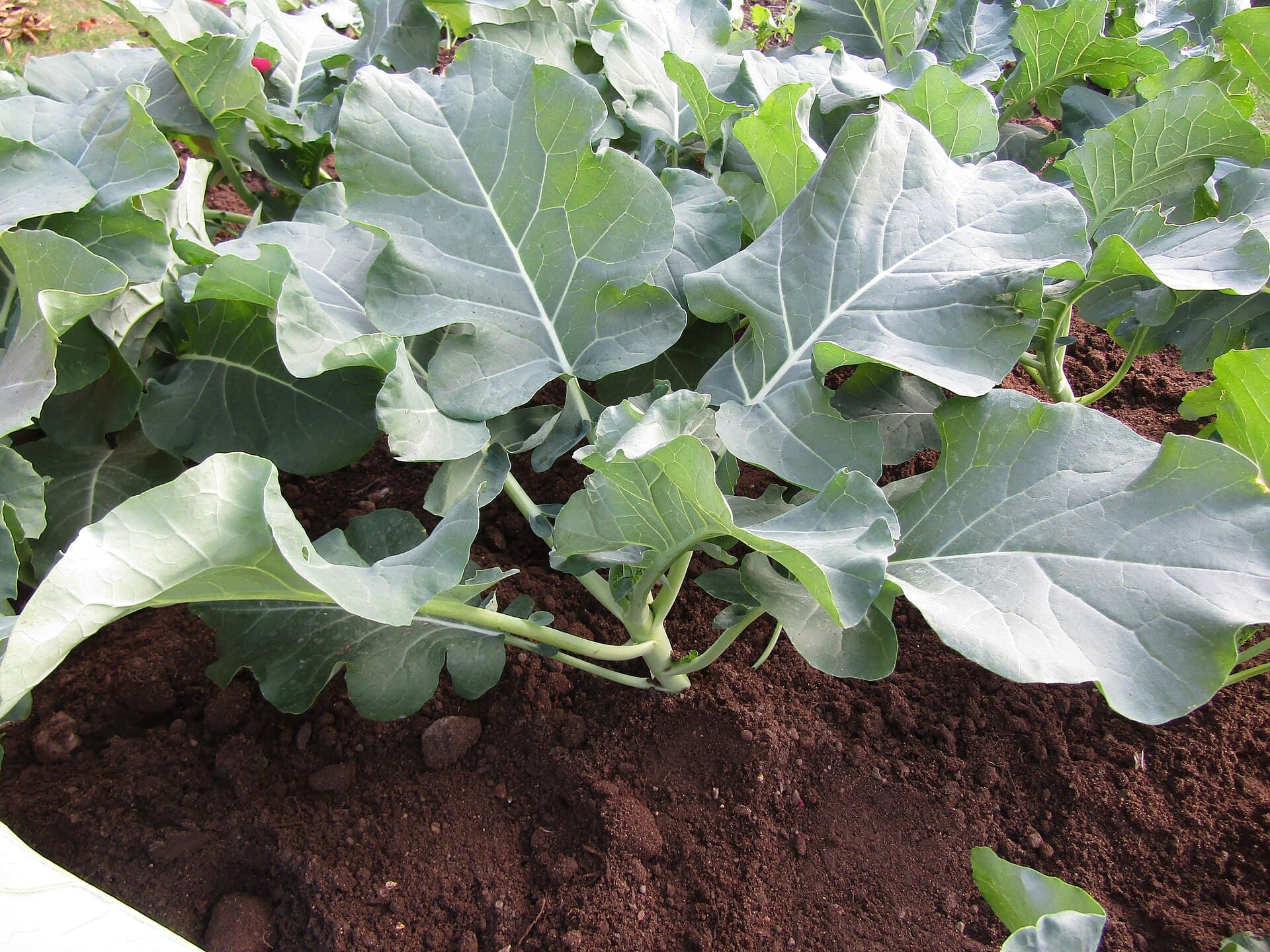
Above: Kolforn · CC BY-SA 4.0
.JPG)
moderate. Not fussy about soil or water once established, but genuinely unforgiving about temperature and timing, and it is a magnet for the cabbage-family pests, which is most of the actual work.
At a glance
- Family
- Brassicaceae (cabbage family)
- Life cycle
- Annual, grown for its flower buds
- Hardiness
- Hardy, takes frost, and prefers cool
- Sowing method
- Usually started and transplanted
- Germination
- 5–10 days in warm soil
- Soil
- Rich, firm, well-limed. Hungry feeder
- Sun
- Full sun, but heat is the enemy, not light
- Days to maturity
- 55–85 from transplant, by variety
- Best season
- Autumn crop usually beats the spring one
- Biggest single risk
- Heat during head formation
When to sow, where you actually live
Every other guide prints a month, and a month is only true somewhere. What transfers between locations is the offset: broccoli go in about 2 weeks before the last spring frost, wherever that falls for you. Give us a ZIP and we will count it from your own NOAA weather station.
Current spacing: 18″ apart in rows 30″ apart, sown 0.25″ deep. Roughly 55–85 days to a first picking, though variety moves that more than any general figure admits.
Get your sowing dates →Timing is nearly the whole crop
Broccoli makes its head, which is a mass of unopened flower buds, and it wants to do that in cool weather. Push a plant into head formation during a hot spell and it either makes a small loose head that flowers almost immediately, or it skips the head and bolts straight to flower. Nothing about feeding, watering or spacing rescues a crop that heads in August.
This is why the autumn crop is usually the better one, and why experienced growers in mild climates lean on it. A summer sowing sizes the plant up through warm weather and forms its head as things cool down, which is exactly the right way round. The spring crop has to race, it must be big enough to head before the heat arrives, which means starting early under cover and getting it out as soon as the ground allows.
In the maritime Northwest this lines up unusually well. The cool, long spring is good for an early crop, the genuinely hot weeks are few, and the mild autumn lets a late crop head in comfort. Overwintering types take it further still: purple sprouting broccoli sown in spring occupies its ground for nearly a year and gives you shoots in March and April, which is the hungriest part of the growing year.
- Heads form well in cool weather and badly in heat. That is the whole crop.
- Autumn crops are usually easier and better than spring crops.
- Purple sprouting overwinters and crops in March, worth the year it costs.
Starting and transplanting
Broccoli transplants willingly, which is why almost everyone starts it in trays or a nursery bed rather than direct-sowing. Sow a quarter-inch deep, expect germination in under a week in warm soil, and grow it on with plenty of light, a broccoli seedling that stretches for light makes a weak, leggy plant that never quite recovers.
Set plants out at about four to six weeks old, when they have three or four true leaves. Bury them slightly deeper than they sat in the tray, right up to the first leaves, and firm them in hard. Firm really does matter for the cabbage family: a loose-planted brassica rocks in the wind, the stem chafes, and the plant sulks all season. The old advice was that you should be able to tug a leaf and tear it rather than lift the plant.
Solomon's method for dry gardening is the opposite and worth knowing: sow a pinch of seed directly onto a deeply dug, well-fertilised spot, then thin gradually to the single best plant by the time it has three or four true leaves. That gives an undisturbed taproot, which matters enormously if the plant will never be watered, and matters much less if it will.
- Plant out at 3–4 true leaves, buried to the first leaves and firmed hard.
- Leggy seedlings never fully recover, give them light, not warmth.
- A loose-planted brassica rocks and sulks. Firm is not optional.
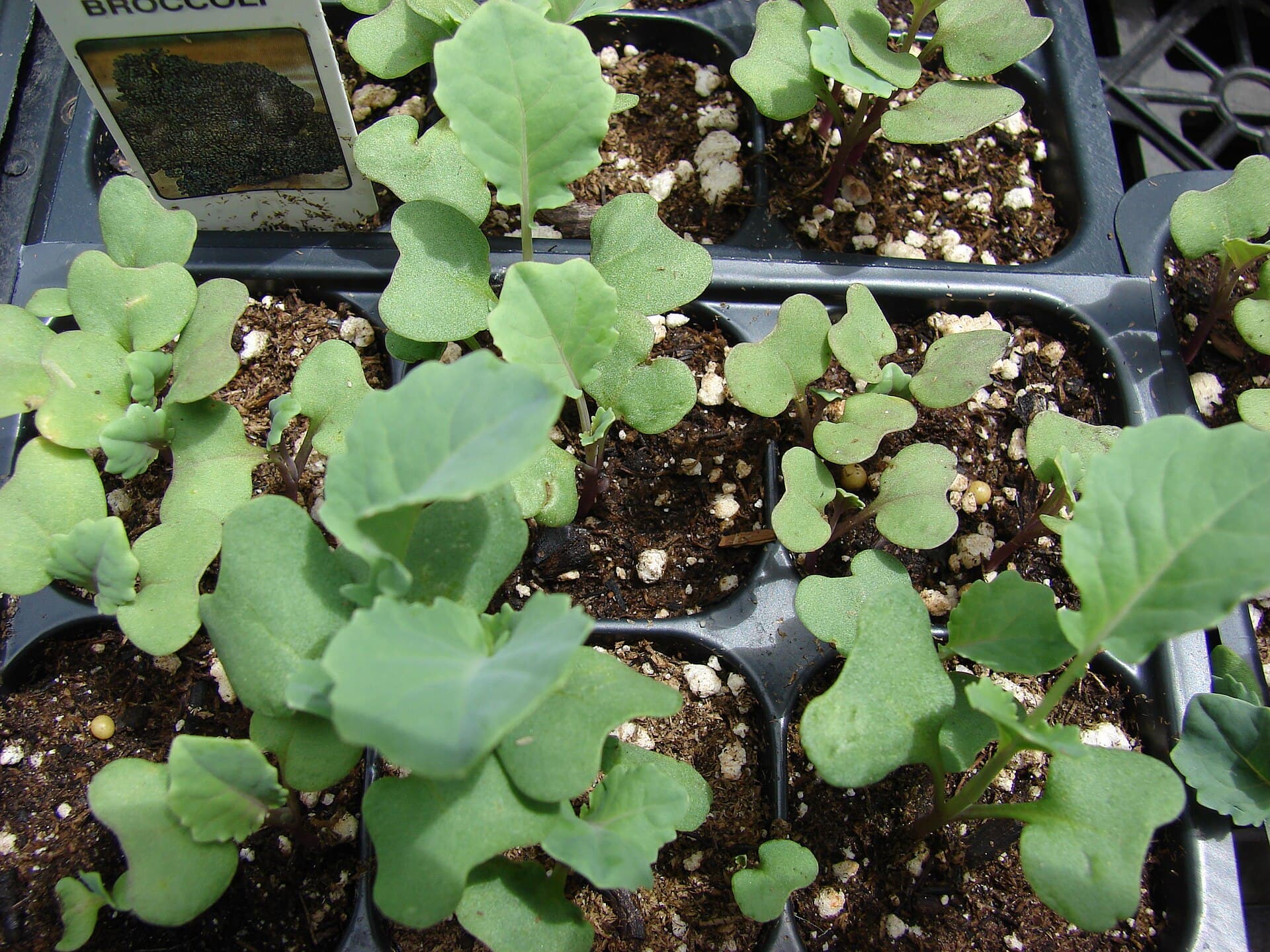
About the right stage to plant out, two or three true leaves beyond the rounded seed leaves, stems still short and purple-tinged rather than stretched. Left much longer in a cell this small, the roots circle and the plant checks when it goes out.
Kula, Maui, Hawaii, 6 September 2007
Forest & Kim Starr · CC BY 3.0

Rich, firm, and limed
Broccoli is a hungry plant and a big one. It wants soil with real fertility in it, compost or well-rotted manure dug in ahead of planting, and a nitrogen-leaning feed once it is growing away. Underfed broccoli makes a small head and stops, and unlike root crops there is no way to disguise it.
It also wants firm ground rather than fluffy ground, which is the opposite of what carrots want and surprises people who garden by one rule. Tread the bed or let it settle for a few weeks before planting.
Lime matters. The cabbage family prefers soil that is not acidic, somewhere around neutral, and acidic soil is both the maritime Northwest's default and the condition that clubroot thrives in. A soil test is worth doing once; it is the single most useful thing you can know about a brassica bed, and it saves guessing for years afterwards.
Space them further apart than looks reasonable. Our own figure is eighteen inches in the row with thirty between; Solomon, growing without irrigation, gives each plant three to four feet and argues that big plants make big sweet heads while cramped ones make small woody ones. The truth is that broccoli spacing is really a decision about head size.
- Hungry: compost before planting, nitrogen feed while growing.
- Firm soil, not fluffy, the opposite of a carrot bed.
- Test and lime. Acid soil is the default here and clubroot loves it.
Everything wants to eat it
This is the real work of growing broccoli, and it is why row cover is close to standard practice. The cabbage family is host to a well-organised set of pests, and in a home garden three of them account for nearly all the damage.
Cabbage white caterpillars, the green ones from the small white butterfly and the hairier ones from the large white, shred leaves and then burrow into the head, which is what turns a good harvest into an hour at the sink. Fine mesh laid over hoops from planting day prevents the butterfly ever laying, and is far more effective than anything you can do afterwards. Where they get in, Bacillus thuringiensis is the standard organic answer, and hand-picking works on a small planting.
Cabbage aphids form dense grey-white colonies in the growing point and among the buds. They are difficult to wash out of a head, so catch them early on the undersides of leaves. A strong jet of water knocks them down; encouraging the ladybirds and hoverflies that eat them does the rest.
Slugs and snails take young transplants, sometimes overnight. This is the pest that decides whether a planting establishes at all, and the damage is unmistakable, ragged holes in the middle of leaves rather than at the edges.
Two soil-borne problems worth naming: clubroot, which distorts the roots and is essentially permanent once present, controlled by liming and long rotations and by never bringing in soil or plants from an infected garden; and cabbage root fly, whose maggots attack the stem base and which a simple collar of card or felt around each stem prevents.
Sources
- PNW Insect Management Handbook, Broccoli, Brussels sprout, cabbage, cauliflower, Imported cabbageworm
- PNW Insect Management Handbook, Broccoli, Brussels sprout, cabbage, cauliflower, Aphid
- PNW Insect Management Handbook, Broccoli, Brussels sprout, cabbage, cauliflower, Cabbage maggot
- PNW Plant Disease Management Handbook, Broccoli, Downy mildew and staghead
- PNW Plant Disease Management Handbook, Broccoli, Clubroot
- Fine mesh from planting day is the single most effective measure.
- Holes in the middle of a leaf mean slugs; chewed edges mean caterpillars.
- Rotate hard. Clubroot is effectively permanent once you have it.
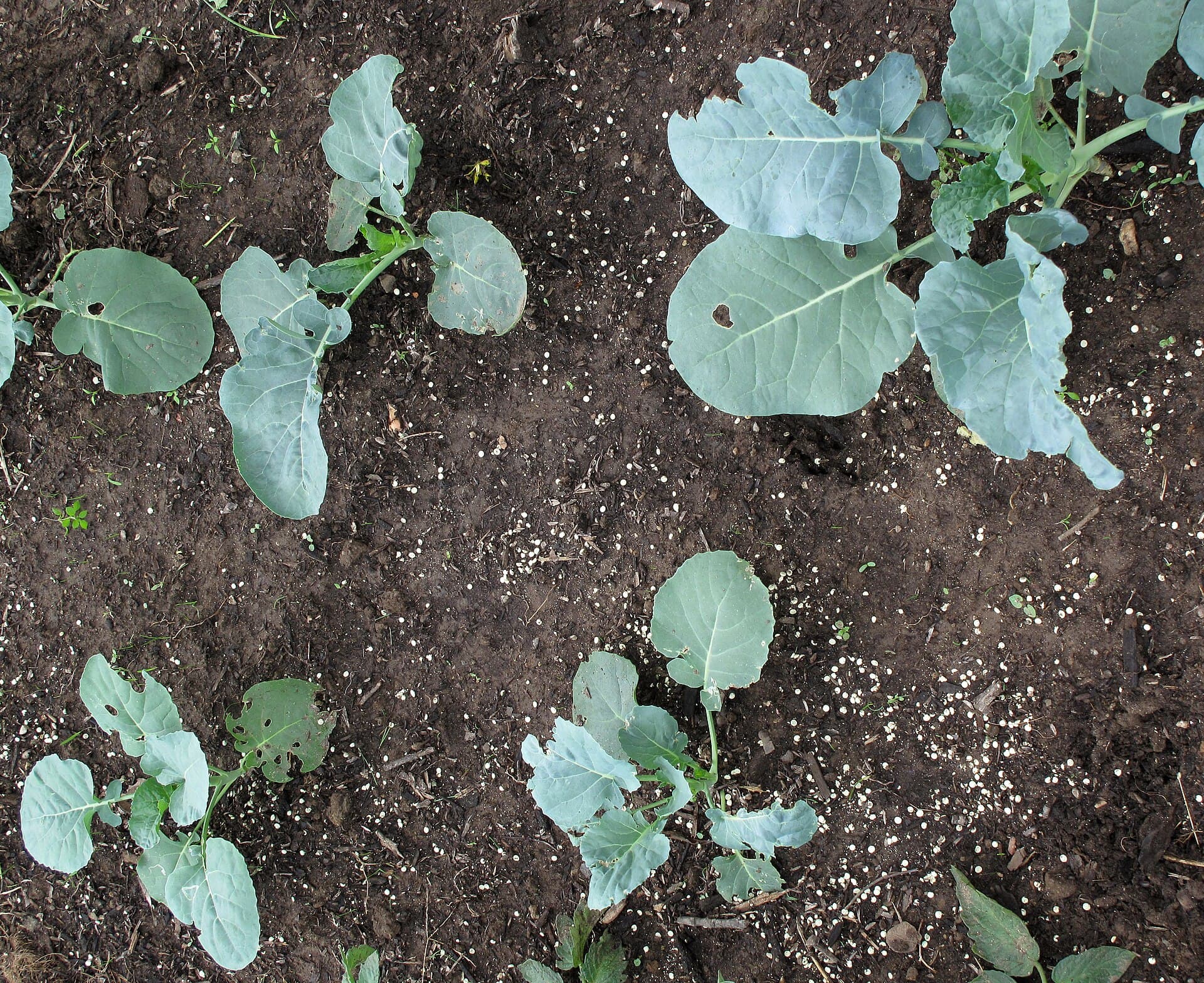
Slug and snail damage on newly planted broccoli, holes punched through the middle of the leaf rather than chewed in from the edge, which is how you tell it from caterpillar damage. Plants this small can be killed outright.
Downtowngal · CC BY-SA 3.0

Cut early, then keep cutting
Cut the main head while the beads are still tight and matt. The moment they start to loosen and shine, and certainly the moment you can see yellow, the plant is opening its flowers and the texture has gone. This happens faster than people expect in warm weather, check every couple of days once a head is sizing.
Cut it with four or five inches of stalk and cut at a slight angle so water runs off the cut rather than sitting on it and rotting the stem.
Then leave the plant. Removing the main head releases the buds lower down the stem, and a good variety will produce side shoots, smaller, looser, and in most people's opinion better eating, for several weeks afterwards. Keep cutting them and the plant keeps making them; stop, and it flowers and gives up. On a home scale the side shoots often add up to more than the head did.
A trick worth knowing at the end of the season: a heavy feed when the autumn rains return can push a spent plant into a second flush of shoots from buds near the soil. Solomon suggests exactly this, and calls it taking a chance, which is the right level of confidence.
- Cut while beads are tight and matt. Yellow means you are late.
- Leave 4–5 inches of stalk, cut at an angle so water runs off.
- Keep cutting side shoots and the plant keeps producing them.
Broccoli used to mean something else entirely
This is worth a moment because it explains why old gardening books seem to give strange advice about a familiar plant.
Our 1912 manual has no broccoli row in its planting table at all, cauliflower is there, Brussels sprouts are there, broccoli is not. Its broccoli section describes something else: a hardier relative of cauliflower, sown in spring, set out in June or early July, standing all winter and producing heads from midwinter into May, with the outer leaves folded over the head to protect it from frost. That is a description of overwintering heading broccoli, not of the green Italian type.
Burr in 1863 goes further. He describes twenty-five broccolis and every one is that older kind, white, purple, cape, sulphur, and most carry English breeders' names. The green sprouting calabrese that the word now means is simply absent from an exhaustive 1863 catalogue of American vegetables.
So when a pre-war book tells you to sow broccoli in spring for a harvest next April, it is not wrong and it is not talking about your seed packet. The nearest thing still sold is purple sprouting broccoli, which is grown on exactly that timetable, and which is, for that reason, the most historically continuous thing you can put in a brassica bed.
- Pre-war “broccoli” meant an overwintering, cauliflower-like plant.
- Burr's 25 varieties in 1863 include no green Italian sprouting type.
- Purple sprouting broccoli is the surviving link to that older crop.
How this crop used to be spaced
A single spacing figure reads as a fact about the plant. It is not, it is a judgement about your cultivation method and your water, and two books on our shelf disagree with our figure and with each other for reasons worth knowing.
- Through a rainless summer, unwatered
- A 4-foot-wide row, plants about 3 feet apart for early sowings and 4 feet for later ones. Solomon's rule is that big plants make big sweet heads, and that a stressed broccoli makes small woody florets that are not worth eating. He also ranks Italian broccoli among the least drought-adapted of the cabbage family, this is a crop that shows water stress in the harvest rather than in the leaves. Our notes on the book.
Which type to grow
Grouped by what each is for rather than by catalogue order, because the useful question is which one suits your ground.
Calabrese / green sprouting
One central head, then side shootsBest for: The standard crop, spring or autumn
What most seed sold as “broccoli” is. Choose open-pollinated types like DeCicco or Waltham 29 if you want a long run of side shoots, and hybrids if you want a single big uniform head. Solomon warns against anything bred compact or held up on a tall stalk for machine harvest, those have the weakest roots.
Purple sprouting
No central head; many slim purple spearsBest for: Overwintering, and the March hungry gap
Sown in spring, occupies the ground nearly a year, and crops when almost nothing else does. Solomon reports plants reaching four to five feet and yielding hugely. The closest surviving relative of what pre-war books meant by broccoli.
Romanesco
Chartreuse fractal spirals, one headBest for: Autumn, and showing off
Botanically closer to cauliflower in behaviour: it makes one head and no useful side shoots, and it is fussier about steady growth. Beautiful and genuinely good eating, but not the crop to learn on.
Broccolini / sprouting hybrids
Long tender stems, small loose headsBest for: Continuous cutting from a small bed
Crosses between broccoli and Chinese kale. Bred to give slim stems rather than one head, so the whole crop is side shoots. Efficient for a small garden where a single large head is an awkward thing to harvest all at once.
Overwintering heading broccoli
A single white or purple head, cut in springBest for: Historical continuity, and late spring cutting
The old kind, still sold in Britain more than in America. Grown on the timetable the 1912 manual describes, out in early summer, cut the following spring, outer leaves folded over the curd against frost.
What went wrong
Listed by what you can see, not by what the plant has, you arrive here holding the evidence and without the vocabulary. Where the answer is that nothing can be done this year, it says so.
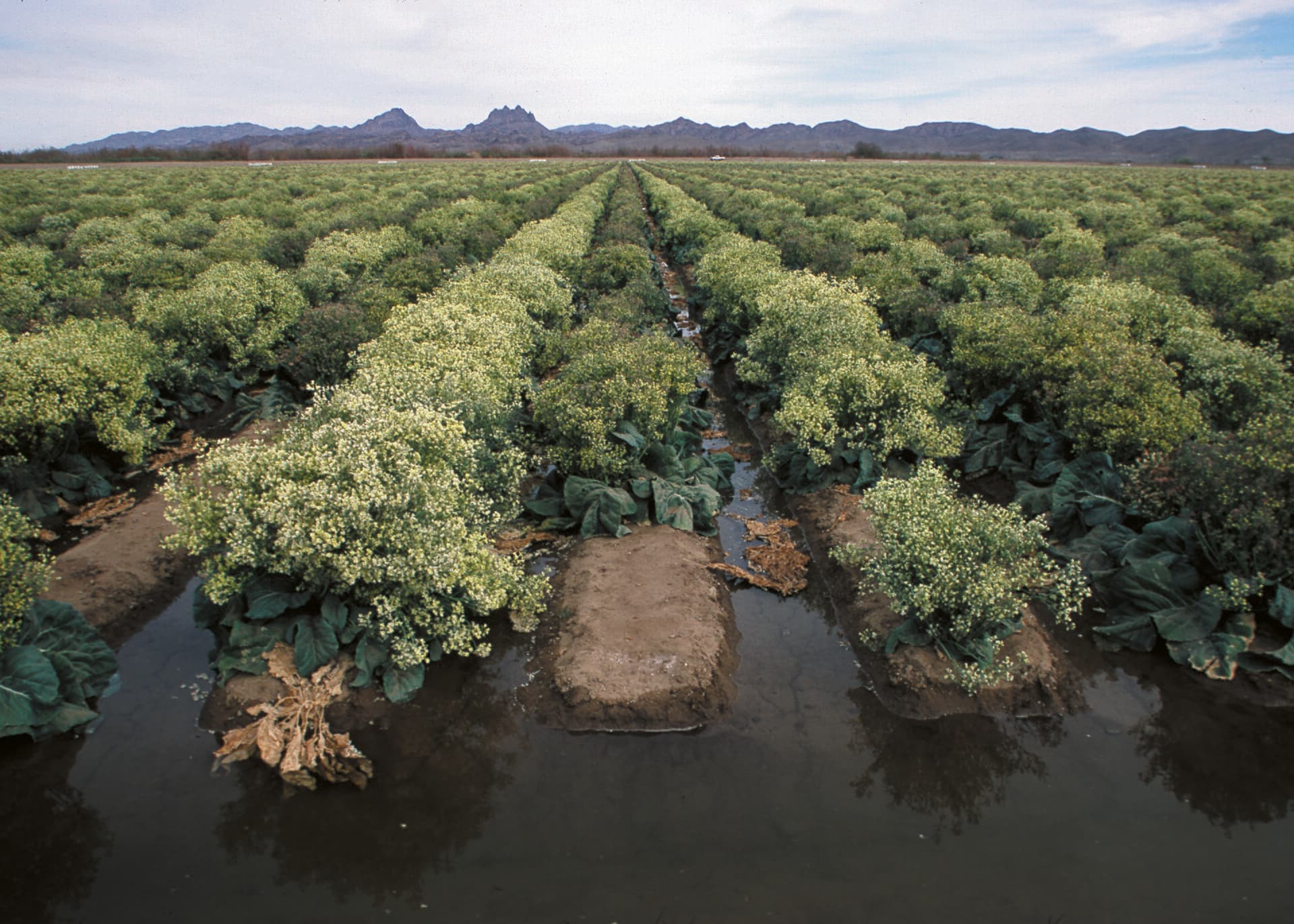
Broccoli that was never cut. This particular field is deliberate, it is a seed crop near Yuma, Arizona, grown on to flower, but it is exactly what a single bolted plant in a home garden is doing, and it shows how completely the crop changes once the buds open.
Furrow flood irrigation on a field of broccoli raised for seed, Yuma, Arizona
Jeff Vanuga, USDA Natural Resources Conservation Service · Public domain
(NRCS_Photo_Gallery).jpg)
A tiny head on a small plant, formed far too early
Next seasonWhy: Buttoning. The seedling was checked, held too long in a cell, planted into cold ground, or dried out, and responded by heading before it had built a plant.
What to do: Nothing recovers a buttoned plant; pull it and use what there is. Next time plant out at three or four true leaves rather than later, into soil that has warmed, and keep the seedlings growing steadily without a check.
Head loosens and shows yellow flowers
Fixable nowWhy: Cut too late, usually because warm weather moved things faster than expected.
What to do: Still edible immediately, though the texture has gone. Cut it now to release the side shoots. Check heads every two days once they start sizing.
Plant runs straight to flower without heading
Next seasonWhy: Heat during head formation, or a plant stressed by drought at the wrong moment.
What to do: Cut and eat the flowering shoots, they are perfectly good. Shift the crop's timing: sow for an autumn harvest rather than a midsummer one.
Green caterpillars in the leaves and down in the head
Fixable nowWhy: Cabbage white butterfly larvae.
What to do: Pick them off; Bacillus thuringiensis works on a bad infestation. Soak cut heads in salted water to float out what you missed. Next season, fine mesh over hoops from planting day stops the butterfly laying at all.
Dense grey-white colonies in the growing point
Fixable nowWhy: Cabbage aphids.
What to do: Blast with water early, before they get into the buds, once they are inside a head it is very hard to wash out. Leave the hoverflies and ladybirds alone to do the rest.
Holes punched through the middle of young leaves
Fixable nowWhy: Slugs and snails, which can kill a new transplant outright.
What to do: Protect transplants for the first fortnight, that is when the risk is. Clear hiding places near the bed, and go out after dark with a torch, which is unglamorous and works.
Plant wilts in sun, roots swollen and distorted
Next seasonWhy: Clubroot. Soil-borne, and effectively permanent once established.
What to do: Remove and destroy the plants, do not compost. Lime the ground towards neutral, rotate brassicas as far away and as long as you can manage, and never move soil or plants from that bed. Raising plants in large pots before planting out helps them outrun it.
Plant rocks loose, stem chafed at soil level
Fixable nowWhy: Planted too shallow or not firmed, then worked by the wind.
What to do: Firm it back in now and draw soil up the stem. Next time bury to the first leaves and firm hard, you should be able to tear a leaf without lifting the plant.
25 kinds, in 1863
Twenty-five broccolis in 1863, and not one of them is the plant you are growing. Every name here belongs to the older overwintering heading type, white, purple, cape, sulphur, and most carry English breeders' names, because that is where the work was being done. The green Italian sprouting broccoli now sold as simply “broccoli” does not appear in an exhaustive American catalogue of the period at all.
Ambler's Early White · Chappell's Large Cream-coloured · Danish, or Late Green · Dwarf Brown Close-headed · Early Purple · Elletson's Gigantic Late White · Fine Early White · Frogmore Protecting · Gillespie's Broccoli · Green Cape · Green Close-headed Winter · Hammond's White Cape · Kent's Late White · Kidderminster · Late Dwarf Purple · Miller's Late White · Mitchell's Ne Plus Ultra · Mitchinson's Penzance · Portsmouth · Purple Cape · Snow's Superb White Winter · Sulphur or Brimstone Broccoli · Ward's Superb · White Cape · Willcove
Our reading of twenty-two tomatoes →Related crops
Worked out from the botany rather than from a hand-written list, so it stays correct as the library grows.
- The same species
The same species, Brassica oleracea, bred in a different direction, so they cross freely, and seed saved near one another will not come true.
- The same family
Also Brassicaceae. Shares much of this crop's pest and disease pressure and belongs in the same rotation group.
What’s in broccoli
Per 100 grams raw, from USDA FoodData Central. The range is what USDA actually measured across its samples — it is usually wide, and your own crop sits somewhere in it rather than on the headline number.
| Nutrient | Per 100 g | % daily | Range measured |
|---|---|---|---|
| Vitamin C | 89.2 mg | 99% | 85.2–93.2 (n=19) |
| Vitamin K | 101.6 µg | 85% | 76.6–136.4 (n=8) |
| Folate | 63 µg | 16% | 42–88 (n=27) |
| Fibre | 2.6 g | 9% | 2.2–3.2 (n=13) |
| Potassium | 316 mg | 7% | 296–322 (n=37) |
| Protein | 2.82 g | 6% | 1.99–3.15 (n=23) |
| Magnesium | 21 mg | 5% | 18–24 (n=33) |
| Iron | 0.73 mg | 4% | 0.56–0.82 (n=33) |
| Calcium | 47 mg | 4% | 39–53 (n=33) |
| Vitamin A | 31 µg | 3% | , |
| Water | 89.3 g | , | 73.73–91.8 (n=49) |
| Energy | 34 kcal | , | , |
Source: USDA FoodData Central, “Broccoli, raw” (SR Legacy, published 4/1/2019). Percentages are of the FDA adult Daily Value, a labelling reference rather than a personal requirement. Raw values; boiling leaches water-soluble vitamins and some carotene, so a cooked serving is not the same figure.
Saving your own seed
Harder than it looks, and worth being honest about. Broccoli is an annual and will flower in its first year, so getting seed is easy, the difficulty is getting seed worth sowing.
Brassica oleracea is one species wearing many costumes. Broccoli, cabbage, kale, cauliflower, Brussels sprouts, kohlrabi and collards all cross freely with each other and with any of them left to flower in a neighbour's garden. Seed saved from a mixed neighbourhood produces plants that are none of the above.
It is also strongly self-incompatible, which means you need a decent population, twenty plants or more, to avoid inbreeding depression. Saving from one or two good plants, which is the instinct, produces weak seedlings a generation later.
If you want to try, grow a single brassica for seed in a given year, keep twenty-plus plants, and let them flower together. Otherwise, save your seed-saving effort for the crops that reward it and buy broccoli seed, this is not a failure of nerve, it is the reason seed houses exist.
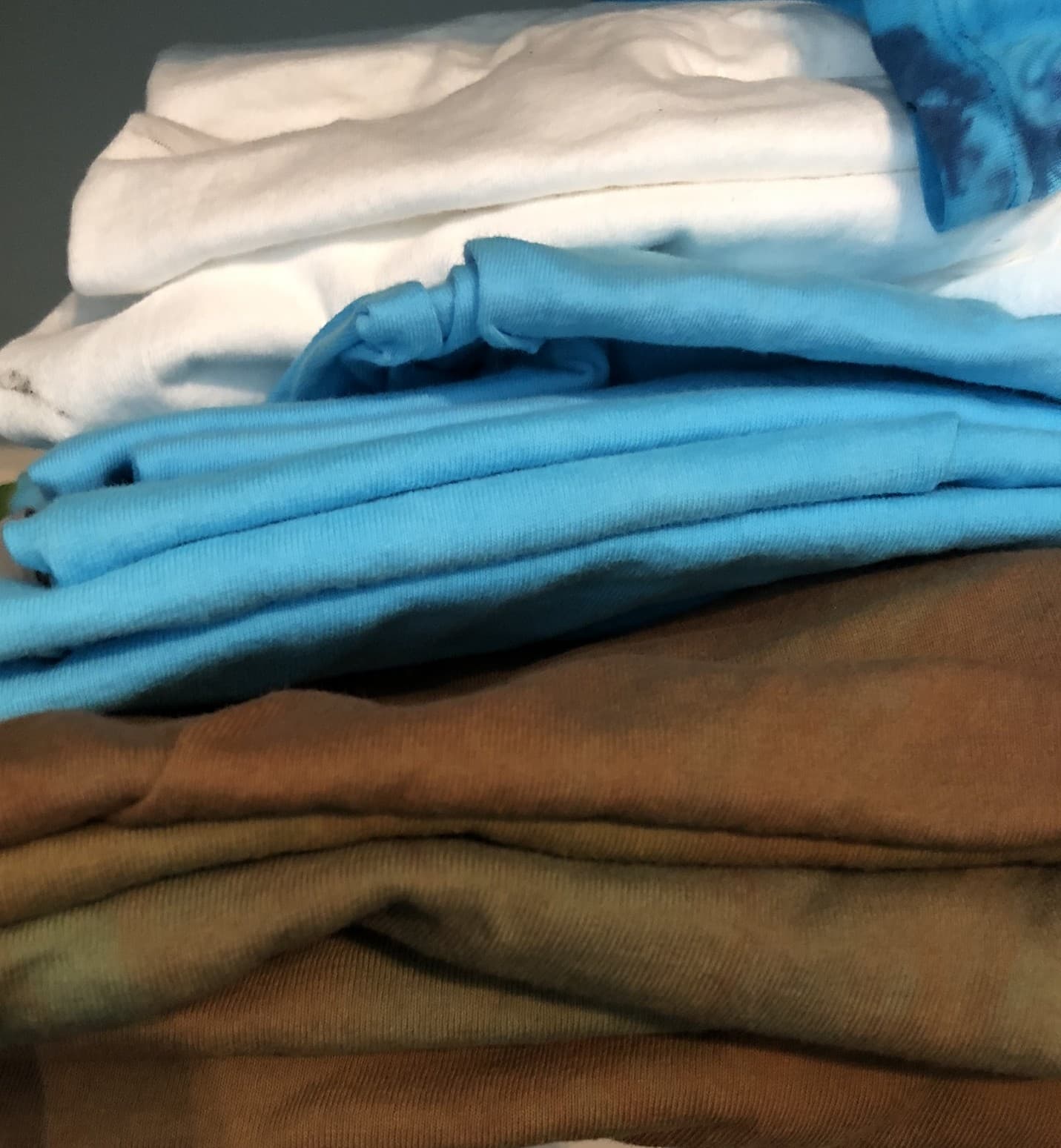
Farm rooted clothing · Est. 2005
The guides are free. The shop is the business.
Sun & Rain Works is a small apparel outfit in Eugene, Oregon, with agricultural roots and a slow path toward farming. The broccoli guide you just read comes from the same place as the shirts.
More growing guides
We're working through the vegetables one at a time, with dates counted from your own frost station and the old books read properly. Occasional notes from Eugene, Oregon, an art business with agricultural roots, working its way toward farming.
We'll email you to confirm before sending anything. After that, occasional seasonal notes from Sun & Rain Works, we won't share your address, and every email has an unsubscribe link.
Growing advice here is current horticultural practice, drafted with AI assistance and checked against the sources this page names. Where it quotes a book, the book is named and linked. Where practice is genuinely contested, or local enough that we would be guessing, the text says so, your county extension service beats any national guide, including this one, on pest timing.
The photographs are not AI-generated. Every one is our own work, public domain, or licensed, and carries its author and licence beneath it.