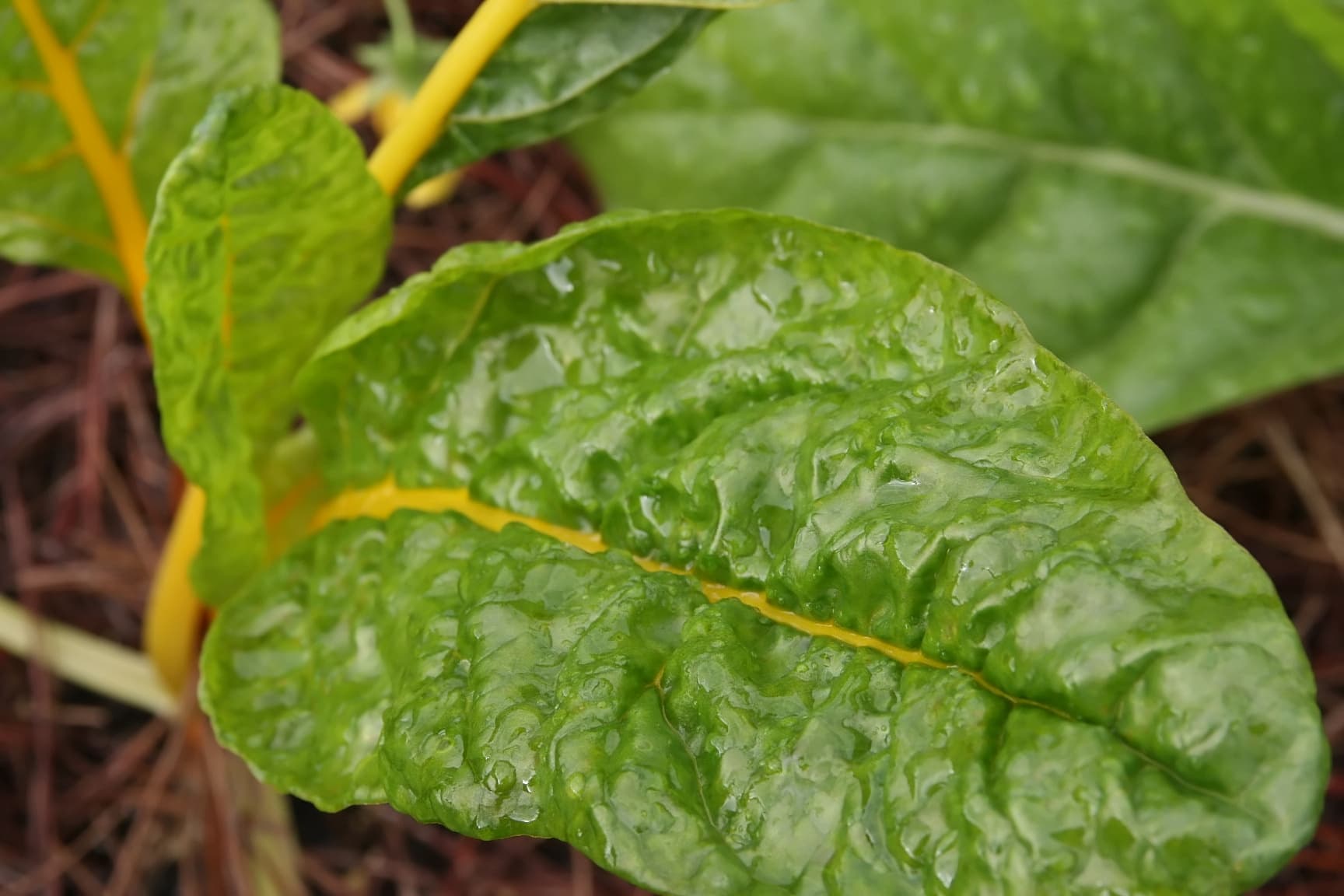
Growing guide
How to grow chard
The highest-return leaf crop a wet-winter garden can grow. One spring row picks from June until the following spring, and it does the job in July that spinach flatly refuses to do.
Beta vulgaris subsp. vulgaris · Amaranthaceae, with beet, spinach, orach and quinoa
Above: David J. Stang · CC BY-SA 4.0

easy. As close to trouble-free as this site gets. It germinates readily, tolerates heat and cold, resists bolting, and forgives neglect, the main risk is simply not picking it hard enough.
At a glance
- Family
- Amaranthaceae, the same species as beetroot
- Life cycle
- Biennial, grown as an annual
- Hardiness
- Half-hardy, stands most maritime winters
- Sowing method
- Direct sow or start in modules
- Germination
- 7–14 days; each seed is a cluster
- Soil
- Any decent soil. Not fussy
- Sun
- Full sun, tolerates part shade
- Days to maturity
- 50–60, and pickable much sooner
- Cropping period
- Eight months or more from one sowing
- Biggest single risk
- Leaf miner, as with beet
When to sow, where you actually live
Every other guide prints a month, and a month is only true somewhere. What transfers between locations is the offset: chard go in about 2 weeks before the last spring frost, wherever that falls for you. Give us a ZIP and we will count it from your own NOAA weather station.
Current spacing: 10″ apart in rows 18″ apart, sown 0.75″ deep. Roughly 50–60 days to a first picking, though variety moves that more than any general figure admits.
Get your sowing dates →What chard is for
Chard is beet. The same species, bred in a different direction, for leaves and stems rather than for a swollen root, which is why the seed looks identical to beetroot seed and why the two cross freely.
What makes it worth a row is the length of the harvest. Spinach gives you a few weeks in spring and then bolts. Lettuce gives you summer and then freezes. Chard sown in spring picks from early summer, stands the heat that flattens spinach, stands the frost that ends lettuce, keeps going through a mild winter, and puts on a final flush the following spring before it finally runs to seed.
That is eight or nine months from one sowing, which nothing else in these guides matches. It is the reason the crop is worth growing even if you consider it a slightly dull vegetable.
It is also two vegetables in one plant. The midribs, white, yellow, pink or red depending on variety, are a distinct thing from the leaf, closer to asparagus or celery in texture, and worth cooking separately rather than throwing away.
- Chard and beetroot are the same species, bred in opposite directions.
- One spring sowing crops for eight or nine months.
- The stems are a second vegetable, not waste. Cook them longer.
Sowing, and the seed cluster
Each chard seed is not a seed. It is a dried fruit containing two or three seeds, exactly as beetroot is, which is why a row comes up in tufts and why thinning is not optional.
Sow about three quarters of an inch deep, two or three inches apart, in rows eighteen inches apart, then thin the tufts to a single seedling and finally to about ten inches between plants. It looks like a lot of room for a seedling and the plants get big.
It transplants well, unlike most of its relatives, so starting in modules is a reasonable option, sow two or three clusters per cell, thin to one plant, and set out. That also gets around slugs taking the seedlings, which is the main early risk in a wet spring.
Sow from about two weeks before your last frost. A second sowing in midsummer gives you younger, more tender plants to carry through winter, which is worth doing if you have the space, the spring-sown plants get large and coarse by autumn.
Soaking the seed overnight speeds germination noticeably. The fruit is corky and takes a while to wet through.
- Each seed is a cluster of two or three. Thinning is compulsory.
- Unlike beet and spinach, chard transplants happily, modules work.
- A midsummer sowing gives you tender plants for winter picking.
Pick hard, and pick from the outside
This is what makes the crop last, and it is where most people underuse it.
Take the outer leaves and leave the growing point in the centre untouched. The plant keeps producing from the middle indefinitely. Snap or cut each stem right at the base rather than tearing it part-way, because a stub left behind rots and lets disease into the crown.
Pick more than you think. A chard plant that is being harvested hard makes tender new leaves continuously; one that is picked lightly puts its energy into a few enormous coarse leaves that nobody wants to eat. If your chard has gone tough, the answer is usually to pick it harder rather than to feed it.
Take no more than a third to a half of a plant at once, and rotate around the row.
Through winter the plants slow almost to a stop, that is normal, and they are holding rather than growing. Keep taking a little, and they resume properly in spring.
- Outer leaves only. Never cut the growing point out of the centre.
- Cut at the very base, a leftover stub rots into the crown.
- Tough leaves usually mean you have been picking too gently.
Through the winter, and when it ends
Chard is hardier than it looks, and in a maritime winter it usually stands without protection. Hard frost will knock the leaves down, but the crown normally survives and pushes new growth when the weather turns.
A cloche or a layer of fleece over the row makes the difference between picking occasionally and picking properly through the cold months. So does taking off the tattiest lower leaves in late autumn, so nothing wet is lying against the crown.
The end comes in spring. Chard is biennial, so a plant that has been through a winter will run to seed as the days lengthen, a thick flower stem, smaller and tougher leaves, and a bitter edge. Take the last decent picking when you see the stem starting, and pull the plants.
That spring flush before bolting is genuinely useful, though. It arrives in what British gardeners call the hungry gap, when the winter crops are finishing and nothing sown in spring is ready yet, and very little else fills it.
- It usually overwinters unprotected here; fleece makes it productive rather than merely alive.
- Strip tatty lower leaves in autumn so nothing wet sits on the crown.
- It bolts in its second spring, but that last flush fills the hungry gap.
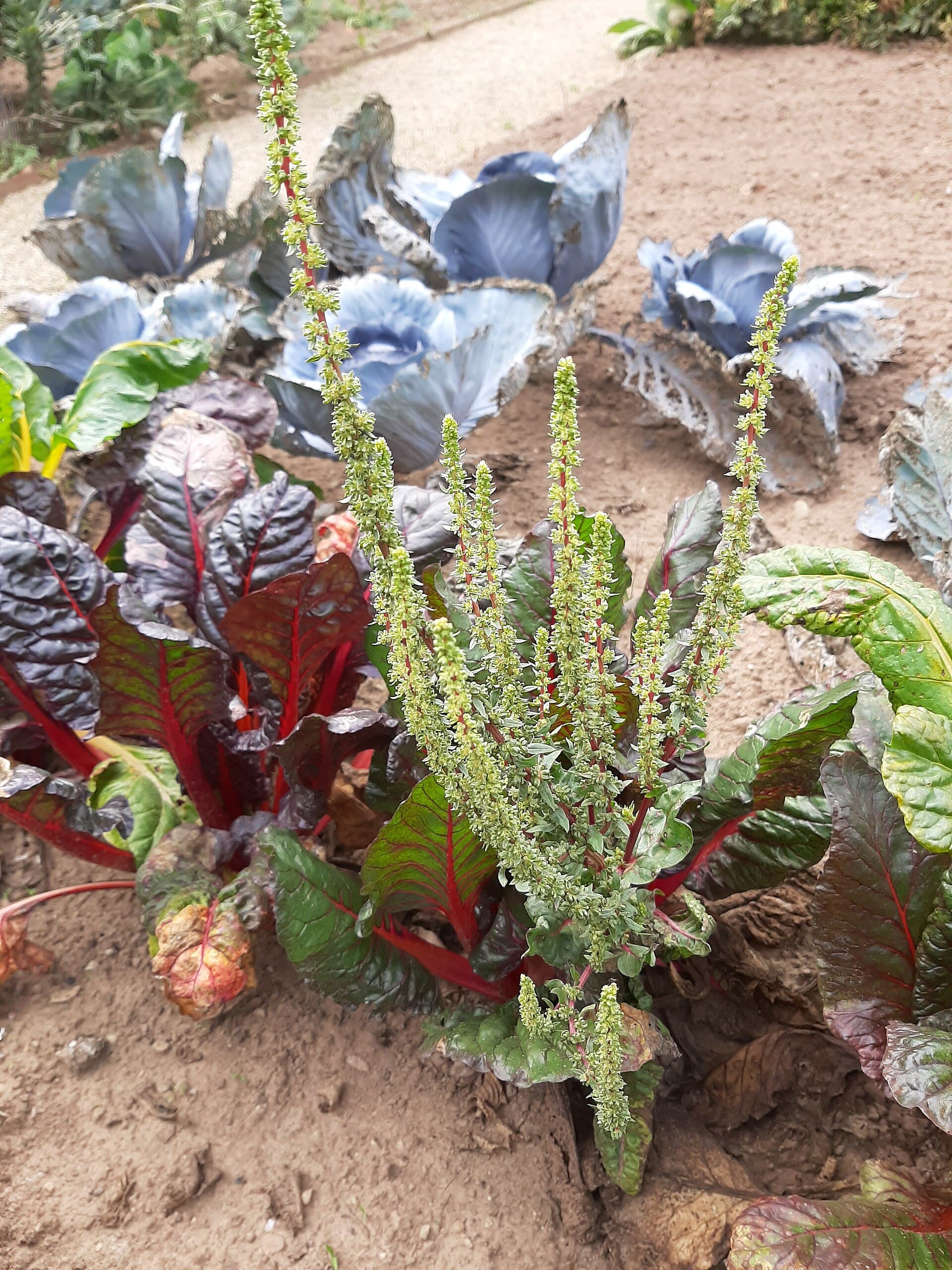
The end of the crop, and worth recognising early. These are second-year plants running to seed, tall green flower spikes, leaves getting smaller and tougher below them. Take a last decent picking when you see the stem rising and pull them; the plant will not turn back.
Villa Borg, Germany
Shi Annan · CC BY-SA 4.0

Leaf miner, and not a great deal else
Beet leaf miner is the one real pest, and it is the same insect that troubles beetroot and spinach, for the obvious reason that all three are close relatives. The larvae feed inside the leaf, making pale winding tunnels that become translucent blistered patches. On a leaf crop, that is the crop.
The controls are the same as for spinach: floating row cover from sowing, rotation away from where beet, chard or spinach grew last year, and picking off and destroying tunnelled leaves as soon as you see them so the larvae never complete their cycle in your bed.
Because chard is picked continuously rather than harvested once, removing affected leaves is easy and effective here in a way it is not on a one-shot crop.
Slugs take seedlings, and downy mildew can show in a wet winter as pale patches with grey growth beneath, space the plants so air moves and take off affected leaves.
Otherwise this crop is remarkably free of trouble, which along with the harvest length is most of the argument for growing it.
Sources
- Leaf miner is the pest, and row cover is the only reliable control.
- Rotate away from beet and spinach, same family, same insect.
- Continuous picking makes removing affected leaves genuinely practical.
Which type to grow
Grouped by what each is for rather than by catalogue order, because the useful question is which one suits your ground.
White-stemmed chard
Broad white midribs, large blistered leavesBest for: Yield and the best stems
Fordhook Giant and its kin. The heaviest cropping and the type with midribs substantial enough to be worth treating as a separate vegetable. The plainest-looking and the most productive.
Coloured and rainbow mixtures
Yellow, pink, orange and red midribsBest for: Looks, with no real loss of crop
Bright Lights and similar mixes, as in the photograph at the top of this page. Sold as a modern novelty, but Burr lists Large-ribbed Scarlet Brazilian and Large-ribbed Yellow Brazilian in 1863, so the coloured stem is at least a century and a half old.
Ruby / rhubarb chard
Deep red stems, dark leavesBest for: Colour, in a single variety
The most striking of them and slightly more prone to bolting than the white-stemmed sorts. The colour leaches in cooking water.
Perpetual spinach / leaf beet
Thin stems, smaller softer leavesBest for: Anyone who actually wants spinach
The same species again, selected for a thin midrib and a leaf that behaves like spinach in the pan. This is the true answer to wanting spinach in summer, it stands heat and drought that flatten real spinach, and Burr's Green or Common Leaf-beet is the direct ancestor.
What went wrong
Listed by what you can see, not by what the plant has, you arrive here holding the evidence and without the vocabulary. Where the answer is that nothing can be done this year, it says so.
Pale winding tunnels and blistered patches in the leaves
Fixable nowWhy: Beet leaf miner larvae feeding between the leaf surfaces.
What to do: Pick off and destroy affected leaves at once, squashing the larva inside works. Cover new sowings with fleece and rotate away from beet, chard and spinach ground.
Leaves tough, coarse and enormous
Fixable nowWhy: Under-picking. The plant is putting everything into a few old leaves.
What to do: Pick much harder, take a third to a half of each plant and keep rotating around the row. Tender new growth follows within days.
Row came up in tufts of three plants together
Fixable nowWhy: Working as designed, each chard seed is a cluster containing two or three seeds.
What to do: Thin the tufts to a single seedling early, then to about ten inches between plants. This is not a seed fault.
Thick flower stem and bitter leaves in spring
Fixable nowWhy: Bolting. Chard is biennial and runs to seed after a winter.
What to do: Take a final picking and pull the plants, it will not recover. Sow a fresh row in spring, and a second in midsummer for the following winter.
Crown rots over winter
Next seasonWhy: Dead leaves lying wet against the centre of the plant.
What to do: Strip the tatty lower leaves in autumn, and cut stems flush at the base when picking rather than leaving stubs to rot.
Seedlings vanish overnight in spring
Fixable nowWhy: Slugs, which is the main early risk in a wet maritime spring.
What to do: Start in modules and set out plants at a size slugs cannot destroy in a night. Chard transplants well, which most of its relatives do not.
5 kinds, in 1863
Only five, under the heading Leaf-beet, or Swiss Chard, one of the shortest lists in the census. But two of them are worth the price of the book: Large-ribbed Scarlet Brazilian and Large-ribbed Yellow Brazilian. Those are the coloured-stem chards now sold at a premium as a modern rainbow mixture, and they were on the market in 1863. Burr also lists Green or Common Leaf-beet, which is the thin-ribbed sort still sold as perpetual spinach.
Green or Common Leaf-beet · Large-ribbed Curled · Large-ribbed Scarlet Brazilian · Large-ribbed Yellow Brazilian · Silver-leaf Beet
Our reading of twenty-two tomatoes →Related crops
Worked out from the botany rather than from a hand-written list, so it stays correct as the library grows.
What’s in chard
Per 100 grams raw, from USDA FoodData Central. The range is what USDA actually measured across its samples — it is usually wide, and your own crop sits somewhere in it rather than on the headline number.
| Nutrient | Per 100 g | % daily | Range measured |
|---|---|---|---|
| Vitamin K | 830 µg | 692% | , |
| Vitamin A | 306 µg | 34% | , |
| Vitamin C | 30 mg | 33% | , |
| Magnesium | 81 mg | 19% | , |
| Iron | 1.8 mg | 10% | , |
| Potassium | 379 mg | 8% | , |
| Fibre | 1.6 g | 6% | , |
| Calcium | 51 mg | 4% | , |
| Protein | 1.8 g | 4% | , |
| Folate | 14 µg | 4% | , |
| Water | 92.66 g | , | , |
| Energy | 19 kcal | , | , |
Source: USDA FoodData Central, “Chard, swiss, raw” (SR Legacy, published 4/1/2019). Percentages are of the FDA adult Daily Value, a labelling reference rather than a personal requirement. Raw values; boiling leaches water-soluble vitamins and some carotene, so a cooked serving is not the same figure.
What the wartime archive says about chard
4 passages from the USDA’s 1943–46 victory garden material, with our note on whether each still holds. Pulled from the annotations themselves rather than listed here by hand.
- Cut and come againStill holds
We know of another gardener who set aside a small space for this purpose last summer and by clipping off the large leaves was able to supply three people with mustard greens at least once a week for nearly three months.
Planning and starting · May 10, 1944
- A beet seed is not one seedMostly holds
Each seed of beet and chard is really a package of several seeds. So several plants will come up from each one, and you are sure to have to do some thinning.
Working the garden year · May 10, 1943
- Eat what you pullStill holds
You can often use the thinnings of greens like chard and beets. The young leaves you pull out are delicious to eat. Use the first thinnings of beets as greens, later thinnings as baby beets cooked with greens... Tiny-finger carrots are fine…
Working the garden year · May 10, 1943
- Why your seed comes from OregonStill holds
Before the war, most seed of cabbage, kale and related crops came from Europe, where black rot and black leg are common. Now this seed is grown in the Pacific Northwest where these diseases do not occur, and so it is free from them. Beans a…
Pests and diseases · “Prevent Vegetable Diseases”, 1944
Saving your own seed
Hard, and honestly not worth it for most gardens, one of only two crops on this site where the advice is to buy the seed.
The problem is not the plant, it is the pollen. Chard is wind-pollinated, so distance rather than a cage is the only control, and it is the same species as beetroot, meaning it crosses with your beets, your neighbour's beets, and any leaf beet within a mile.
It is also biennial, so seed means overwintering the plants and waiting for them to bolt the following spring. That part is easy here, since they overwinter anyway, but it ties up the row for a second year.
If you do it: keep twenty to thirty plants for genetic health, grow only one variety of the whole species that year, and let them flower. The seed clusters ripen along tall stems and keep four to five years.
For everyone else, chard seed is cheap and long-lived. Put the effort into tomatoes, beans, peas and lettuce, where the same work actually preserves something.
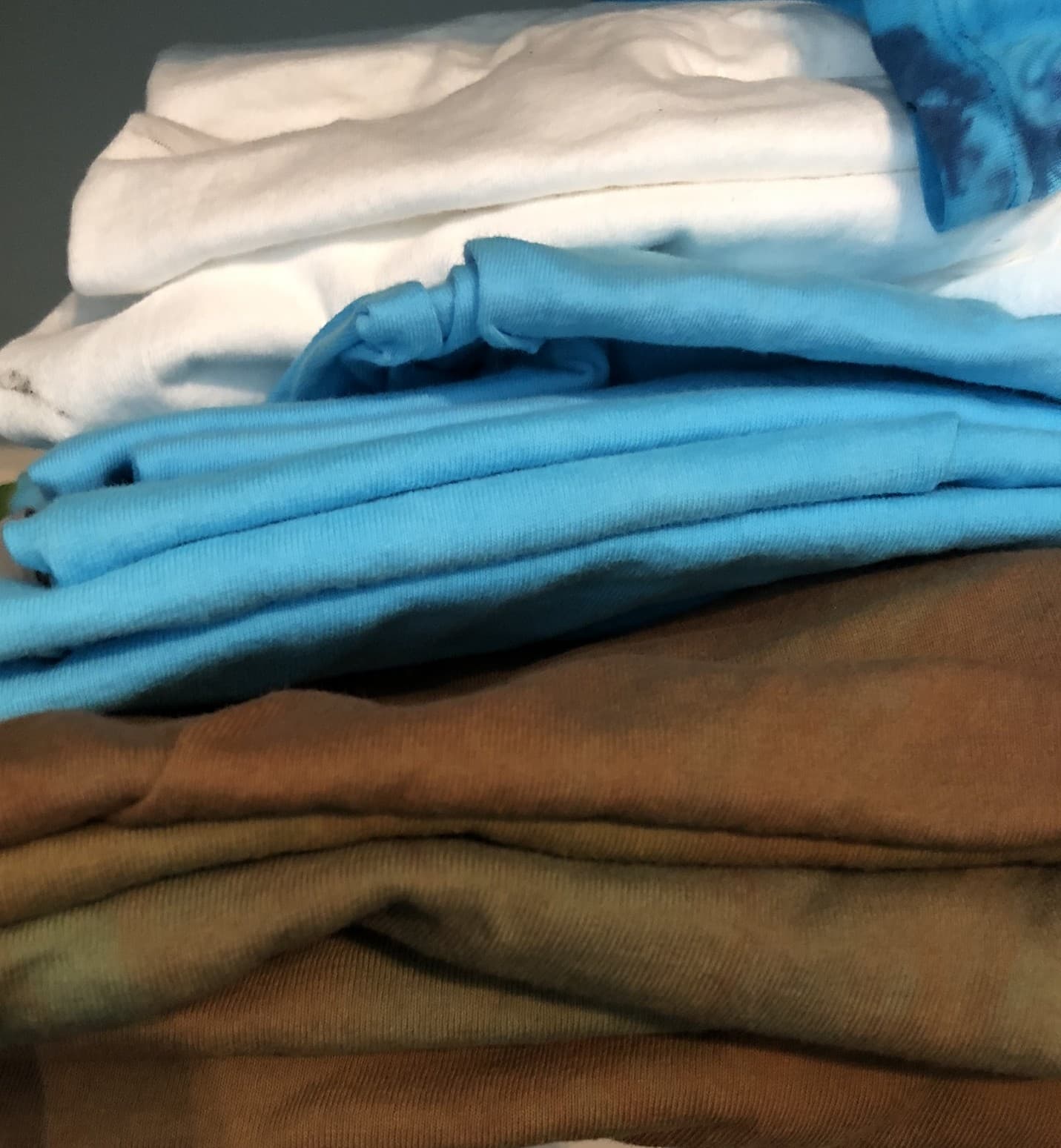
Farm rooted clothing · Est. 2005
The guides are free. The shop is the business.
Sun & Rain Works is a small apparel outfit in Eugene, Oregon, with agricultural roots and a slow path toward farming. The chard guide you just read comes from the same place as the shirts.
More growing guides
We're working through the vegetables one at a time, with dates counted from your own frost station and the old books read properly. Occasional notes from Eugene, Oregon, an art business with agricultural roots, working its way toward farming.
We'll email you to confirm before sending anything. After that, occasional seasonal notes from Sun & Rain Works, we won't share your address, and every email has an unsubscribe link.
Growing advice here is current horticultural practice, drafted with AI assistance and checked against the sources this page names. Where it quotes a book, the book is named and linked. Where practice is genuinely contested, or local enough that we would be guessing, the text says so, your county extension service beats any national guide, including this one, on pest timing.
The photographs are not AI-generated. Every one is our own work, public domain, or licensed, and carries its author and licence beneath it.