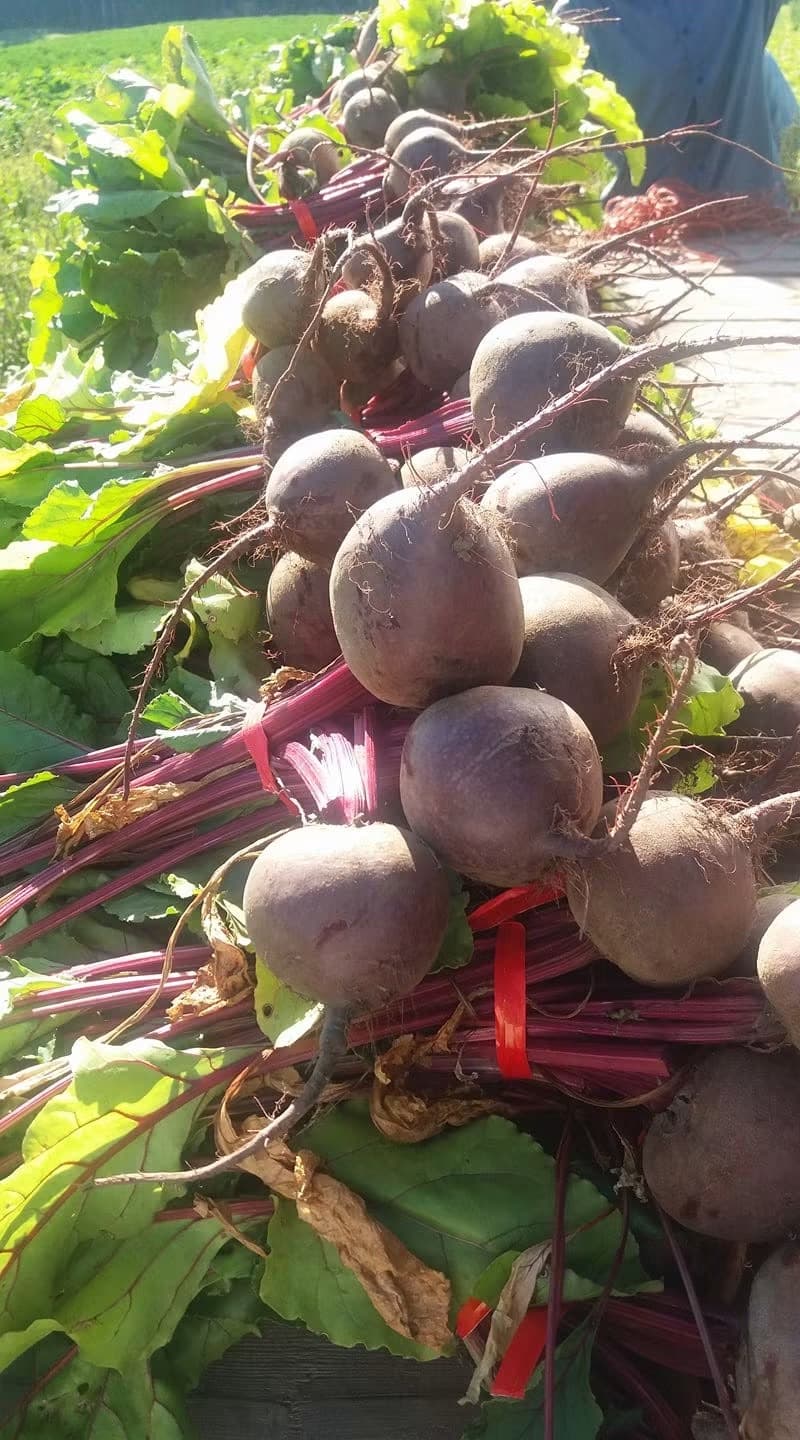
Growing guide
How to grow beets
Two crops from one plant, and the greens are as good as the roots. The only step that really matters is the one most people skip, and the plant makes it unavoidable by design.
Beta vulgaris · Amaranthaceae, with chard, spinach, orach and quinoa
Above: Sun & Rain Works · © Sun & Rain Works
easy. Forgiving about soil, weather and neglect, and quick from sowing to eating. The only genuinely required task is thinning, and the only common failure is not doing it.
At a glance
- Family
- Amaranthaceae, same species as chard
- Life cycle
- Biennial, grown as an annual
- Hardiness
- Half-hardy; roots take light frost
- Sowing method
- Direct sow; transplants poorly
- Germination
- 5–14 days; soak seed to speed it
- Soil
- Loose and stone-free; dislikes acid ground
- Sun
- Full sun to light shade
- Days to maturity
- 50–65, and greens far sooner
- Succession
- Every 3 weeks through the season
- Biggest single risk
- Not thinning
When to sow, where you actually live
Every other guide prints a month, and a month is only true somewhere. What transfers between locations is the offset: beets go in about 3 weeks before the last spring frost, wherever that falls for you. Give us a ZIP and we will count it from your own NOAA weather station.
Current spacing: 3″ apart in rows 14″ apart, sown 0.5″ deep. Roughly 50–65 days to a first picking, though variety moves that more than any general figure admits.
Get your sowing dates →One seed is several seeds
What a packet calls a beet seed is botanically a fruit, a corky cluster holding two to four actual seeds fused together. Sow one and you get a tuft of seedlings from a single point on the row.
This changes what a thick row means. A gardener who sowed carefully at the recommended spacing still gets clumps, concludes they were heavy-handed, and often leaves the row alone out of embarrassment. The result is a row of leaves and marble-sized roots, beets crowded at the crown simply cannot swell.
The 1912 manual is entirely clear on this, and its explanation is the same one a modern seed catalogue gives: as a rule each seed ball contains more than one seed, and this accounts for beets coming up very thickly.
The exception worth knowing: monogerm varieties, bred originally for mechanised sugar-beet production and now sold for gardens, carry a single seed per fruit. If your packet says monogerm, sow at final spacing and skip most of the thinning. If it does not, assume clusters.
Soaking the seed overnight before sowing softens that corky fruit and speeds germination noticeably, one of the few pre-sowing rituals that reliably earns its time.
- Each “seed” is a cluster of 2–4. Clumps are normal, not your fault.
- Monogerm varieties are the exception, check the packet.
- Soak seed overnight; it genuinely speeds germination.
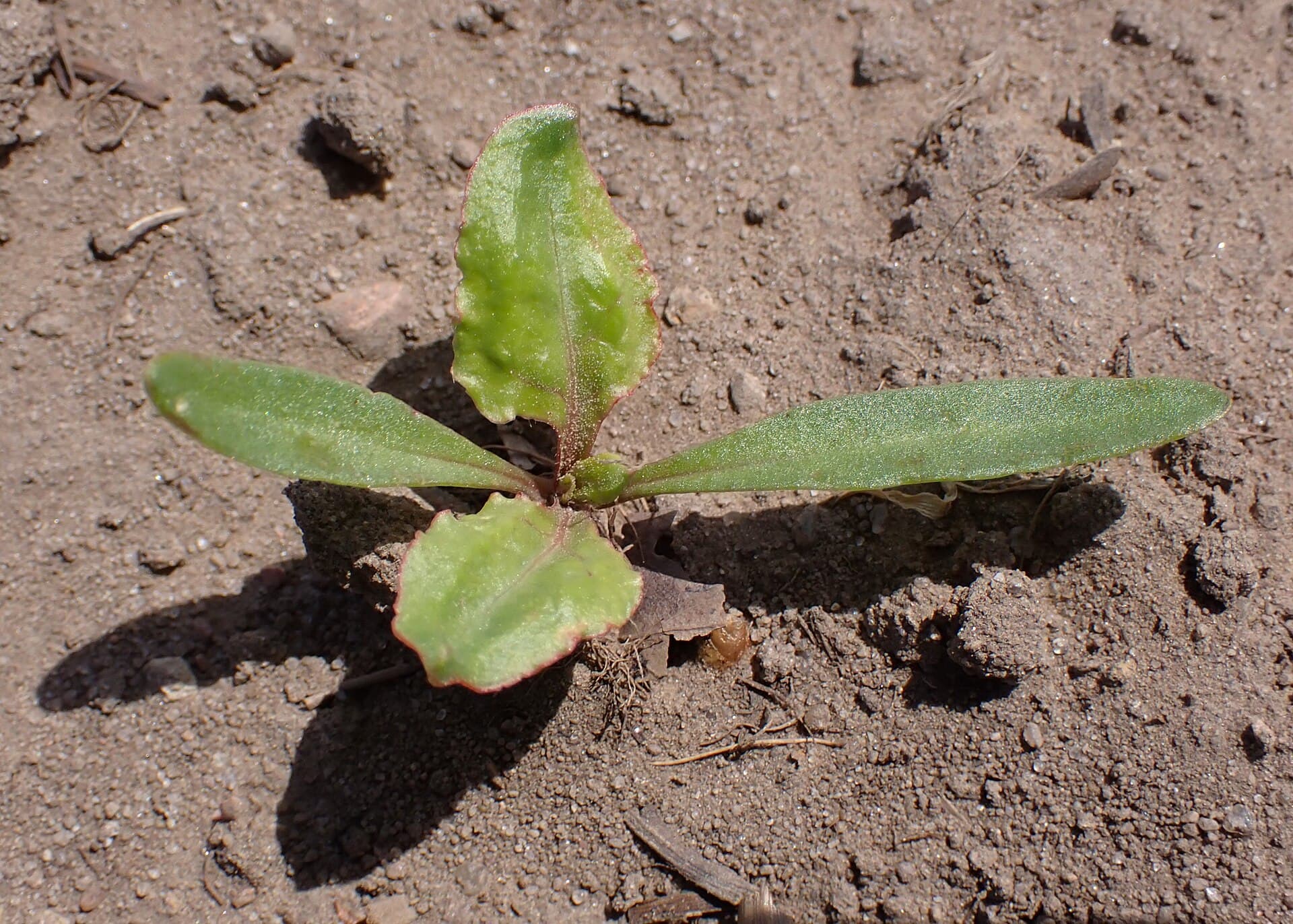
A beet seedling at the stage to start thinning: two narrow seed leaves, two rounded true leaves, and the red in the stem and leaf margin that tells you it is a beet rather than a weed. Where a cluster came up, this is one of three or four crowded into the same inch. Photographed in a sugar-beet field, a different use of the same species.
Warchlino near Maszewo, north-west Poland, 13 May 2023
Krzysztof Ziarnek, Kenraiz · CC BY-SA 4.0

Thin in stages, and eat every stage
Thin gradually rather than once. Solomon's sequence is the clearest published version and works whether or not you are watering: at two to three inches tall, thin to about an inch apart. When the roots reach radish size, thin to two inches and eat the thinnings, tops and all. At golfball size, thin to four. And in a dry garden with deep open soil, a final thinning to a foot apart lets the plants run all summer.
The point of thinning in stages is that nothing is wasted and no gaps are created. Every thinning is food: beet greens at any size cook exactly like chard, and the very small ones are excellent raw.
Snip rather than pull, if the row is tight. Pulling one seedling out of a cluster disturbs the two beside it that you meant to keep.
For a household, four inches apart in rows fourteen inches apart, which is what our calendar gives, produces good eating-sized roots. Wider spacing gives larger roots, which are not better; a beet the size of a fist is usually woodier than one the size of an egg.
- Thin in stages: an inch, then two, then four. Eat every thinning.
- Snip crowded seedlings rather than pulling and disturbing neighbours.
- Bigger is not better, an egg-sized beet beats a fist-sized one.
Soil, and the acid problem
Beets want loose, stone-free ground for the same reason carrots do, the root has to swell, and it will deform around anything hard. They are less fussy about depth than carrots, because most of a beet sits at or above the soil surface rather than driving down.
The one real preference is pH. Beets dislike acid soil more than most vegetables and respond visibly to liming where the ground is sour, which in the maritime Northwest it usually is. If one crop in the garden is going to tell you your soil needs lime, it will be this one.
They are also the classic indicator crop for boron deficiency, which shows as dark corky patches inside the root and hollow brown areas at the crown. It is uncommon in gardens with regular compost and easy to overcorrect, boron is toxic to plants at not much above the useful dose, so confirm with a soil test before adding anything.
Water steadily. Beets are more drought-tolerant than they look, but irregular water makes tough roots with pronounced rings.
- Loose stone-free soil, but depth matters less than for carrots.
- Beets hate acid soil, this is the crop that tells you to lime.
- Corky dark patches inside a root suggest boron. Test before adding any.
The other half of the crop
Beet and chard are the same species. Chard was selected for leaves and beet for the root, but a beet's leaves are chard leaves and cook the same way, and treating them as a by-product is how half the crop gets composted.
You can crop leaves lightly from growing plants without harming the root, as long as you take no more than about a third and never touch the growing point at the centre. Beyond that you are trading root for leaf, which is a fair trade if leaves are what you want.
The thinnings are where the real volume is. A row thinned three times produces a considerable amount of greens before a single root is lifted, and those young leaves are better than anything the mature plant offers.
This is not a modern rediscovery. Burr treats the leaf crop as ordinary, and the wartime archive in our own collection includes a 1943 USDA broadcast titled Thick and Thin about exactly this, thinning root crops and eating what you pull.
- Beet and chard are one species. The leaves are chard.
- Take up to a third of the leaves without harming the root.
- Thinnings are the main green harvest, plan for them.
Harvest and storage
Lift when the roots are between a golf ball and a tennis ball. There is no need to wait for a size on a packet and every reason not to, larger roots go woody and develop a stronger, earthier flavour that not everybody wants.
Twist or cut the tops off about an inch above the crown rather than trimming flush. A beet cut close to the crown bleeds badly when cooked, which is why boiled beets sometimes end up pale and the water dark red. Leave the taproot on for the same reason.
Take the leaves off within an hour of lifting if you are storing the roots, leaves left on keep drawing moisture out and a bunch left overnight is noticeably softer by morning.
For keeping, layer roots in barely damp sand in a box somewhere cold and dark, not touching, exactly as for carrots. Burr describes the same method and reckons on roots holding until spring. In a mild winter you can also leave them in the ground under a thick mulch and lift as needed, which is less work and better eating.
- Lift between golf ball and tennis ball. Bigger means woodier.
- Cut tops an inch above the crown, not flush, or the root bleeds.
- Damp sand, cold and dark, or leave them under mulch in a mild winter.
Very little else goes wrong
Beets are among the least troubled crops in a home garden. Leaf miner is the commonest complaint, pale winding tunnels or blistered patches inside the leaf, made by larvae feeding between the leaf surfaces. It ruins greens and barely affects roots. Pick off affected leaves, and use row cover on a crop grown mainly for its tops.
Cercospora leaf spot appears as small round spots with pale centres in warm humid spells. It is cosmetic on a root crop; remove badly affected leaves and rotate.
Bolting happens when a young plant meets a cold spell, beets are biennial, and prolonged cold reads as winter to a seedling, which then flowers in what it believes is its second year. Sowing into soil that has warmed, rather than at the earliest possible date, is the fix.
Slugs take seedlings, as they do everywhere. Once the plants have a few true leaves the crop looks after itself.
Sources
- Leaf miner ruins greens and barely touches roots.
- Bolting means a cold snap hit young plants. Sow into warmer soil.
- Otherwise this crop mostly leaves you alone.
How this crop used to be spaced
A single spacing figure reads as a fact about the plant. It is not, it is a judgement about your cultivation method and your water, and two books on our shelf disagree with our figure and with each other for reasons worth knowing.
- 1912, worked by hand
- Rows 12 to 18 in., plants 5 or 6 to ft., sown 1 to 2 in.deep. That is the hand-cultivation column, the same table's horse column is far wider, because a horse and cultivator had to walk between the rows, and quoting that one is how old manuals got their reputation for wasting ground. We reproduce the table in full.
- Through a rainless summer, unwatered
- Thinned in stages to 1 foot apart, allowing a single row 4 feet of width. Solomon thins four times rather than once, at 1 inch, 2 inches, 4 inches, then a foot, and eats every thinning. On deep open soil at that final spacing he reckons beets need no irrigation at all. Our notes on the book.
Which type to grow
Grouped by what each is for rather than by catalogue order, because the useful question is which one suits your ground.
Round red beets
Globe, deep redBest for: The default garden beet
Detroit Dark Red and its many relatives. Reliable, quick, good raw or cooked, and the type most seed sold as simply “beetroot” belongs to. Start here.
Cylindrical beets
Long, even-diameter rootsBest for: Slicing, and getting more from a row
Cylindra and similar. They grow downward rather than outward, so a row yields more, and every slice is the same size, genuinely useful if you pickle or roast in quantity.
Golden and white
Globe, yellow or ivory fleshBest for: Milder flavour, and not staining everything
Sweeter and earthier-tasting than red types to most palates, and they do not bleed. Germination is usually a little weaker, so sow a bit more thickly. Burr's 1863 list already includes white and yellow garden beets alongside the reds.
Chioggia
Globe, concentric red and white ringsBest for: Raw, sliced thin
The striped Italian heirloom. The rings fade when cooked, so it earns its place in salads rather than roasting pans. Mild and sweet.
Leaf beet and chard
Large leaves, no useful rootBest for: Greens all season
The same species selected the other way. Worth naming here because if greens are what you want, chard does it better and for longer than harvesting leaves off root beets ever will.
What went wrong
Listed by what you can see, not by what the plant has, you arrive here holding the evidence and without the vocabulary. Where the answer is that nothing can be done this year, it says so.
Lots of leaves, roots the size of marbles
Fixable nowWhy: Crowding, almost always. Each seed cluster produced several plants and the row was never thinned.
What to do: Thin now even though it is late, the remaining plants will still swell. Next time thin in stages from the two-leaf stage and eat every thinning.
Pale winding tunnels or blisters inside the leaves
Fixable nowWhy: Beet leaf miner larvae feeding between the leaf surfaces.
What to do: Pick off and destroy affected leaves, squashing the larvae inside works. Roots are barely affected. Use row cover next time if you are growing mainly for greens.
Plant sends up a flower stem instead of swelling
Fixable nowWhy: Bolting. Beets are biennial and a prolonged cold spell reads as a winter to a young plant, which then flowers as though it were in its second year.
What to do: Pull bolted plants; the root goes woody. Sow into soil that has warmed rather than at the earliest possible date, and choose a bolt-resistant variety for the first sowing.
White rings through the flesh, tough texture
Fixable nowWhy: Irregular growth, usually alternating drought and heavy watering, or roots left too long.
What to do: Still edible. Water more evenly, mulch, and lift at golf-ball to tennis-ball size rather than waiting.
Dark corky patches inside the root, hollow brown crown
Next seasonWhy: Boron deficiency, to which beets are unusually sensitive.
What to do: Confirm with a soil test before adding anything, boron becomes toxic to plants at not much above the useful dose. Regular compost prevents it in most gardens.
Patchy, slow germination
Fixable nowWhy: That corky seed cluster is slow to take up water, and cold or dry soil makes it slower.
What to do: Soak seed overnight before sowing and keep the drill damp. Beet seed keeps four to five years, so age is rarely the culprit.
Small round spots with pale centres on the leaves
Fixable nowWhy: Cercospora leaf spot, in warm humid weather.
What to do: Cosmetic on a root crop. Remove the worst leaves, keep foliage dry where you can, and rotate next season.
25 kinds, in 1863
Twenty-five beets in 1863, but read the names before drawing a conclusion. Ten are mangel wurzels grown for cattle and one is a sugar beet, so the garden-beet count is fourteen. That is the kind of distinction a bare number hides, and it is why we list the names rather than just the total. The survivors are recognisable: Early Blood Turnip-rooted is the direct ancestor of the round red beet in every seed rack today.
Bark-skinned · Barrott's New Crimson · Bassano · Cattell's Dwarf Blood · Cow-horn Mangel Wurzel · Early Mangel Wurzel · Early Blood Turnip-rooted · German Red Mangel Wurzel · German Yellow Mangel Wurzel · Half Long Blood · Improved Long Blood · Long Blood · Long Red Mangel Wurzel · Long White Green-top Mangel Wurzel · Long Yellow Mangel Wurzel · Pine-apple Short-top · Red Castelnaudary · Red Globe Mangel Wurzel · White Globe Mangel Wurzel · White Sugar · White Turnip-rooted · Wyatt's Dark Crimson · Yellow Castelnaudary · Yellow Globe Mangel Wurzel · Yellow Turnip-rooted
Our reading of twenty-two tomatoes →Related crops
Worked out from the botany rather than from a hand-written list, so it stays correct as the library grows.
What’s in beets
Per 100 grams raw, from USDA FoodData Central. The range is what USDA actually measured across its samples — it is usually wide, and your own crop sits somewhere in it rather than on the headline number.
| Nutrient | Per 100 g | % daily | Range measured |
|---|---|---|---|
| Folate | 103 µg | 26% | 78–153 (n=8) |
| Fibre | 3.119 g | 11% | 1.95–4.69 (n=8) |
| Potassium | 341.5 mg | 7% | 252–386 (n=8) |
| Vitamin C | 4.6 mg | 5% | 3.4–5.5 (n=8) |
| Magnesium | 21.01 mg | 5% | 17.1–29.4 (n=8) |
| Protein | 1.6875 g | 3% | 1.3125–2.375 |
| Iron | 0.4281 mg | 2% | 0.322–0.678 (n=8) |
| Calcium | 13.82 mg | 1% | 6.47–29.4 (n=8) |
| Water | 88.16 g | , | 85–90.3 (n=8) |
Source: USDA FoodData Central, “Beets, raw” (Foundation, published 4/18/2024). Percentages are of the FDA adult Daily Value, a labelling reference rather than a personal requirement. Raw values; boiling leaches water-soluble vitamins and some carotene, so a cooked serving is not the same figure.
What the wartime archive says about beets
7 passages from the USDA’s 1943–46 victory garden material, with our note on whether each still holds. Pulled from the annotations themselves rather than listed here by hand.
- The Department says don't save seedMostly holds
Unfortunately, no. Horticulturists of the Department of Agriculture say it might be a good plan if it would work — but it won't, especially for those vegetables you named: carrots, beets, cabbage, kale, onions and turnips. Those vegetables,…
The Question Box · August 5, 1943
- Two-way vegetablesStill holds
They are easy to grow, take little tending and — in the case of beets and turnips — you have a two-way vegetable. You eat tops and bottoms. Young beet tops are delicious cooked with a dash of vinegar. So are turnip greens. They are a little…
Planning and starting · May 10, 1944
- A beet seed is not one seedMostly holds
Each seed of beet and chard is really a package of several seeds. So several plants will come up from each one, and you are sure to have to do some thinning.
Working the garden year · May 10, 1943
- Eat what you pullStill holds
You can often use the thinnings of greens like chard and beets. The young leaves you pull out are delicious to eat. Use the first thinnings of beets as greens, later thinnings as baby beets cooked with greens... Tiny-finger carrots are fine…
Working the garden year · May 10, 1943
- Why your seed comes from OregonStill holds
Before the war, most seed of cabbage, kale and related crops came from Europe, where black rot and black leg are common. Now this seed is grown in the Pacific Northwest where these diseases do not occur, and so it is free from them. Beans a…
Pests and diseases · “Prevent Vegetable Diseases”, 1944
- Storing roots without a root cellarMostly holds
People who have only a few pecks, or bushels, can put them in bushel baskets, lined with old newspapers, and they'll keep for several weeks. In the garage, in a corner of the back porch, or in the basement. However, if you store root crops…
Saving the crop · October 4, 1944
- Cut the tops off flushMostly holds
In preparing these vegetables for storage — beets, carrots, turnips and rutabagas — cut the tops off flush with the top of the roots.
Saving the crop · October 4, 1944
Saving your own seed
Hard, and for two independent reasons, which makes beets a good illustration of why some crops are simply not home seed-saving crops.
First, they are biennial. The root you would save from has to be lifted, kept through winter, and replanted in spring to flower, which means giving up the harvest and finding somewhere frost-free to store it.
Second, and worse, beets are wind-pollinated. Pollen travels much further than insect-carried pollen, so isolation is measured in miles rather than yards, and beet crosses freely with chard, sugar beet and mangel wurzel, because all four are Beta vulgaris. A garden with a chard plant left to bolt anywhere nearby will not produce true beet seed.
Twenty to thirty roots is the sensible minimum population. Set against seed that stays viable four to five years and costs very little, this is the clearest case on the site for buying seed and putting the effort into tomatoes, beans, peas and lettuce instead.
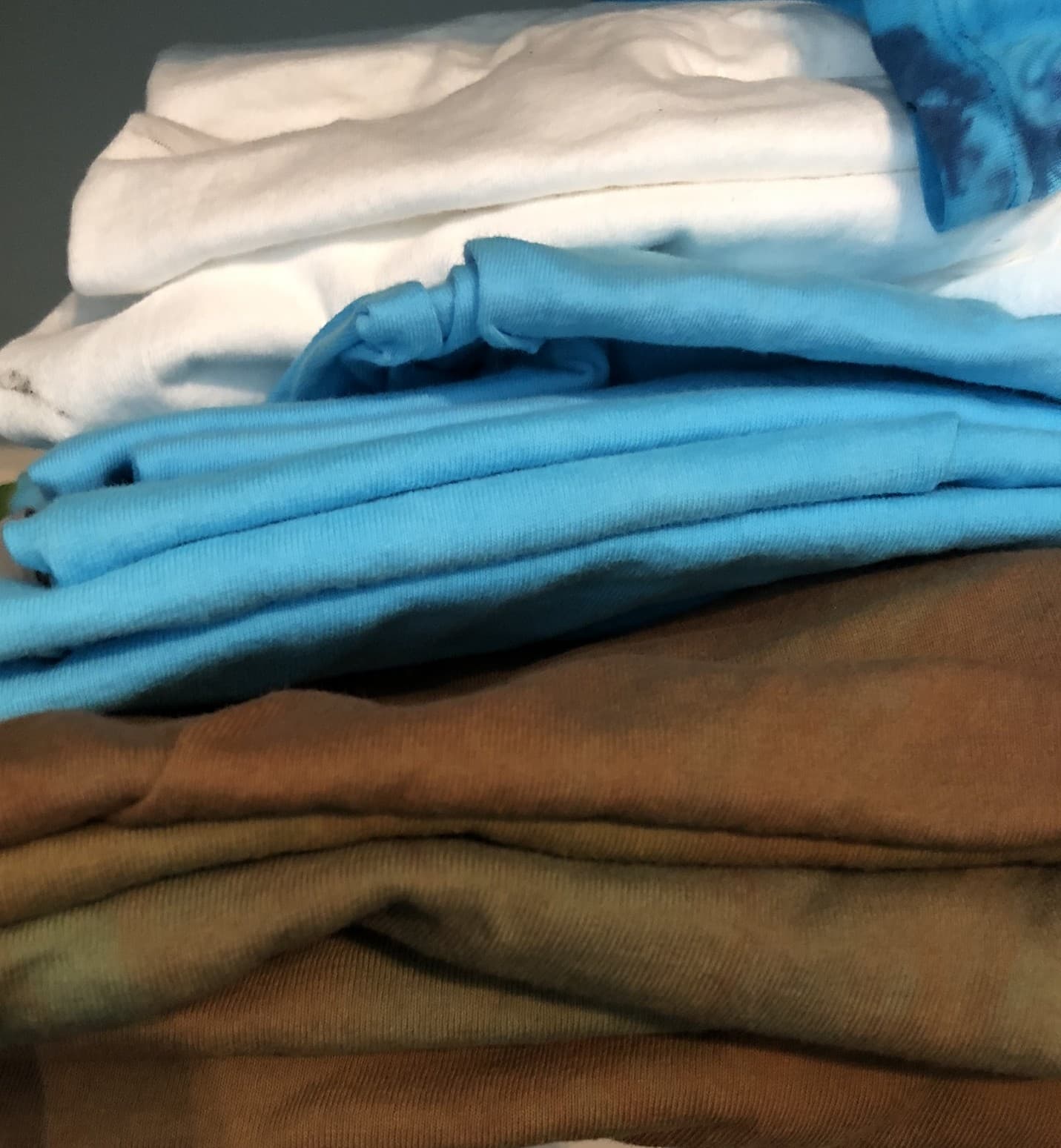
Farm rooted clothing · Est. 2005
The guides are free. The shop is the business.
Sun & Rain Works is a small apparel outfit in Eugene, Oregon, with agricultural roots and a slow path toward farming. The beets guide you just read comes from the same place as the shirts.
More growing guides
We're working through the vegetables one at a time, with dates counted from your own frost station and the old books read properly. Occasional notes from Eugene, Oregon, an art business with agricultural roots, working its way toward farming.
We'll email you to confirm before sending anything. After that, occasional seasonal notes from Sun & Rain Works, we won't share your address, and every email has an unsubscribe link.
Growing advice here is current horticultural practice, drafted with AI assistance and checked against the sources this page names. Where it quotes a book, the book is named and linked. Where practice is genuinely contested, or local enough that we would be guessing, the text says so, your county extension service beats any national guide, including this one, on pest timing.
The photographs are not AI-generated. Every one is our own work, public domain, or licensed, and carries its author and licence beneath it.