Growing guide
How to grow spinach
Everybody sows it in spring and everybody is disappointed. Spinach is an autumn and winter crop that tolerates a short spring outing, get the season the right way round and it is one of the most generous things you can grow.
Spinacia oleracea · Amaranthaceae, with beet, chard, orach and quinoa
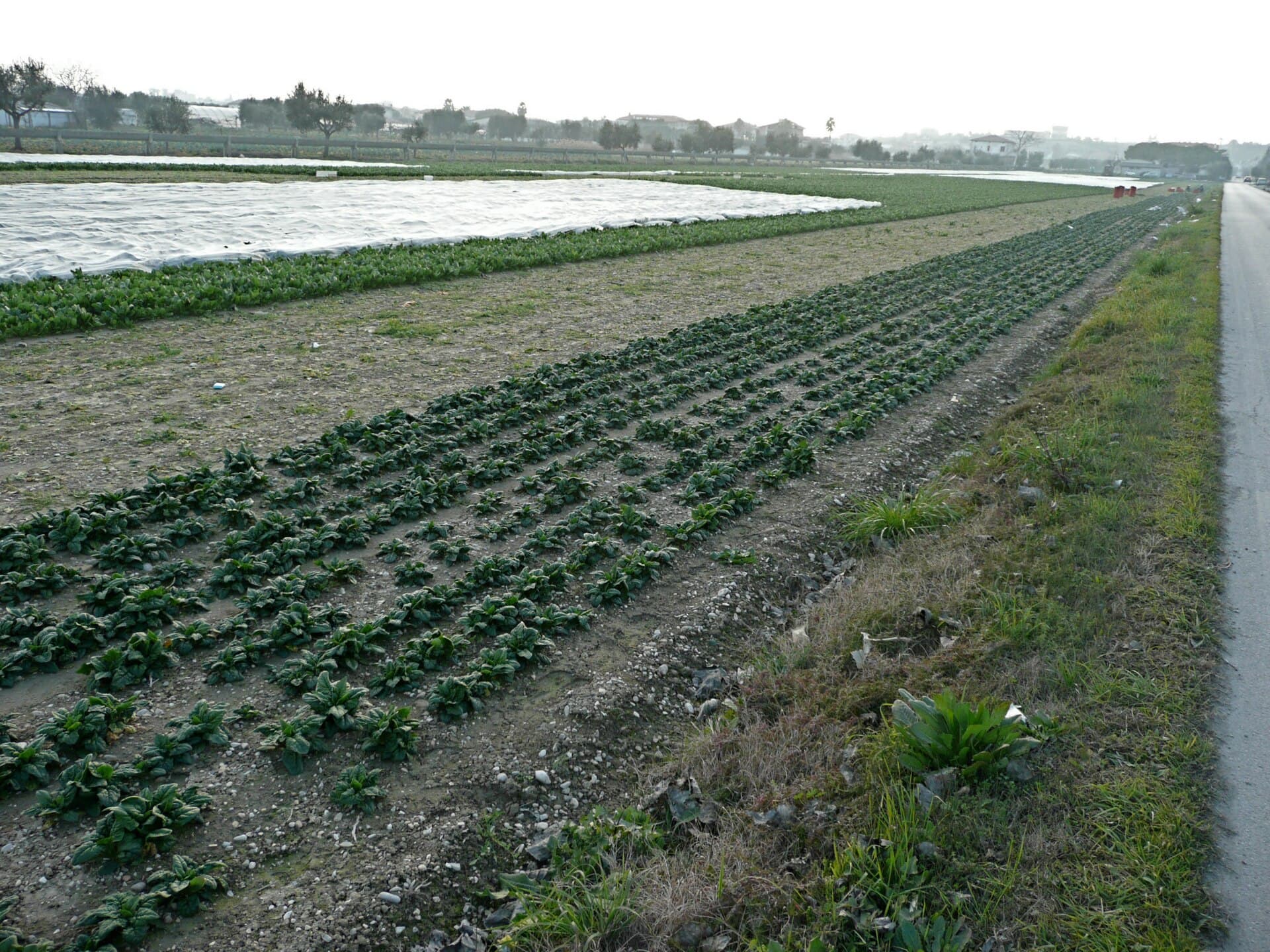
Above: Peter Forster · CC BY-SA 2.0

easy. Fast, hardy and undemanding, with one hard limit: it will bolt when the days lengthen no matter what you do, and no amount of care changes that.
At a glance
- Family
- Amaranthaceae, same family as beet and chard
- Life cycle
- Annual
- Hardiness
- Very hardy, overwinters in the ground
- Sowing method
- Direct sow; transplants poorly
- Germination
- 5–14 days; refuses in warm soil
- Soil
- Rich and moisture-retentive; dislikes acid
- Sun
- Full sun in the cool months, shade in summer
- Days to maturity
- 40–50, and pickable much sooner
- Best sowing
- Late summer and autumn, not spring
- Biggest single risk
- Bolting when days lengthen
When to sow, where you actually live
Every other guide prints a month, and a month is only true somewhere. What transfers between locations is the offset: spinach go in about 6 weeks before the last spring frost, wherever that falls for you. Give us a ZIP and we will count it from your own NOAA weather station.
Current spacing: 4″ apart in rows 14″ apart, sown 0.5″ deep. Roughly 40–50 days to a first picking, though variety moves that more than any general figure admits.
Get your sowing dates →Sow it in autumn, not spring
Spinach bolts in response to day length as much as heat, once days pass about fourteen hours it runs up a flower stem and stops making leaves, and nothing you do prevents it. In practice that means a spring sowing has a short window: a few weeks of picking in late spring, then it is over.
The autumn crop has no such limit. Sown from late summer, spinach sizes up as the days shorten, stands through the cold, and picks through winter and into the following spring, which is exactly the period when there is least else to eat from a garden.
The 1912 manual describes this as ordinary practice, and its account of large-scale growing near Norfolk, Virginia is worth knowing: cuttings made at any time during the winter when the fields are not frozen or covered with snow, and then a new flush of growth and a large crop of early greens when the weather moderates. That is a winter crop, not a spring one.
It also notes that three or four ounces of seed sown in autumn after a summer crop has come off will produce an abundance of greens for the average family, which is a good reminder of how little ground this takes.
In a mild maritime winter the plants simply stand. Where the ground freezes hard, a low tunnel or a thick straw mulch carries them through.
- Bolting is triggered by day length, not just heat. Spring crops are short.
- Late-summer sowings crop through winter into the following spring.
- This is where the crop is genuinely generous, and where nobody sows it.
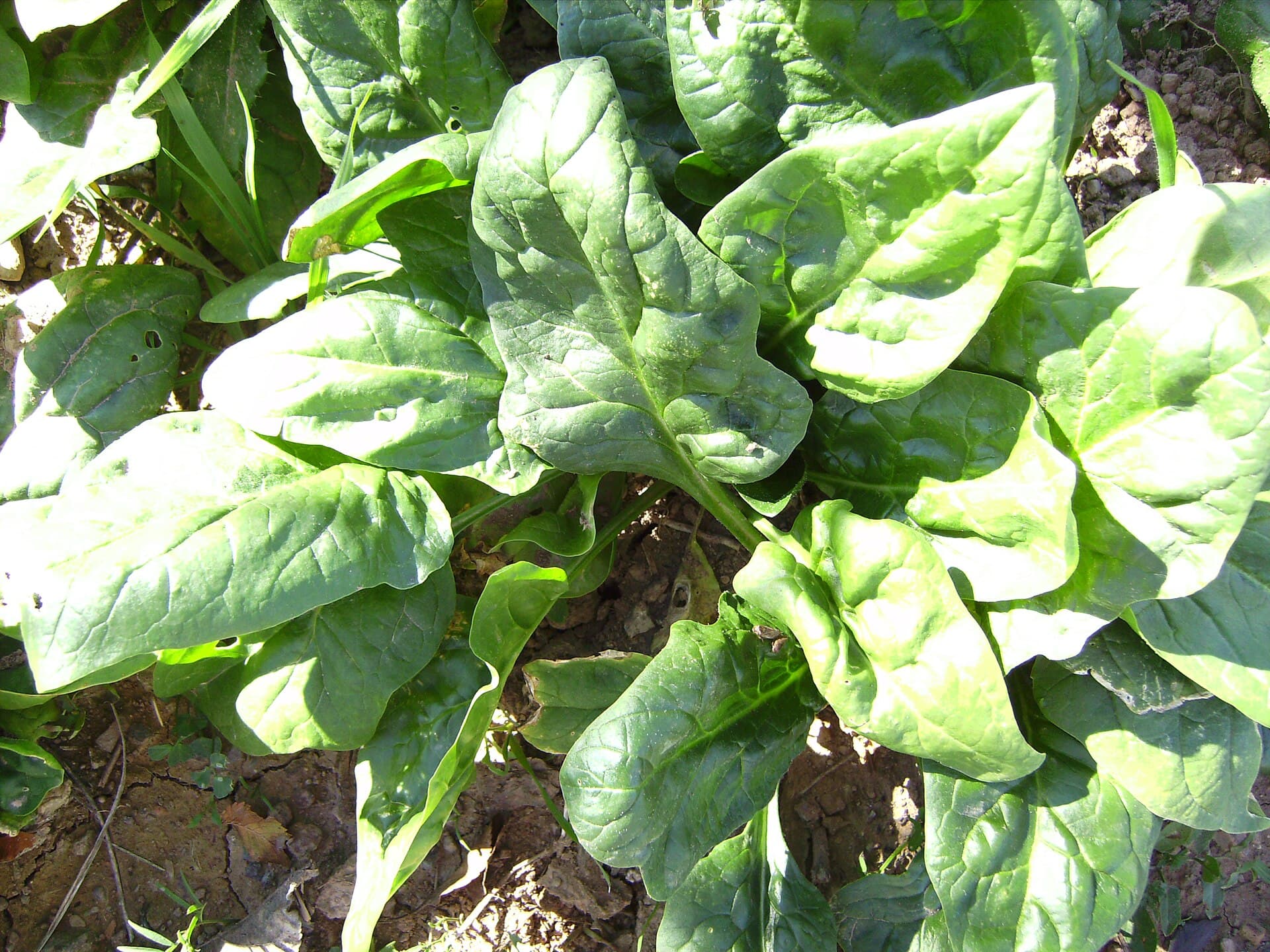
The same crop in November, a plant that will sit like this through the cold and start again as soon as the light returns. This is the sowing almost nobody makes, and it is the one that gives spinach a season worth having.
Castelltallat, Catalonia, 5 November
Victor M. Vicente Selvas · Public domain

Sowing, and the warm-soil refusal
Sow direct, spinach has a taproot and resents being moved, so modules are more trouble than they are worth.
The one thing that stops a sowing is warm soil. Spinach germinates poorly above about 70°F and barely at all above 85°F, which is precisely the temperature a bed sits at in the late summer window when you most want to sow it. The practical answers are to water the drill heavily before sowing to cool it, to sow a little deeper than usual so the seed sits in cooler soil, to shade the row for the first week, or simply to wait for the first cool spell.
Sow about half an inch deep in rows a foot apart. Our calendar gives four inches between plants and fourteen between rows; the 1912 hand-cultivation column says rows twelve to eighteen inches apart at seven or eight plants to the foot. Sow thickly and thin by eating.
Seed keeps three to five years but germination falls off noticeably, if a sowing is patchy, suspect the seed before the soil.
- Direct sow only; spinach has a taproot and hates being moved.
- Warm soil is what stops germination. Water the drill to cool it, or wait.
- Half an inch deep, rows a foot apart, sown thickly and thinned by eating.
Take whole plants, largest first
Most modern advice says to pick outer leaves and leave the centre. The 1912 manual recommends the opposite and is, for a garden row, right: in gathering spinach the entire plant is removed rather than merely cutting off the leaves, the larger plants being selected first so the smaller ones are given room to develop. It adds, pointedly, that no thinning is required if this plan of harvesting is practiced.
That is a genuinely better method than it sounds. Harvesting whole plants largest-first thins the row and feeds you in the same motion, removes the fiddly business of picking individual leaves, and leaves a row that gets progressively better spaced as you eat it.
For a cut-and-come-again bed the leaf method still works, take a third at a time and never the growing point, but for a row grown to eat properly, whole plants are less work and better food.
Pick in the morning. Spinach wilts fast in warmth and a plant cut in the afternoon never crisps up again.
- Pull whole plants, largest first, it harvests and thins at once.
- Done that way, the row needs no separate thinning at all.
- Cut in the morning; afternoon-picked spinach does not recover.
Rich ground, and no acid
Spinach is a leaf crop grown fast, so it wants nitrogen and moisture and it wants both steadily. A plant that is checked by drought or hunger is smaller, tougher and closer to bolting than one that grew evenly.
It dislikes acid soil markedly, the same preference as its relative the beet, and a poor spinach crop on ground that grows everything else adequately is a reasonable prompt to test the pH.
Solomon's note is worth having for dry gardeners: spring spinach is remarkably more drought-tolerant than its delicate appearance suggests, and a bolt-resistant variety sown in late April at a foot apart in rows three feet apart can still be yielding pickable leaves in late June or early July with no watering at all. That is a very different plant from the crowded row most people grow.
- Feed it. Spinach is a fast leaf crop and hunger shows immediately.
- It hates acid soil, a poor crop on decent ground suggests testing pH.
- Given real space, spring spinach is far more drought-tolerant than it looks.
Leaf miner, and not much else
Beet leaf miner is the one pest that genuinely matters, and it is the same insect that troubles beet and chard, unsurprising, since they are relatives. The larvae feed between the upper and lower surfaces of the leaf, making pale winding tunnels and then translucent blistered patches. On a root crop that is cosmetic; on a leaf crop it is the crop.
The only reliable control is exclusion: floating row cover from the day of sowing, on ground that did not grow spinach, beet or chard the previous year. That is what the fleece in the photograph at the top of this page is doing. Beyond that, pick off and destroy affected leaves as soon as you see a tunnel, which prevents the larvae completing their cycle in your bed.
Downy mildew shows as pale yellow patches on the upper leaf surface with grey fuzz beneath in prolonged damp, which is most of a maritime winter. Space rows so air moves, avoid overhead watering, and choose resistant varieties, which most modern spinach is.
Slugs take seedlings and, in a wet winter, mature plants sitting on wet soil.
Aphids gather in the crown. On a crop you eat raw this matters more than usual, so check before harvesting rather than after washing.
Sources
- Leaf miner is the pest that counts, and row cover is the only real answer.
- Rotate away from beet and chard, same insect, same family.
- Downy mildew loves a wet winter; space for airflow and buy resistant seed.
How this crop used to be spaced
A single spacing figure reads as a fact about the plant. It is not, it is a judgement about your cultivation method and your water, and two books on our shelf disagree with our figure and with each other for reasons worth knowing.
- 1912, worked by hand
- Rows 12 to 18 in., plants 7 or 8 to ft., sown 1 to 2 in.deep. That is the hand-cultivation column, the same table's horse column is far wider, because a horse and cultivator had to walk between the rows, and quoting that one is how old manuals got their reputation for wasting ground. We reproduce the table in full.
- Through a rainless summer, unwatered
- Thinned to 12 inches apart in rows 3 feet apart. Solomon rates spring spinach as far more drought-tolerant than it looks: at this spacing a late-April sowing can still be picking in early July with no water at all. Our notes on the book.
Which type to grow
Grouped by what each is for rather than by catalogue order, because the useful question is which one suits your ground.
Savoy and semi-savoy
Crinkled, dark, thick leavesBest for: Overwintering and standing cold
The hardiest types and the ones to sow for winter. The crinkles trap grit, so they need washing properly, and semi-savoy is the usual compromise between hardiness and a leaf you can rinse.
Flat-leaved / smooth
Smooth, spade-shaped leavesBest for: Salad, and easy washing
Faster and cleaner but less hardy. The type most baby-leaf salad spinach belongs to, and the right choice for a spring sowing you intend to eat raw.
Bolt-resistant / long-standing
VariesBest for: Spring sowings and pushing the season
Bred to hold a few weeks longer before running up. The labelling is broadly honest, and this is the category worth paying attention to for any sowing made after the equinox. Solomon's dry-garden spinach is one of these, sown late April.
New Zealand spinach
Sprawling, thick triangular leavesBest for: Summer, when true spinach refuses
Not spinach at all and not even in the family, but it does the job in the heat that true spinach cannot tolerate. Burr gives it a separate entry, and the 1912 table lists it as its own crop, a long-standing solution to a permanent problem.
Chard, as the summer substitute
Large leaves, thick stemsBest for: The rest of the year
Worth naming here because it is the honest answer to wanting spinach in July. Chard is the same species as beet, stands heat and drought that flatten spinach, and cooks similarly.
What went wrong
Listed by what you can see, not by what the plant has, you arrive here holding the evidence and without the vocabulary. Where the answer is that nothing can be done this year, it says so.
Plants run up a flower stem in late spring
Fixable nowWhy: Bolting, triggered by lengthening days as much as by heat. Unavoidable in a spring crop.
What to do: Pull and use them, leaves turn bitter quickly once the stem elongates. Shift the main sowing to late summer, and use a bolt-resistant variety for spring.
Little or nothing germinated from a late-summer sowing
Fixable nowWhy: Soil too warm. Spinach germinates poorly above about 70°F.
What to do: Water the drill heavily to cool it before re-sowing, shade the row for a week, or wait for the first cool spell. This is a soil-temperature problem, not a seed problem.
Pale winding tunnels and blistered patches inside the leaves
Fixable nowWhy: Beet leaf miner larvae feeding between the leaf surfaces.
What to do: Pick off and destroy affected leaves immediately, squashing the larva inside works. Next sowing, cover with fleece from day one and rotate away from where beet, chard or spinach grew.
Yellow patches above, grey fuzz beneath
Fixable nowWhy: Downy mildew, in prolonged damp weather.
What to do: Remove affected leaves and improve airflow between rows. Choose a resistant variety next time, most modern spinach carries resistance and it is worth checking the packet.
Small, pale, tough leaves
Fixable nowWhy: Hunger, drought or acid soil. Spinach is a fast leaf crop and shows all three quickly.
What to do: Feed with something nitrogen-leaning and water. If it recurs on ground that grows other things well, test the pH, spinach dislikes acid soil markedly.
Grit trapped in the leaves after washing
Fixable nowWhy: Savoy crinkles hold soil, and rain splashes it up from bare ground.
What to do: Mulch the row so there is less loose soil to splash. Grow a smooth-leaved or semi-savoy type if you eat it raw often.
Plants rot at the base over winter
Next seasonWhy: Sitting wet, usually a drainage problem rather than a cold one.
What to do: Spinach survives the cold far better than the wet. Sow on a raised row and pick off dead lower leaves through winter so nothing holds moisture against the crown.
7 kinds, in 1863
Seven, the shortest list in this whole census, and the names are about the seed rather than the leaf. True spinach seed used to come in a spiny husk, and Burr's split between the prickly-seeded sorts for winter standing and the round-seeded Summer spinach is roughly the same division we still make between overwintering and spring varieties. The seed coat was bred smooth; the seasonal division survived.
Flanders Spinach · Large Prickly-seeded Spinach · Lettuce-leaved Spinach · Sorrel-leaved Spinach · Summer or Round-leaved Spinach · Winter or Common Prickly Spinach · Yellow Sorrel-leaved Spinach
Our reading of twenty-two tomatoes →What’s in spinach
Per 100 grams raw, from USDA FoodData Central. The range is what USDA actually measured across its samples — it is usually wide, and your own crop sits somewhere in it rather than on the headline number.
| Nutrient | Per 100 g | % daily | Range measured |
|---|---|---|---|
| Vitamin K | 482.9 µg | 402% | , |
| Vitamin A | 469 µg | 52% | , |
| Folate | 194 µg | 49% | , |
| Vitamin C | 28.1 mg | 31% | , |
| Magnesium | 79 mg | 19% | , |
| Iron | 2.71 mg | 15% | , |
| Potassium | 558 mg | 12% | , |
| Fibre | 2.2 g | 8% | , |
| Calcium | 99 mg | 8% | , |
| Protein | 2.86 g | 6% | , |
| Water | 91.4 g | , | 87.75–94.16 (n=1) |
| Energy | 23 kcal | , | , |
Source: USDA FoodData Central, “Spinach, raw” (SR Legacy, published 4/1/2019). Percentages are of the FDA adult Daily Value, a labelling reference rather than a personal requirement. Raw values; boiling leaches water-soluble vitamins and some carotene, so a cooked serving is not the same figure.
Saving your own seed
Hard, and one of the two crops on this site where the honest advice is not to bother, which is a shame, because spinach is otherwise so easy.
Two independent problems. Spinach is wind-pollinated, so pollen travels much further than an insect would carry it and isolation is measured in miles rather than yards. And it is largely dioecious: individual plants are male or female, so you need a decent population, thirty or more, simply to get seed at all.
If you do try, let a block bolt rather than a few plants, keep everything that flowers, and accept you have no control over what a neighbour's bolted spinach contributes.
The practical alternative is to buy spinach seed, which is cheap and keeps three to five years, and put your seed-saving effort into tomatoes, beans, peas and lettuce, where the same work actually keeps a variety alive.
Farm rooted clothing · Est. 2005
The guides are free. The shop is the business.
Sun & Rain Works is a small apparel outfit in Eugene, Oregon, with agricultural roots and a slow path toward farming. The spinach guide you just read comes from the same place as the shirts.
More growing guides
We're working through the vegetables one at a time, with dates counted from your own frost station and the old books read properly. Occasional notes from Eugene, Oregon, an art business with agricultural roots, working its way toward farming.
We'll email you to confirm before sending anything. After that, occasional seasonal notes from Sun & Rain Works, we won't share your address, and every email has an unsubscribe link.
Growing advice here is current horticultural practice, drafted with AI assistance and checked against the sources this page names. Where it quotes a book, the book is named and linked. Where practice is genuinely contested, or local enough that we would be guessing, the text says so, your county extension service beats any national guide, including this one, on pest timing.
The photographs are not AI-generated. Every one is our own work, public domain, or licensed, and carries its author and licence beneath it.