Growing guide
How to grow beans
The crop that takes over the ground peas leave. Everything about growing beans well comes down to one thing: waiting for the soil to warm, then never letting a pod get old on the plant.
Phaseolus vulgaris · Fabaceae, the legume family, with peas, lentils and clover
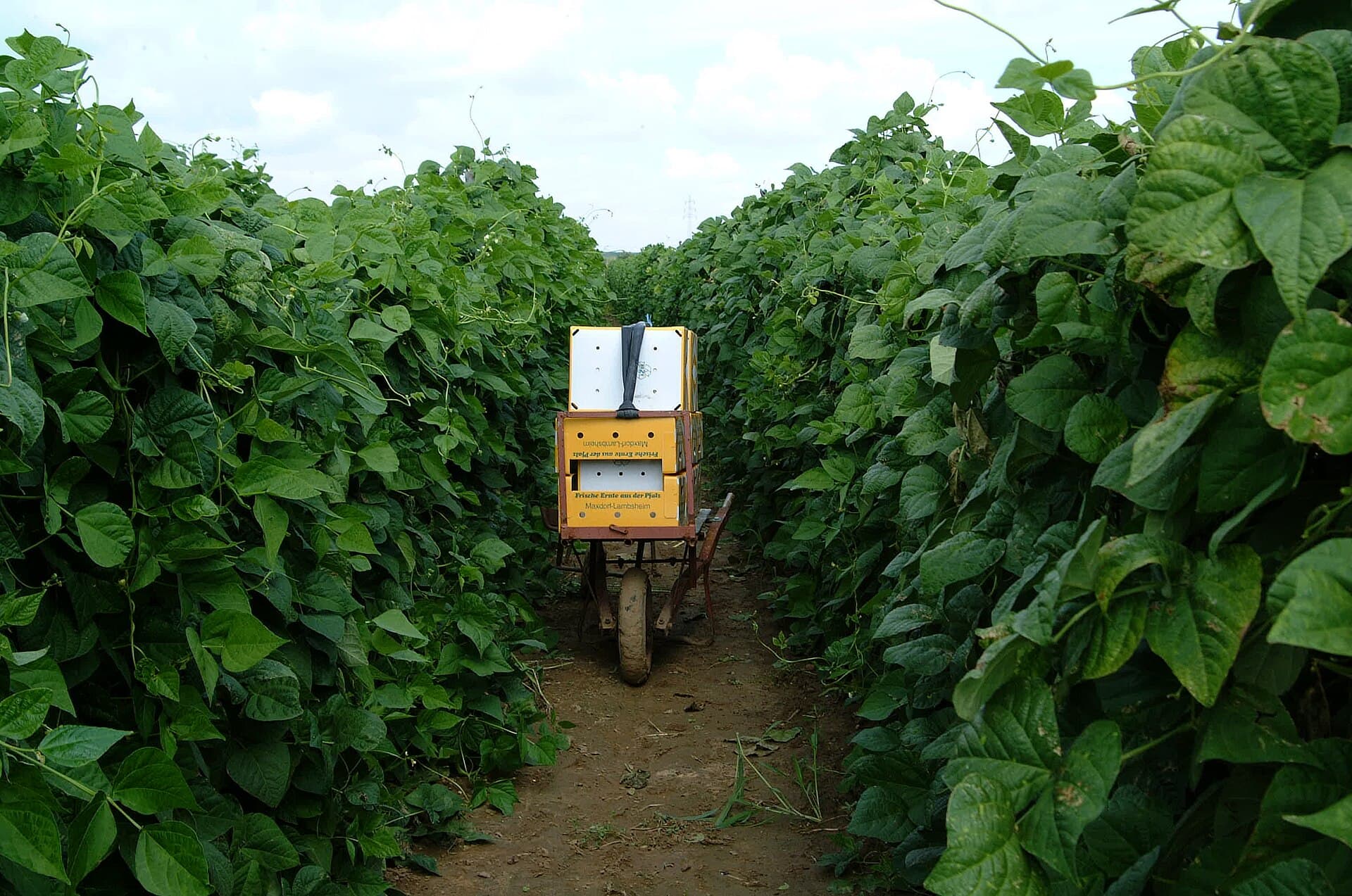
Above: Josef Schlaghecken · CC BY-SA 4.0

easy. Very easy once the soil is warm and very unforgiving before that. Almost every bean failure is a sowing-date failure rather than anything that happened later.
At a glance
- Family
- Fabaceae (legumes)
- Life cycle
- Annual
- Hardiness
- Tender, killed outright by frost
- Sowing method
- Direct sow; dislikes transplanting
- Germination
- 7–10 days in warm soil; rots in cold
- Soil
- Warm and well-drained. No nitrogen feed
- Sun
- Full sun
- Days to maturity
- 50–60 bush; 60–75 pole
- Succession
- Every 3 weeks for bush; pole needs none
- Biggest single risk
- Sowing into cold soil
When to sow, where you actually live
Every other guide prints a month, and a month is only true somewhere. What transfers between locations is the offset: beans go in 7 days after the last spring frost, wherever that falls for you. Give us a ZIP and we will count it from your own NOAA weather station.
Current spacing: 4″ apart in rows 24″ apart, sown 1″ deep. Roughly 50–60 days to a first picking, though variety moves that more than any general figure admits.
Get your sowing dates →Wait for warm soil, not a frost-free date
This is the whole crop, and it is where most people go wrong. Our calendar puts beans in a week after the last spring frost rather than on it, and that gap is deliberate: beans want warm soil, not merely air that will not freeze. Sown into cold ground the seed simply rots, and a sowing made a week later routinely overtakes one made on the frost date.
The rule of thumb is soil at about 60°F. If you have no thermometer, the practical test is whether you would kneel on the ground comfortably.
The 1912 manual explains why depth matters so much for this crop, and the explanation is correct botany applied properly. Beans germinate epigeally, the seed leaves are pushed up out of the soil rather than staying below it, and the book notes that a large expenditure of energy is required to accomplish this, and the more compacted the soil and the deeper the seed is planted, the more time and energy are required. Which is why an inch to two inches is right and three is a real cost.
The same fact explains a common panic: a crusted seedbed after heavy rain can trap seedlings that have already germinated underground. Breaking the crust gently with a rake saves them.
- Sow a week after the last frost, not on it. Cold soil rots the seed.
- About 60°F soil. If kneeling on it is unpleasant, wait.
- One to two inches deep, beans push their seed leaves up through the soil.
Bush or pole, the decision that matters
Bush beans grow knee-high, need no support, and crop heavily over two or three weeks before winding down. That concentration is useful if you are freezing or canning a batch, and it is why succession sowing every three weeks is the standard advice.
Pole beans climb six to eight feet, need a structure, take a few weeks longer to start, and then crop continuously until frost. For a household eating beans as they come, one sowing of pole beans usually beats three sowings of bush.
Solomon adds a third consideration that only matters in a dry summer, and it is worth quoting the substance: heirloom pole beans once climbed over serious competition while struggling for water, and modern bush varieties tend to have puny root systems. In a garden that will not be irrigated, pole beans are not merely more productive but more likely to survive.
Against that: pole beans need a structure that will stand up to a wall of wet foliage in an autumn wind, and picking the top of an eight-foot row is a genuine nuisance. Both types are worth growing.
- Bush: no support, heavy for 2–3 weeks, sow in succession.
- Pole: needs structure, starts later, then crops until frost.
- In an unwatered garden, pole beans root far better than bush.
Do not feed them nitrogen either
Like peas, beans fix their own nitrogen through root nodules, so a nitrogen-rich bed gives you a magnificent leafy plant and disappointing pods. Feed the bed for the crop before, not for this one.
What they want is drainage, warmth and a soil that is not acid. Phosphorus and potassium help; nitrogen does not.
Beans are shallow-rooted and dislike disturbance, so hoe carefully close to the plants and mulch rather than cultivating deeply once they are established.
Water matters most at flowering and pod set. A plant that dries out while flowering drops its flowers, which is the usual explanation for a bean plant that looked healthy and then simply did not produce.
- No nitrogen. Lush leaves and few pods is over-feeding.
- Shallow-rooted, mulch rather than hoeing deeply.
- Drought at flowering makes the plant drop flowers. Water then.
Pick small, pick constantly
A bean plant exists to make seed. Let a few pods swell and mature and the plant reads its work as done and stops flowering, so picking is not just harvest, it is what keeps the crop going.
Pick snap beans while the pods are slim and before the seeds inside show as bumps. That is earlier than most people pick and it is the difference between a tender bean and a stringy one. Modern varieties are bred stringless, but even a stringless bean goes tough and leathery if left.
Pick every two or three days at the height of the crop. Missing a week during a warm spell can effectively end a bush planting.
Use two hands. A bean pod is attached more firmly than it looks, and yanking one-handed tears whole shoots off the plant.
If you find over-mature pods, take them off anyway and compost them. Leaving them costs you far more than they are worth.
- Pick before the seeds show as bumps in the pod.
- Every 2–3 days. A missed week can end a bush planting.
- Two hands, yanking pods tears shoots off.
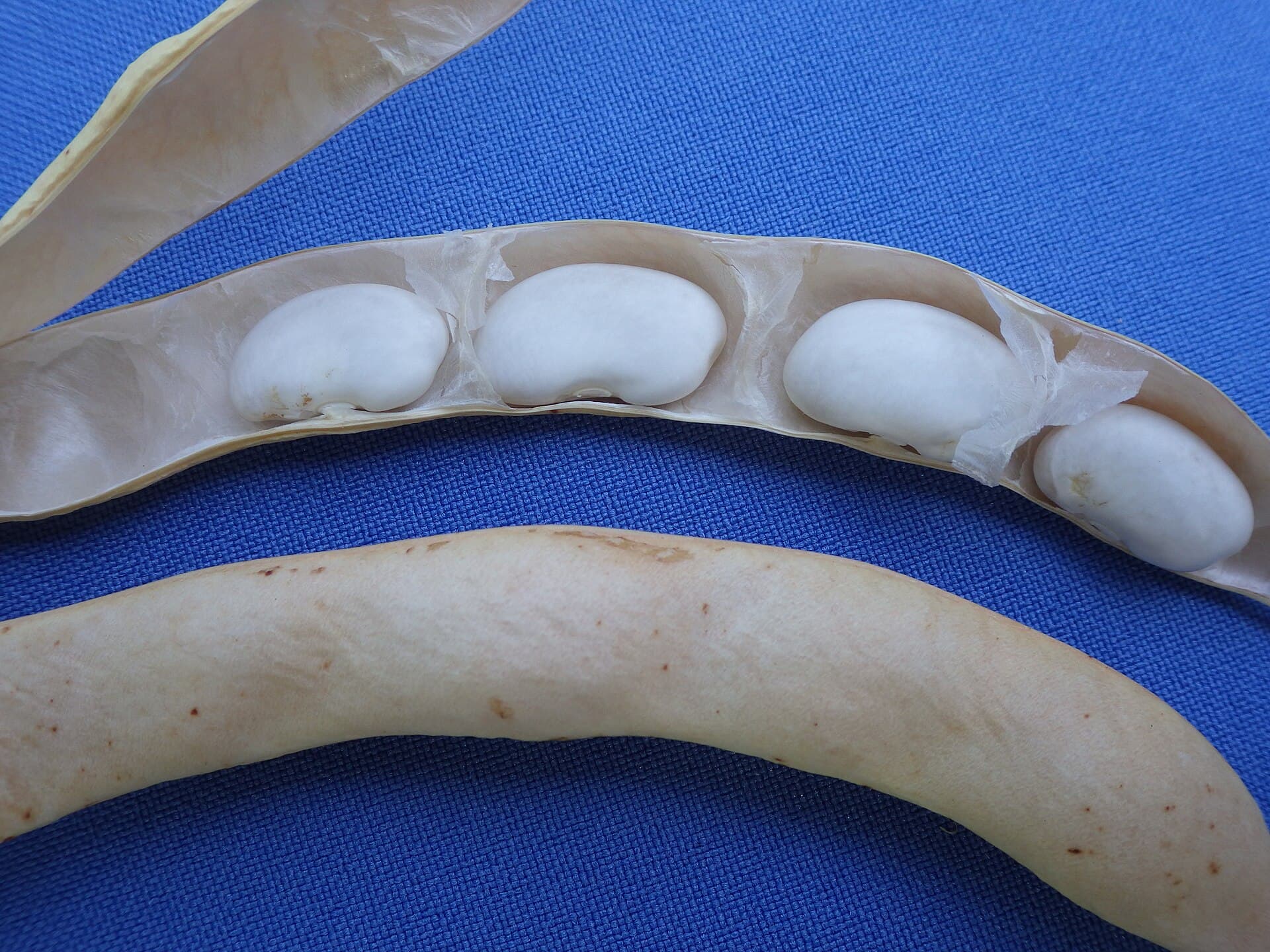
The other end of the same pod's life, dry, papery and full of hard white seed. This is what you are racing when you pick: everything the plant puts into these it stops putting into new flowers. It is also exactly the stage to harvest at if you are saving seed rather than eating.
Josef Schlaghecken · CC BY-SA 4.0

What goes wrong
Slugs take seedlings, particularly in a damp spring, and this is the commonest cause of a gappy row. Beans emerge with large fleshy seed leaves that slugs find very attractive.
Black bean aphid colonises growing tips in early summer. Pinching out the top few inches of an affected shoot removes most of a colony and does the plant no harm.
Halo blight and bacterial blight show as water-soaked or yellow-haloed spots on leaves and pods in wet seasons. They are seed-borne, so the practical answers are buying clean seed, not saving seed from an affected crop, and not working among the plants while the foliage is wet.
Bean rust appears as orange-brown pustules on leaf undersides late in the season, usually as the crop is finishing anyway.
And the failure that is not a pest at all: flowers that form and drop without setting pods, which is almost always heat above about 90°F or drought at flowering. It corrects itself when conditions ease.
Sources
- Slugs take emerging seedlings, the fleshy seed leaves attract them.
- Pinch out aphid-covered shoot tips; the plant does not mind.
- Flowers dropping without pods means heat or drought, not disease.
How this crop used to be spaced
A single spacing figure reads as a fact about the plant. It is not, it is a judgement about your cultivation method and your water, and two books on our shelf disagree with our figure and with each other for reasons worth knowing.
- 1912, worked by hand
- Rows 18 to 24 in., plants 5 or 8 to ft., sown 1/2 to 2 in.deep. That is the hand-cultivation column, the same table's horse column is far wider, because a horse and cultivator had to walk between the rows, and quoting that one is how old manuals got their reputation for wasting ground. We reproduce the table in full.
- Through a rainless summer, unwatered
- Twelve to 16 inches apart at final thinning, with 2½ to 3 feet clear either side of the trellis. Solomon's figure is for pole beans, and that is the point: he holds that modern bush varieties have puny root systems and that the heirloom climbers are what survive a dry summer. Read it as an argument against this crop's habit, not just its spacing. Our notes on the book.
Which type to grow
Grouped by what each is for rather than by catalogue order, because the useful question is which one suits your ground.
Bush snap beans
Knee-high plants, slim green podsBest for: A concentrated pick, and no structure
The default. Quick, no support, heavy for a fortnight or three. Sow in succession or you will have beans for two weeks and none for the rest of the summer.
Pole snap beans
Climbing to six or eight feetBest for: Continuous cropping and unwatered gardens
More yield per square foot than any bush type and a picking season measured in months. Solomon's preference for dry gardening, on the grounds that the older climbing types root far more aggressively.
Wax / yellow beans
Bush or pole, pale yellow podsBest for: Finding them on the plant
Identical to grow, and genuinely easier to harvest because the pods show up against the foliage. Burr's Canada Yellow and Long Yellow Six-weeks are in this line.
Filet / haricot vert
Very slim, fine podsBest for: Eating quality, if you will pick often
Bred to be picked very young and very small. Superb if you pick every other day and pointless if you do not, they go tough faster than standard types. Burr's two Flageolets are the ancestors.
Shell and dry beans
Grown on to mature seedBest for: Storage, and the crop that keeps
Most of Burr's thirty-five bush beans are these, Dwarf Horticultural, White Marrow, White Kidney, Pea-bean, because a bean that dried and stored fed a household through winter, while a fresh green bean fed it for a fortnight.
What went wrong
Listed by what you can see, not by what the plant has, you arrive here holding the evidence and without the vocabulary. Where the answer is that nothing can be done this year, it says so.
Seed rotted, patchy or no emergence
Fixable nowWhy: Sown into soil that was too cold. The commonest bean failure by a wide margin.
What to do: Re-sow once the soil is genuinely warm, around 60°F. A later sowing routinely overtakes an early one, so nothing is lost but time.
Seedlings emerged then vanished
Fixable nowWhy: Slugs, which find the large fleshy seed leaves particularly attractive.
What to do: Protect the row for the first fortnight only, once beans have true leaves they are largely safe. Clear hiding places nearby.
Big leafy plants, very few pods
Next seasonWhy: Too much nitrogen. Beans fix their own and a rich bed pushes growth instead of flowering.
What to do: Nothing much this year. Next time follow a fed crop rather than feeding for beans.
Flowers form and drop without setting pods
Fixable nowWhy: Heat above about 90°F, or drought during flowering.
What to do: Water thoroughly and wait, plants resume setting when temperatures ease. Not a disease and not your fault.
Pods stringy and leathery
Fixable nowWhy: Picked too late. Even stringless varieties toughen once the seeds swell.
What to do: Pick before the seeds show as bumps, every two or three days. Over-mature pods can still be shelled and used as fresh shell beans.
Plant stopped flowering mid-season
Fixable nowWhy: Mature pods were left on, so the plant read its job as complete.
What to do: Strip every over-mature pod off and keep picking. Many plants restart within a week or two.
Water-soaked or yellow-haloed spots on leaves and pods
Next seasonWhy: Halo blight or bacterial blight, both seed-borne and spread by wet foliage.
What to do: Remove badly affected plants and do not save seed from this crop. Stay out of the row when foliage is wet, and buy fresh clean seed next season.
35 kinds, in 1863
Thirty-five bush beans, plus fifteen pole sorts in the same chapter, fifty for the common garden bean alone, before Lima, scarlet-runner and sieva get their own chapters. What the names show is what beans were mostly for: White Marrow, White Kidney, Pea-bean, Dwarf Cranberry, Turtle-soup. These are shell and dry beans, grown to store. A fresh green bean fed a household for a fortnight; a dried one fed it through the winter. Dwarf Horticultural and Refugee are still sold under those names.
Bagnolet · Black-eyed China · Blue Pod · Canada Yellow · Chilian · Crescent-eyed · Dun-colored · Dwarf Cranberry · Dwarf Horticultural · Dwarf Sabre · Dwarf Soissons · Early China · Early Rachel · Early Valentine · Golden Cranberry · Long Yellow Six-weeks · Mohawk · Newington Wonder · Pea-bean · Pottawottomie · Red Flageolet · Red-speckled · Refugee · Rice · Rob-Roy · Round Yellow Six-weeks · Solitaire · Swiss Crimson · Turtle-soup · Victoria · White's Early · White Flageolet · White Kidney · White Marrow · Yellow-eyed China
Our reading of twenty-two tomatoes →Related crops
Worked out from the botany rather than from a hand-written list, so it stays correct as the library grows.
- The same family
Also Fabaceae. Shares much of this crop's pest and disease pressure and belongs in the same rotation group.
What’s in beans
Per 100 grams raw, from USDA FoodData Central. The range is what USDA actually measured across its samples — it is usually wide, and your own crop sits somewhere in it rather than on the headline number.
| Nutrient | Per 100 g | % daily | Range measured |
|---|---|---|---|
| Vitamin K | 43.9 µg | 37% | 32.3–63.5 (n=8) |
| Fibre | 3.011 g | 11% | 2.39–5.05 (n=8) |
| Magnesium | 28.21 mg | 7% | 22.6–46.1 (n=8) |
| Potassium | 290.4 mg | 6% | 203–437 (n=8) |
| Protein | 1.96875 g | 4% | 1.4375–3.25 |
| Iron | 0.6516 mg | 4% | 0.368–1.09 (n=8) |
| Calcium | 40.05 mg | 3% | 27.5–66.8 (n=8) |
| Water | 89.66 g | , | 82.92–92 (n=8) |
Source: USDA FoodData Central, “Beans, snap, green, raw” (Foundation, published 10/28/2022). Percentages are of the FDA adult Daily Value, a labelling reference rather than a personal requirement. Raw values; boiling leaches water-soluble vitamins and some carotene, so a cooked serving is not the same figure.
What the wartime archive says about beans
12 passages from the USDA’s 1943–46 victory garden material, with our note on whether each still holds. Pulled from the annotations themselves rather than listed here by hand.
- Navy beans are not worth the groundStill holds
The garden experts think dried beans, such as navy beans, aren't desirable for the average small victory garden. Compared with some of the other vegetables they yield a small amount of food, and anyway they're available all year round.
The Question Box · April 18, 1944
- Lime and snap beansMostly holds
Beans do well on any good garden soil, but be sure you don't give them too much lime, as that is definitely harmful to snap beans.
The Question Box · April 18, 1944
- Watch the pods, don't spill the beansStill holds
She should watch the pods after they are well filled with beans and pick them as they ripened but before the pods burst open and “spill the beans.” The pods will turn yellow or brown and begin to wither. They should be spread in a warm, dry…
The Question Box · August 31, 1944
- Turnips after the beansStill holds
You can put the late turnips in the garden where snap beans grew. Your crop of snap beans will be about over when it's time for the late turnips to go in.
The Question Box · April 22, 1943
- Don't sow peas and beans thickStill holds
No matter how tempted you are to put beans or peas close, don't do it. You can't transplant them successfully later. And thinning the rows and throwing away young plants is not only a waste but also disturbs the roots of the plants left.
Working the garden year · May 10, 1943
- Why your seed comes from OregonStill holds
Before the war, most seed of cabbage, kale and related crops came from Europe, where black rot and black leg are common. Now this seed is grown in the Pacific Northwest where these diseases do not occur, and so it is free from them. Beans a…
Pests and diseases · “Prevent Vegetable Diseases”, 1944
- Resistance, namedStill holds
Seed catalogs indicate the resistance of a variety after the name. Example: “Marglobe (wilt resistant).” If that is not done, the resistance is usually mentioned in the description of the variety.
Pests and diseases · “Prevent Vegetable Diseases”, 1944
- Hand picking, started earlyStill holds
Hand picking of the larger beetles, bugs, and caterpillars, if done consistently, will often give satisfactory control and eliminate the need for applying insecticides. This practice is most effective if started early enough to catch the fi…
Pests and diseases · “Insect Control in the Victory Garden”, 1943
- Replanting a flooded gardenStill holds
Snap beans need a fairly rich soil, but too much fertilizer makes snap beans grow more to leaves than beans. On the other hand, for lima beans you can hardly have soil too rich... Lima beans are warm weather beans. They suffer from cold and…
When things go wrong · Release immediate
- Don't work among wet beansStill holds
Remember not to gather beans or work around beans when the leaves are wet with dew or rain. This tends to spread disease.
When things go wrong · Release immediate
- “Of course, there's always an exception”Mostly holds
The wise Victory gardener won't bother to save seed of most crops. Of course, there's always an exception. Tomatoes and a few other crops come under that heading. But even with these, which are fairly safe, a gardener will want to get exper…
When things go wrong · August 2, 1945
To can snap beans, lima beans, peas, and corn — in fact, all vegetables except tomatoes — the canning specialists recommend canning only under steam pressure. The reason is that certain spoilage organisms are not [destroyed at boiling tempe…
Saving the crop · May 14, 1943
Saving your own seed
One of the four crops to start with, and the easiest of them to get right. Beans are self-pollinating annuals, the flower fertilises itself before opening, so ten to twenty feet between varieties is enough for a home garden.
The one qualification: bumblebees do work bean flowers and will occasionally cross two varieties growing side by side. If you are keeping something rare, put a different crop between the rows rather than relying on distance alone.
The method is simply to stop picking. Leave pods on the plant until they are brown, dry and rattle, then shell them. If autumn turns wet, pull whole plants and hang them somewhere airy to finish, because pods left in the rain sprout inside.
Dry the beans thoroughly before storing, a bean that dents under a fingernail is not dry enough. They stay viable three to four years. Do not save seed from a crop that showed halo blight or bacterial blight, because both are carried on the seed itself and you would be planting next year's outbreak.
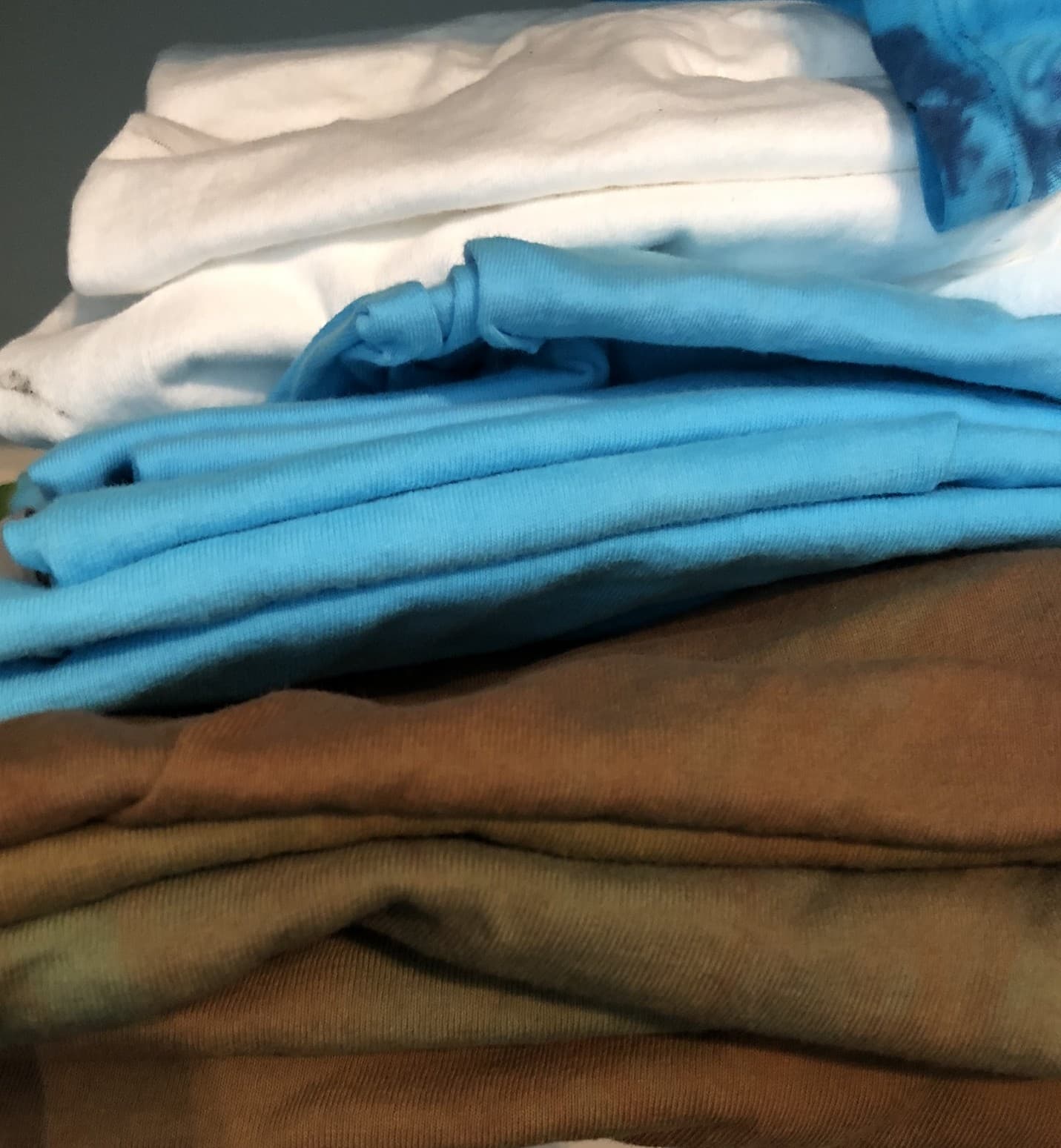
Farm rooted clothing · Est. 2005
The guides are free. The shop is the business.
Sun & Rain Works is a small apparel outfit in Eugene, Oregon, with agricultural roots and a slow path toward farming. The beans guide you just read comes from the same place as the shirts.
More growing guides
We're working through the vegetables one at a time, with dates counted from your own frost station and the old books read properly. Occasional notes from Eugene, Oregon, an art business with agricultural roots, working its way toward farming.
We'll email you to confirm before sending anything. After that, occasional seasonal notes from Sun & Rain Works, we won't share your address, and every email has an unsubscribe link.
Growing advice here is current horticultural practice, drafted with AI assistance and checked against the sources this page names. Where it quotes a book, the book is named and linked. Where practice is genuinely contested, or local enough that we would be guessing, the text says so, your county extension service beats any national guide, including this one, on pest timing.
The photographs are not AI-generated. Every one is our own work, public domain, or licensed, and carries its author and licence beneath it.